8.1 Rolling Motion
Rolling motion represents the general plane motion of a rigid body It can be considered as a combination of pure translational motion parallel to a fixed plane plus a pure rotational motion about an axis that is perpendicular to that plane. The axis of rotation usually passes through the center of mass. In Sect. 6.4 Motion Relative to the Center of Mass, we’ve seen that the motion of an object (or a system of particles) can always be considered as a combination of the motion of the object relative to its center of mass plus the motion of its center of mass relative to some origin O. From Sect. 6.4.3 The Total Kinetic Energy of a System of Particles About the Center of Mass, the kinetic energy of an object relative to the origin is
where is the velocity of the center of mass of the object relative to the origin is the mass of the ith particle and is the linear velocity of the ith particle relative to the center of mass. In the case of the general plane motion of a rigid body, the motion can be considered as a combination of pure translational motion of the center of mass plus pure rotational motion about an axis passing through the center of mass and perpendicular to the plane of motion. Therefore, the first term in Eq. (1) can be written as
where is the perpendicular distance from the ith particle to the center of mass axis. Hence
Thus, the total kinetic energy of a rolling object is the sum of the translational kinetic energy of its center of mass and the rotational kinetic energy about its center of mass.
8.2 Rolling Without Slipping
An important special case of the general plane motion is rolling without slipping. Such motion occurs if a perfectly rigid body rolls on a perfectly rigid surface. As the object rolls without slipping, the instantaneous point of contact between the object and the surface is at rest relative to the surface since there is no slipping. Now, consider a wheel of radius R rolling without slipping along the straight track shown in Fig. Figure 1. The center of mass of the wheel moves along a straight line, while a point on the rim such as moves in a cycloid path. As the wheel rotates through an angle , its center of mass moves through a distance equal to the arc length s (see Fig. Figure 2) given by
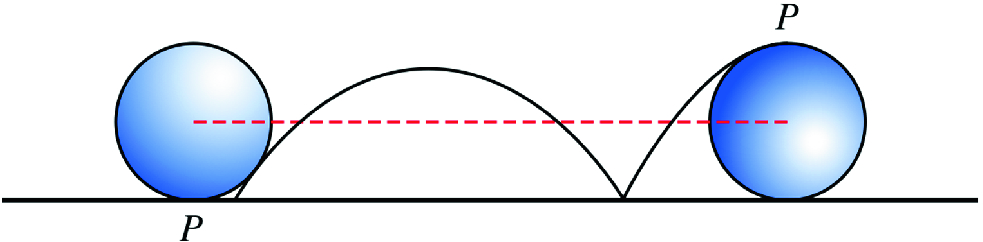
Figure 1:A wheel of radius R rolling without slipping along the straight track
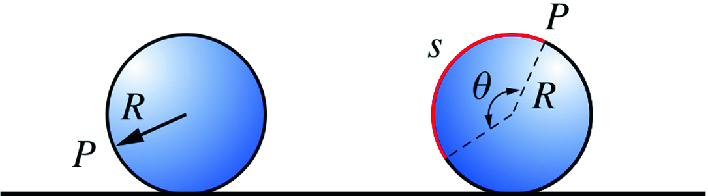
Figure 2:As the wheel rotates through an angle , its center of mass moves through a distance equal to the arc length s
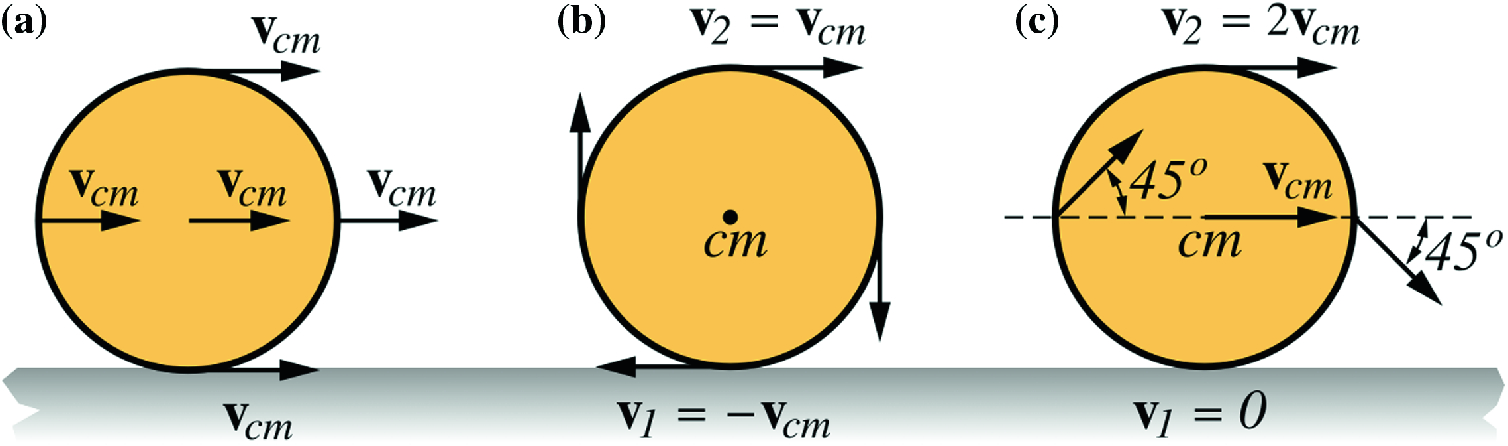
Figure 3:The combination of pure rotational and translational motions
Hence, the speed of the center of mass is
The acceleration of the center of mass is given by
The combination of pure rotational and translational motions is viewed in Fig. Figure 3. In the pure translational motion (see Fig. Figure 3 part a) every particle in the wheel moves with the velocity . In pure rotational motion (see Fig. Figure 3 part b), each particle moves with an angular speed about the center of mass axis and the linear speed of any particle at the rim is
The resulting motion of these two combined motions is shown in Fig. Figure 3 part , where the linear velocity of each particle is the vector sum of its linear velocity in pure translational motion and its linear velocity in pure rotational motion. Therefore, the instantaneous velocity of the point of contact is equal to zero and of a point at the top of the wheel is equal to twice the velocity of the center of mass . Note that Eq. (8) is valid only in the special case of rolling without slipping; in the general rolling motion this equation does not hold. The total kinetic energy of a rigid object rolling without slipping is therefore given by
Another way to view rolling without slipping is to consider the wheel to be in pure rotational motion about an instantaneous axis that passes through the point of contact (see Fig. Figure 4). In that case, the velocity of the point of contact is zero and the velocity of the center of mass is (since it is at a distance R from the axis of rotation) and the velocity of a point at the top is . Note that the angular velocity of the wheel is the same as its angular velocity if the axis of rotation is at the center of mass.
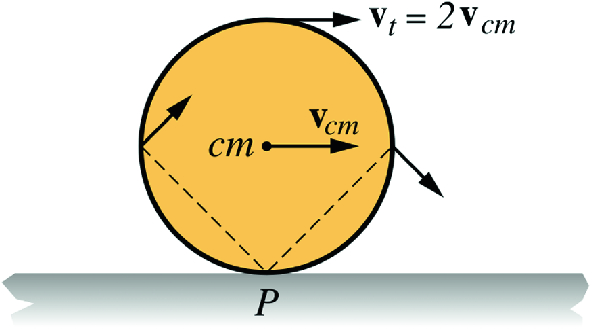
Figure 4:Another way to view rolling without slipping is to consider the wheel to be in pure rotational motion about an instantaneous axis that passes through the point of contact
For simplicity, only homogeneous symmetrical objects will be considered here such as hoops, cylinders, and spheres. When a rigid body rolls without slipping with a constant speed, there will be no frictional force acting on the body at the instantaneous point of contact. However, if the object is accelerating, then a statistical frictional force acts on it at the instantaneous point of contact producing a torque about the center (see Fig. Figure 5). This will cause the object to rotate about its center of mass. The direction of the statistical force opposes the tendency of the object to slide. For example, if a wheel is rolling down an incline, the direction of the frictional force will be opposing the downward motion.
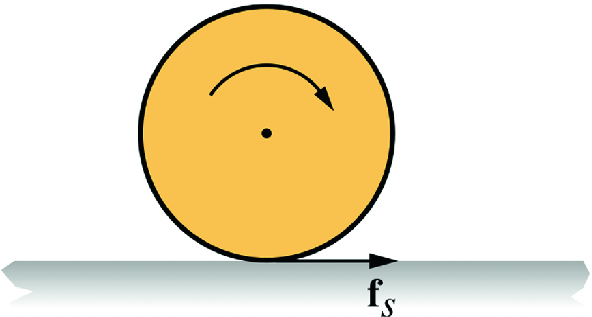
Figure 5:A statistical frictional force acts on it at the instantaneous point of contact producing a torque about the center
In most situations, the body and the surface are not perfectly rigid. As a result, the normal force would not be a single force; rather it would be a number of forces that are distributed over the area of contact (see Fig. Figure 6). Therefore, each normal force will exert an opposing torque since its line of action will not pass through the center of mass. Furthermore, as the object rolls over the surface, both the object and the surface undergo deformation resulting in a loss in the mechanical energy.
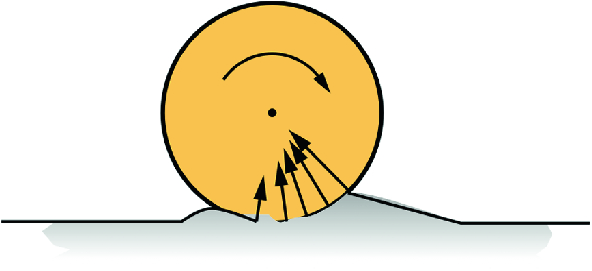
Figure 6:If the body and the surface are not perfectly, the normal force would not be a single force; rather it would be a number of forces that are distributed over the area of contact
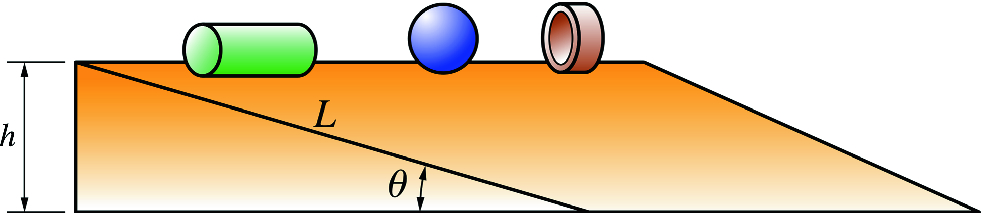
Figure 7:A uniform solid cylinder, sphere and hoop roll without slipping from rest at the top of an incline
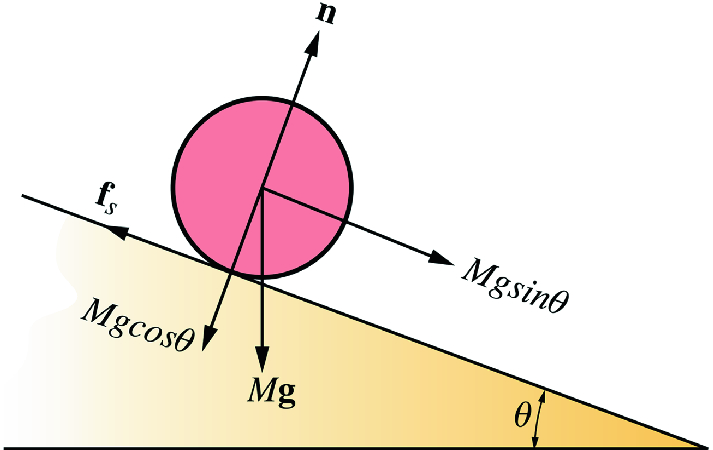
Figure 8:A marble ball of radius R and mass M rolls without slipping down the incline
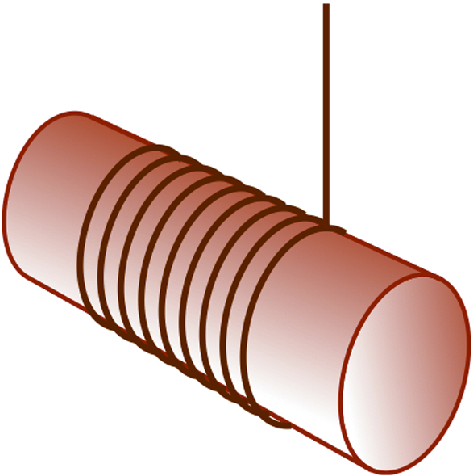
Figure 9:A string wrapped around a uniform solid cylinder of radius of R and mass of M
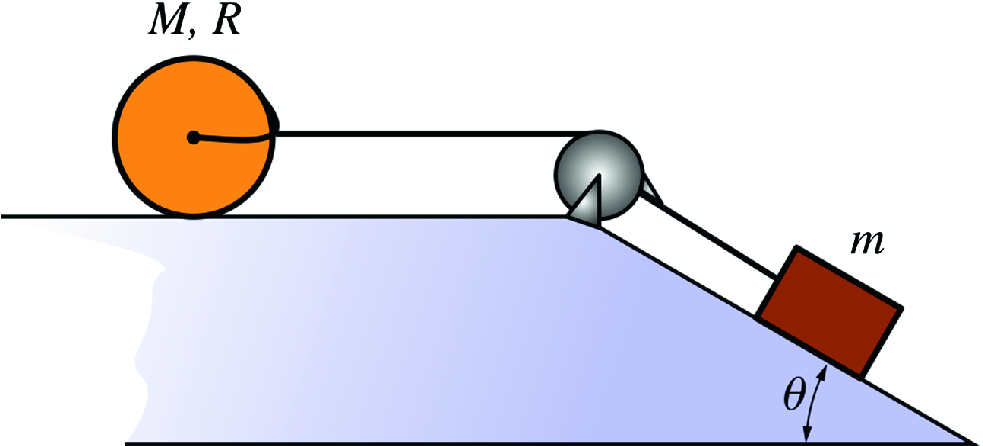
Figure 10:A block of mass m is attached to a light string that passes over a light pulley connected to a uniform solid sphere of radius R and mass M
8.3 Static Equilibrium
An extended object is said to be in equilibrium if two conditions are satisfied. First, the net external force acting on the object must be equal to zero. Second, the net external torque on the object about any origin must also be equal to zero. In other words, an object is in equilibrium if its total linear momentum and its total angular momentum (about any origin) are constants. Only the first condition is necessary if the object can be treated as a particle. Thus, the conditions of equilibrium may be written as
In terms of components, we may write
An object is said to be in static equilibrium if it is at rest (there isn’t any kind of motion with respect to our inertial frame of reference). Now consider the case in which all external forces acting on the object lie in the same plane (for example the x–y plane). Such forces are called coplanar forces. The net external torque due to these forces is then perpendicular to the x–y plane and parallel to the -axis. Equations (49) and (50) are, therefore, reduced to
Next, we will prove that if the object is in translational equilibrium where and the net external torque on the object is equal to zero about some origin, it is also equal to zero about any other origin. Note that the origin may be chosen anywhere inside or outside the object. Suppose that a number of forces are acting on a rigid object at different points (see Fig. Figure 11) and that the object is in translational equilibrium. The point of application of relative to is and of is and so on. The net external torque about is given by
The net external torque about (see Fig. Figure 12) is
Since we have
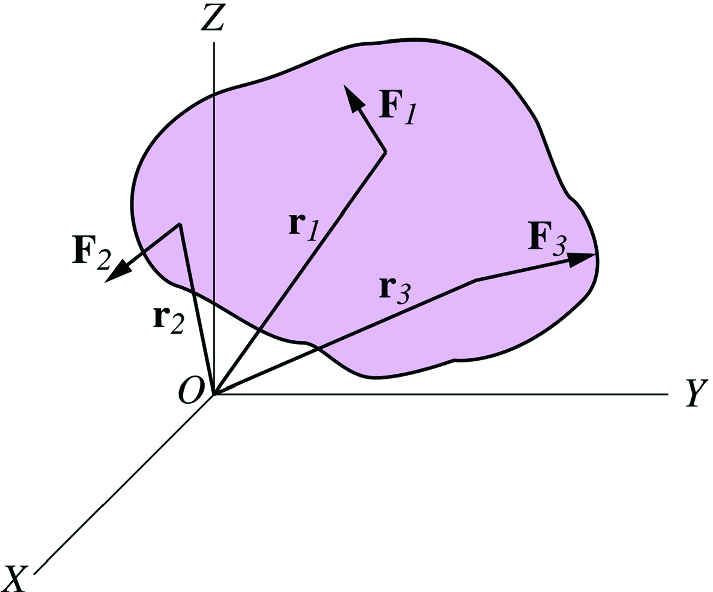
Figure 11:A number of forces act on a rigid object at different points
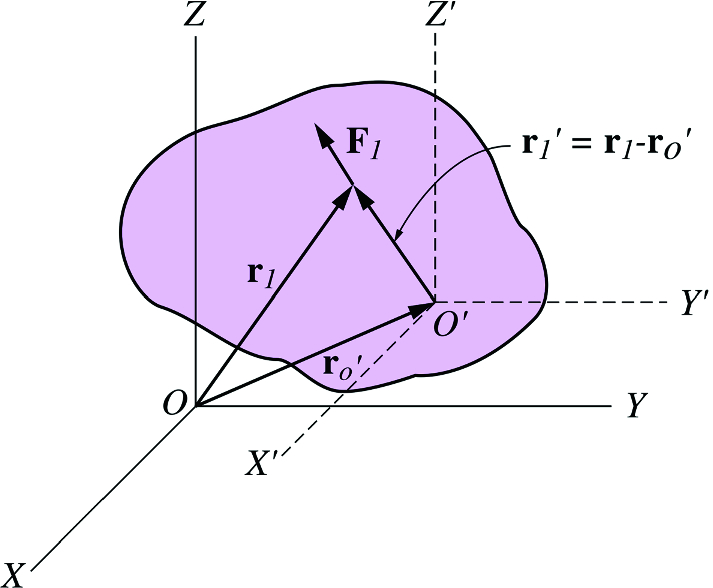
Figure 12:The net external torque on the object about
8.4 The Center of Gravity
The resultant gravitational force acting on an object is the resultant of the individual gravitational forces acting on different mass elements of the object (see Fig. Figure 13), i.e.,
This force can be replaced by a single force that is equal to the weight of the object (Mg) and that acts at a single point called the center of gravity Now consider an object that is near the earth’s surface where the force of gravity is assumed to be constant over that range. Equation (59) becomes
To locate the center of gravity, let us calculate the net torque acting on an object about an origin due to gravity This torque is the vector sum of the individual torques acting on different mass elements. That is,
Therefore, we conclude that if the gravitational field (g) is constant over the body, the center of gravity of the object coincides with its center of mass.
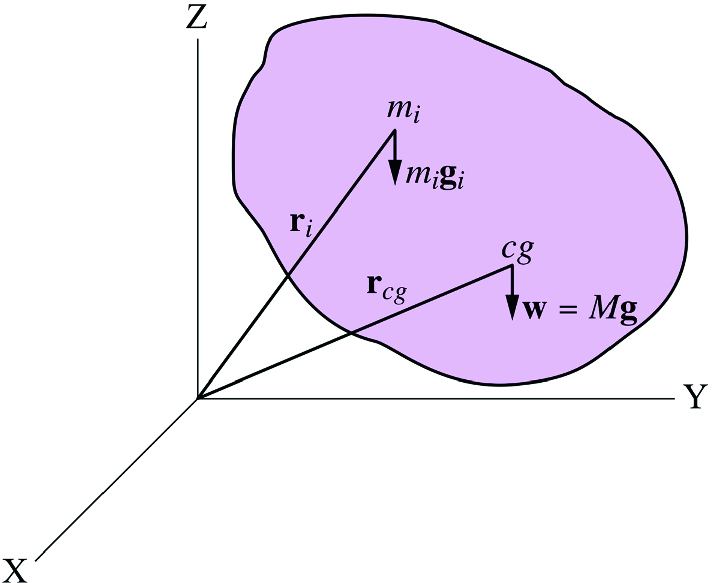
Figure 13:The resultant gravitational force acting on an object is the resultant of the individual gravitational forces acting on different mass elements of the object
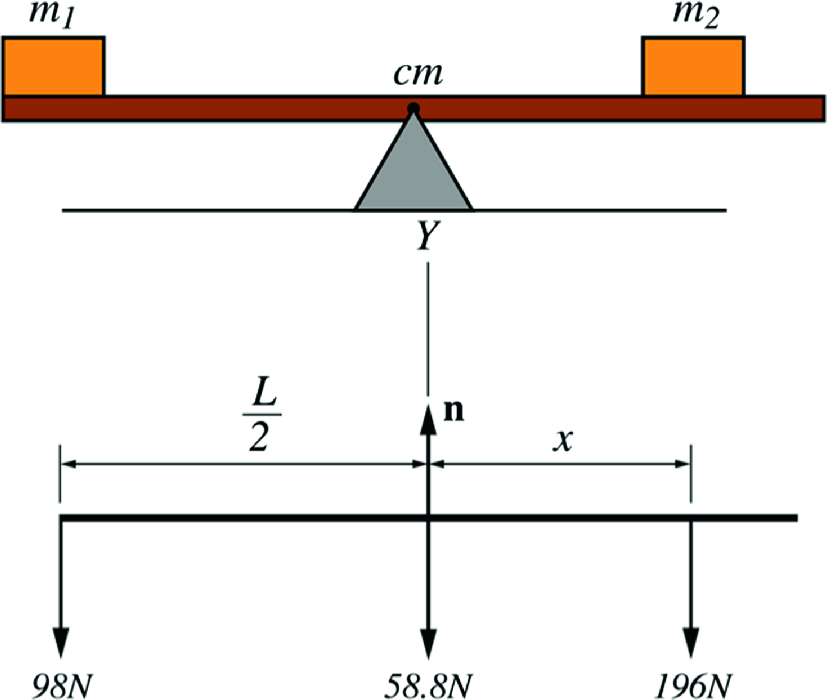
Figure 14:Two blocks supported by a uniform horizontal beam
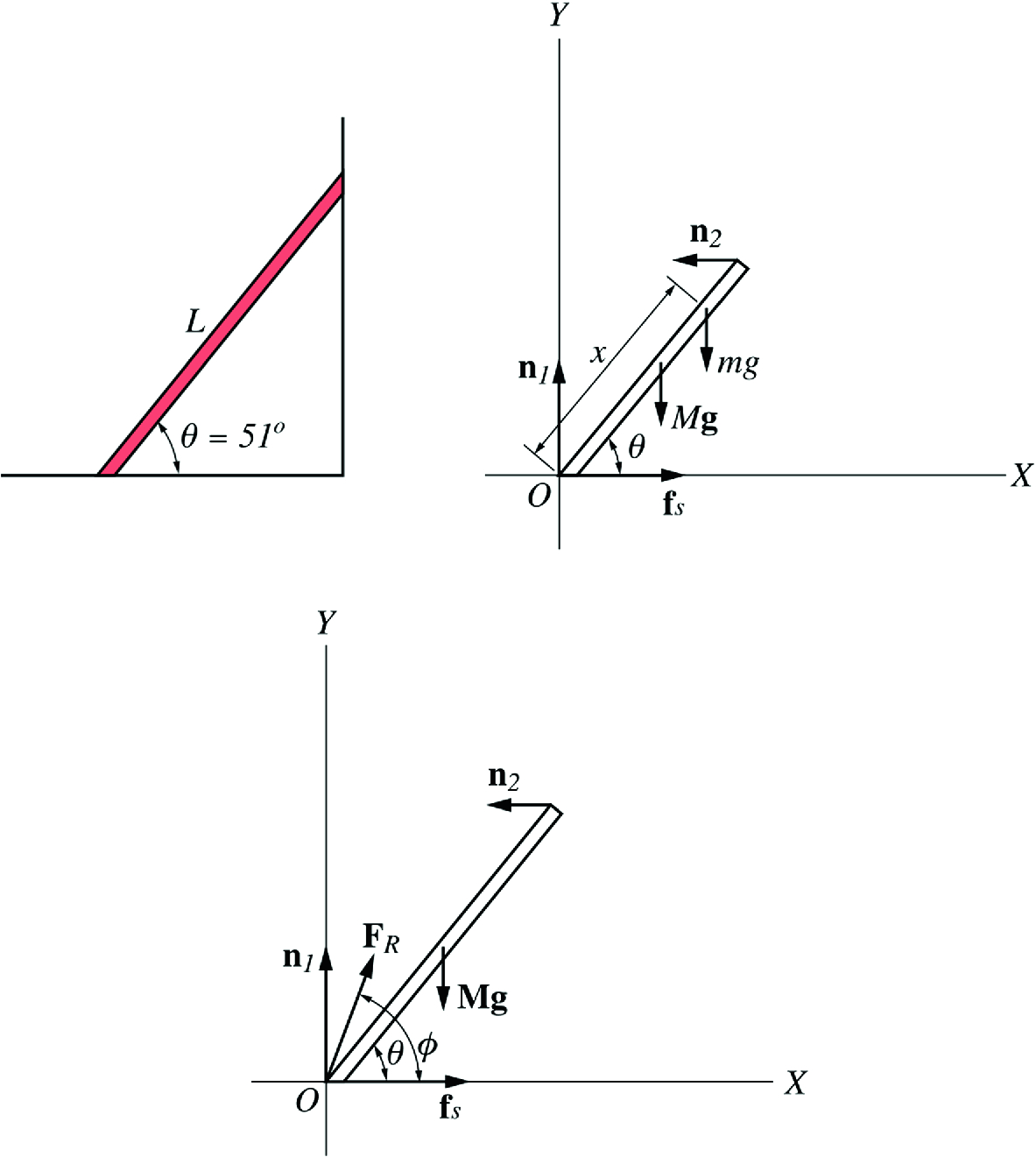
Figure 15:The free-body diagram of a ladder of length L and mass kg resting against a smooth vertical wall
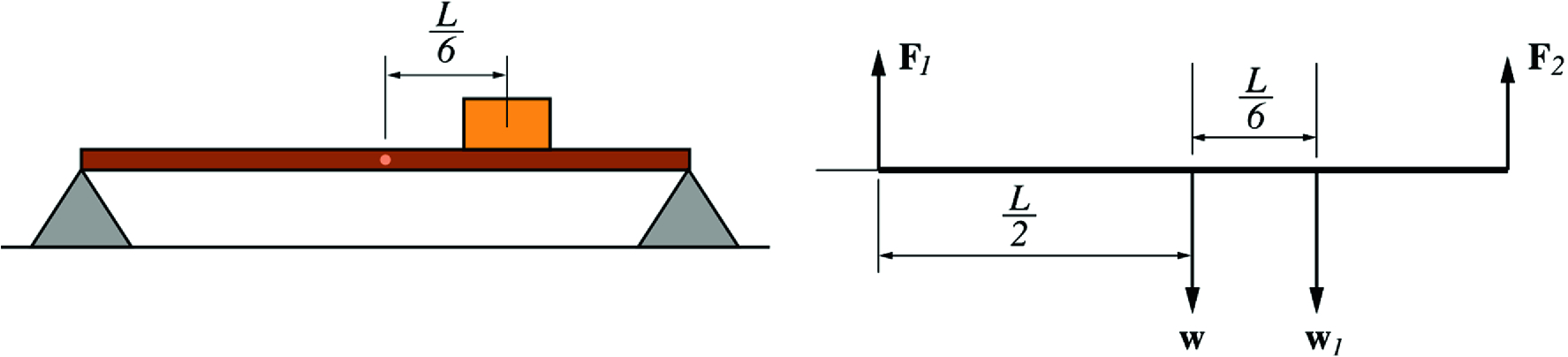
Figure 16:A uniform beam of weight w and length L balanced by two supports
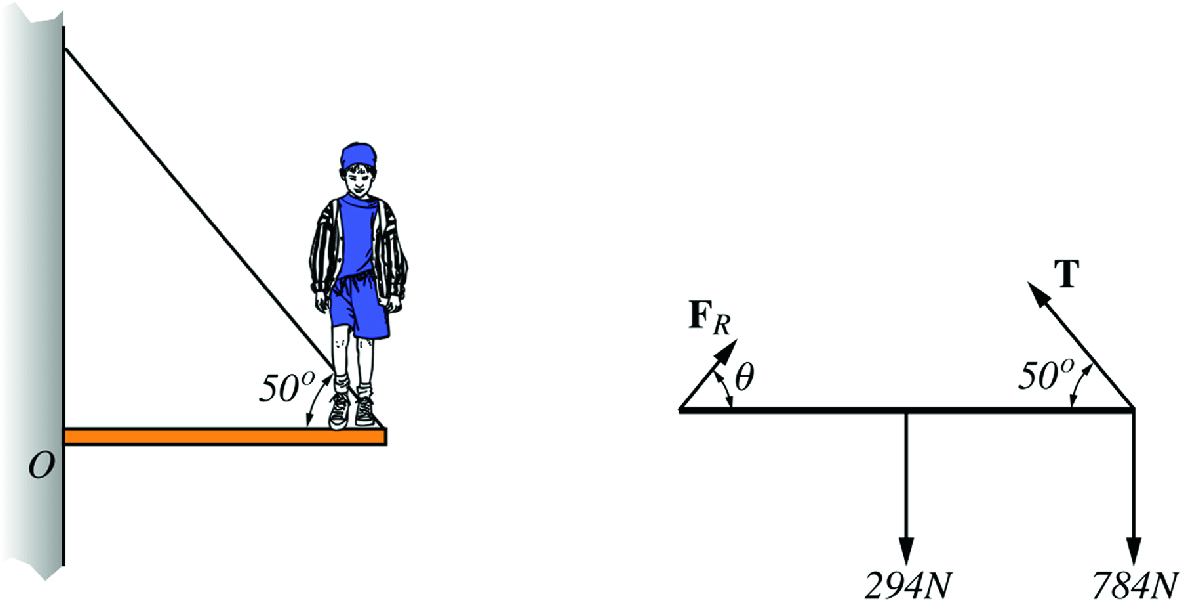
Figure 17:A man standing at the end of a uniform beam
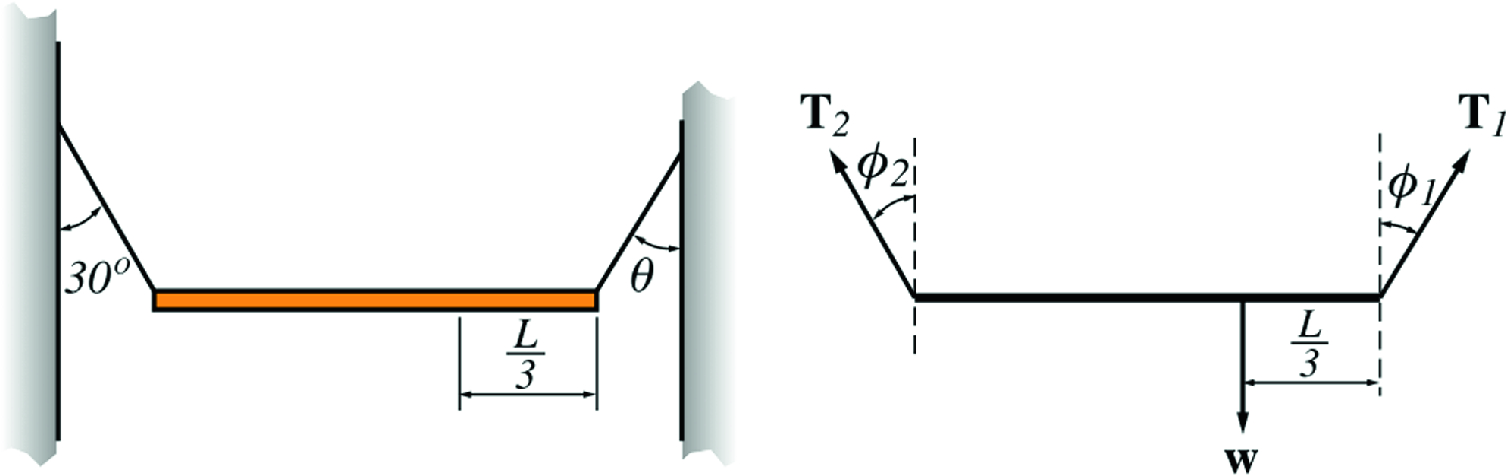
Figure 18:A uniform beam held by ropes in static equilibrium
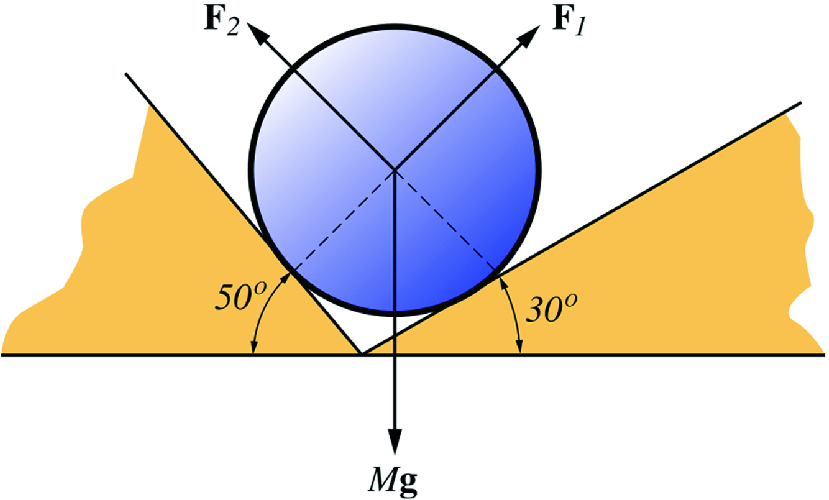
Figure 19:A solid sphere in static equilibrium inside a wedge
Problems
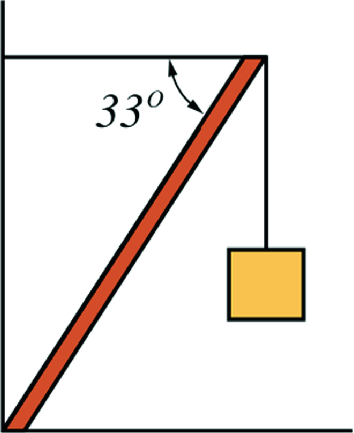
Figure 20:A block suspended by a cable attached to a uniform rod
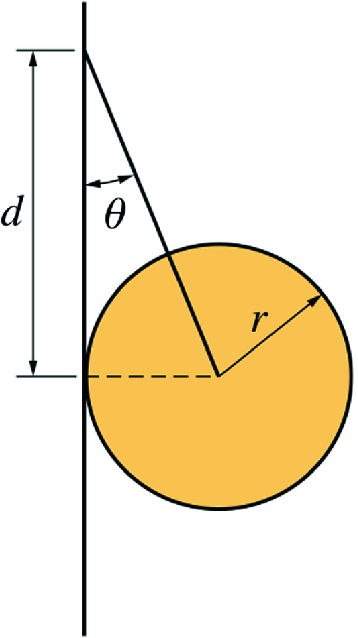
Figure 21:A uniform sphere suspended by a light string and leaning on a frictionless wall
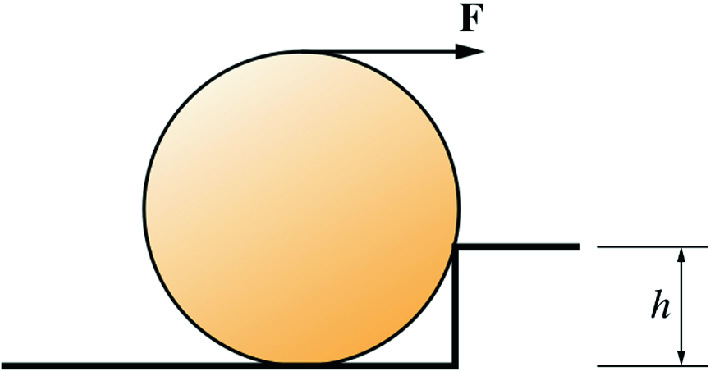
Figure 22:A wheel raised over a step
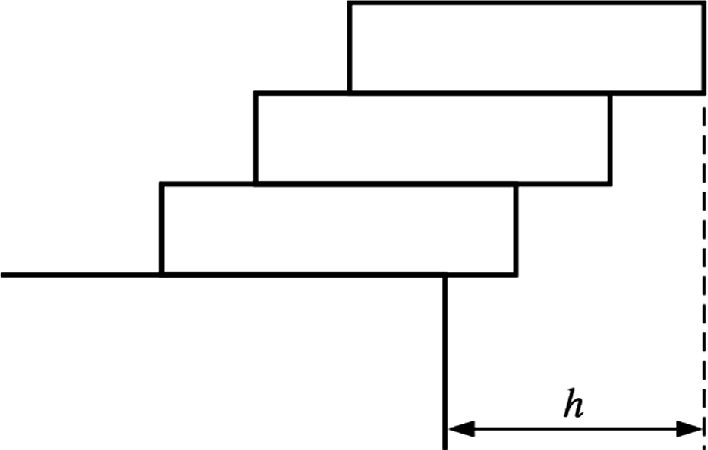
Figure 23:Three identical uniform blocks on top of each other