Glucose is one of the carbohydrates you will learn about in this chapter as we begin the study of biochemistry[1]---the chemistry of molecules found in living organisms. Later we will study the other three major types of macromolecules found in living organisms: lipids, proteins, and nucleic acids.
16.1 Carbohydrates
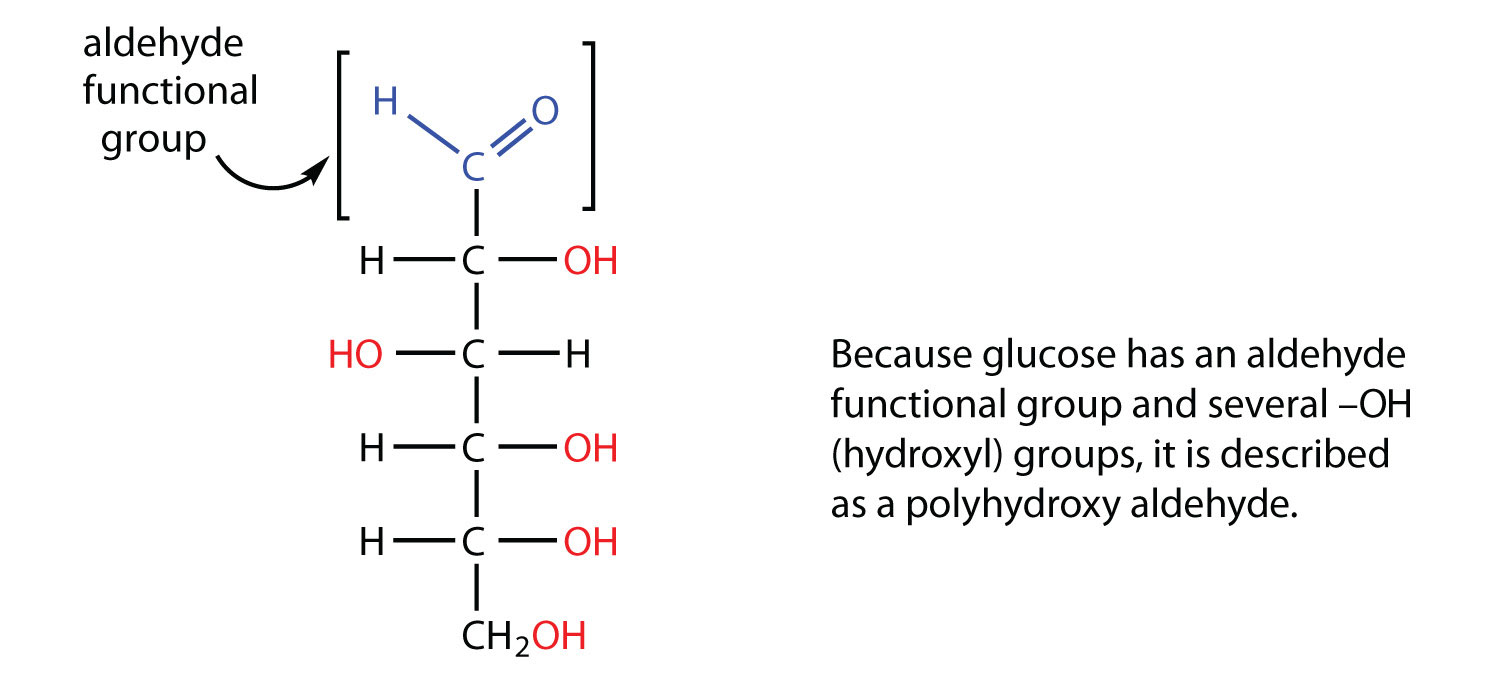
All carbohydrates[2] consist of carbon, hydrogen, and oxygen atoms and are polyhydroxy aldehydes or ketones or are compounds that can be broken down to form such compounds. Examples of carbohydrates include starch, fiber, the sweet-tasting compounds called sugars, and structural materials such as cellulose. The term carbohydrate had its origin in a misinterpretation of the molecular formulas of many of these substances. For example, because its formula is C6H12O6, glucose was once thought to be a “carbon hydrate” with the structure C6·6H2O.
Example 1
Which compounds would be classified as carbohydrates?




Solution
This is a carbohydrate because the molecule contains an aldehyde functional group with OH groups on the other two carbon atoms.
This is not a carbohydrate because the molecule does not contain an aldehyde or a ketone functional group.
This is a carbohydrate because the molecule contains a ketone functional group with OH groups on the other two carbon atoms.
This is not a carbohydrate; although it has a ketone functional group, one of the other carbon atoms does not have an OH group attached.
Skill-Building Exercise
Which compounds would be classified as carbohydrates?




Green plants are capable of synthesizing glucose (C6H12O6) from carbon dioxide (CO2) and water (H2O) by using solar energy in the process known as photosynthesis[3]:
6CO2 + 6H2O + 686 kcal → C6H12O6 + 6O2
(The 686 kcal come from solar energy.) Plants can use the glucose for energy or convert it to larger carbohydrates, such as starch or cellulose. Starch provides energy for later use, perhaps as nourishment for a plant’s seeds, while cellulose is the structural material of plants. We can gather and eat the parts of a plant that store energy---seeds, roots, tubers, and fruits---and use some of that energy ourselves. Carbohydrates are also needed for the synthesis of nucleic acids and many proteins and lipids.
Animals, including humans, cannot synthesize carbohydrates from carbon dioxide and water and are therefore dependent on the plant kingdom to provide these vital compounds. We use carbohydrates not only for food (about 60%--65% by mass of the average diet) but also for clothing (cotton, linen, rayon), shelter (wood), fuel (wood), and paper (wood).
The simplest carbohydrates---those that cannot be hydrolyzed to produce even smaller carbohydrates---are called monosaccharides[4]. Two or more monosaccharides can link together to form chains that contain from two to several hundred or thousand monosaccharide units. Prefixes are used to indicate the number of such units in the chains. Disaccharide[5] molecules have two monosaccharide units, trisaccharide molecules have three units, and so on. Chains with many monosaccharide units joined together are called polysaccharides[6]. All these so-called higher saccharides can be hydrolyzed back to their constituent monosaccharides.
Concept Review Exercises
Why is photosynthesis important?
Identify the differences among monosaccharides, disaccharides, and polysaccharides.
Answers
Photosynthesis is the process by which solar energy is used to reduce carbon dioxide to carbohydrates, which are needed for energy by plants and other living organisms that eat plants.
A monosaccharide is the simplest carbohydrate and cannot be hydrolyzed to produce a smaller carbohydrate; a disaccharide is composed of two monosaccharide units; and a polysaccharide contains many saccharide units.
Exercises
When an aqueous solution of trehalose is heated, two molecules of glucose are produced for each molecule of trehalose. Is trehalose a monosaccharide, a disaccharide, or a polysaccharide?
When an aqueous solution of arabinose is heated, no other molecules are produced. Is arabinose a monosaccharide, a disaccharide, or a polysaccharide?
Answer
Trehalose is a disaccharide because it is hydrolyzed into two molecules of glucose (a monosaccharide).
16.2 Classes of Monosaccharides
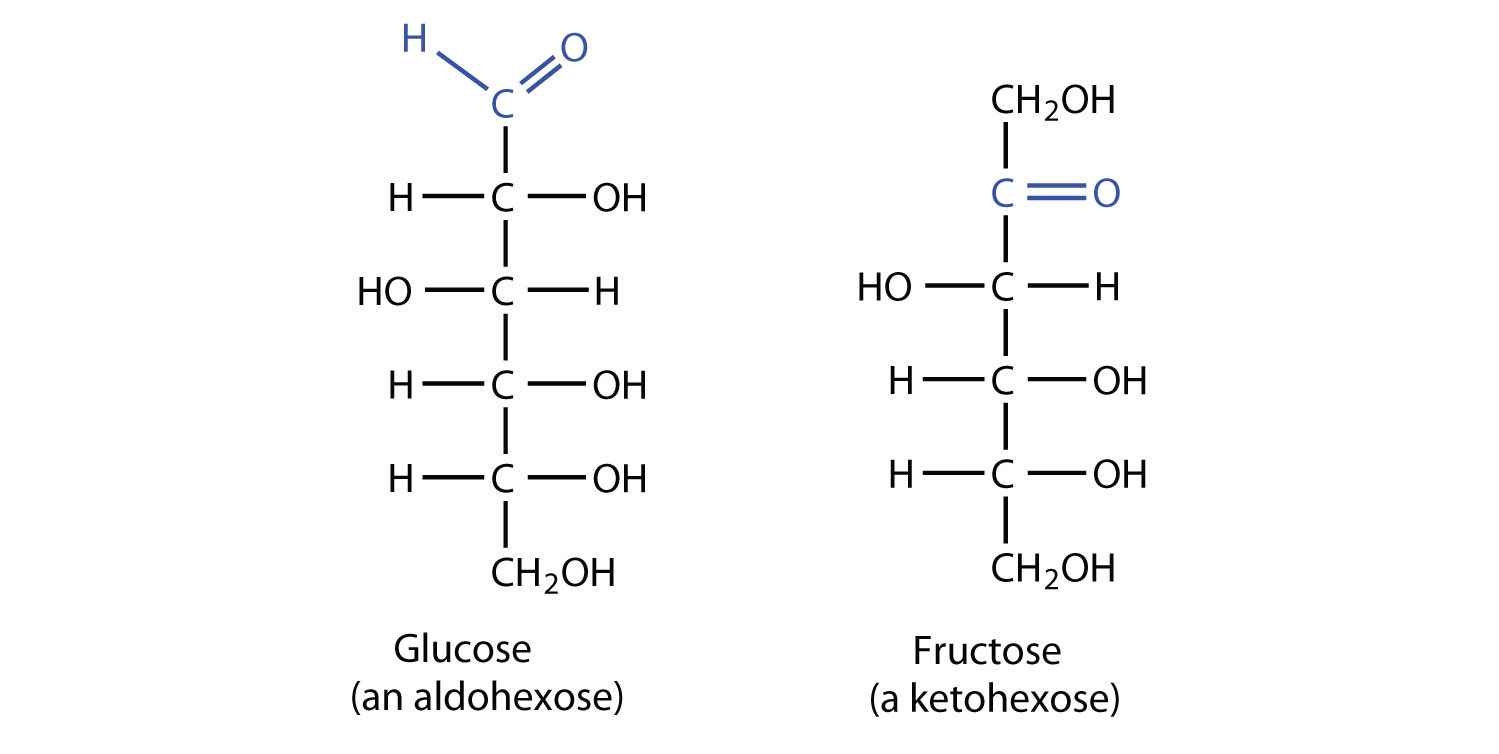
The naturally occurring monosaccharides contain three to seven carbon atoms per molecule. Monosaccharides of specific sizes may be indicated by names composed of a stem denoting the number of carbon atoms and the suffix -ose. For example, the terms triose, tetrose, pentose, and hexose signify monosaccharides with, respectively, three, four, five, and six carbon atoms. Monosaccharides are also classified as aldoses or ketoses. Those monosaccharides that contain an aldehyde functional group are called aldoses[7]; those containing a ketone functional group on the second carbon atom are ketoses[8]. Combining these classification systems gives general names that indicate both the type of carbonyl group and the number of carbon atoms in a molecule. Thus, monosaccharides are described as aldotetroses, aldopentoses, ketopentoses, ketoheptoses, and so forth. Glucose and fructose are specific examples of an aldohexose and a ketohexose, respectively.
Example 2
Draw an example of each type of compound.
a ketopentose
an aldotetrose
Solution
The structure must have five carbon atoms with the second carbon atom being a carbonyl group and the other four carbon atoms each having an OH group attached. Several structures are possible, but one example is shown.

The structure must have four carbon atoms with the first carbon atom part of the aldehyde functional group. The other three carbon atoms each have an OH group attached. Several structures are possible, but one example is shown.

Skill-Building Exercise
Draw an example of each type of compound.
an aldohexose
a ketotetrose
The simplest sugars are the trioses. The possible trioses are shown in part (a) of Figure 16.2 "Structures of the Trioses"; glyceraldehyde is an aldotriose, while dihydroxyacetone is a ketotriose. Notice that two structures are shown for glyceraldehyde. These structures are stereoisomers[9], isomers having the same structural formula but differing in the arrangement of atoms or groups of atoms in three-dimensional space. If you make models of the two stereoisomers of glyceraldehyde, you will find that you cannot place one model on top of the other and have each functional group point in the same direction. However, if you place one of the models in front of a mirror, the image in the mirror will be identical to the second stereoisomer in part (b) of Figure 16.2 "Structures of the Trioses". Molecules that are nonsuperimposable (nonidentical) mirror images of each other are a type of stereoisomer called enantiomers[10] (Greek enantios, meaning “opposite”).
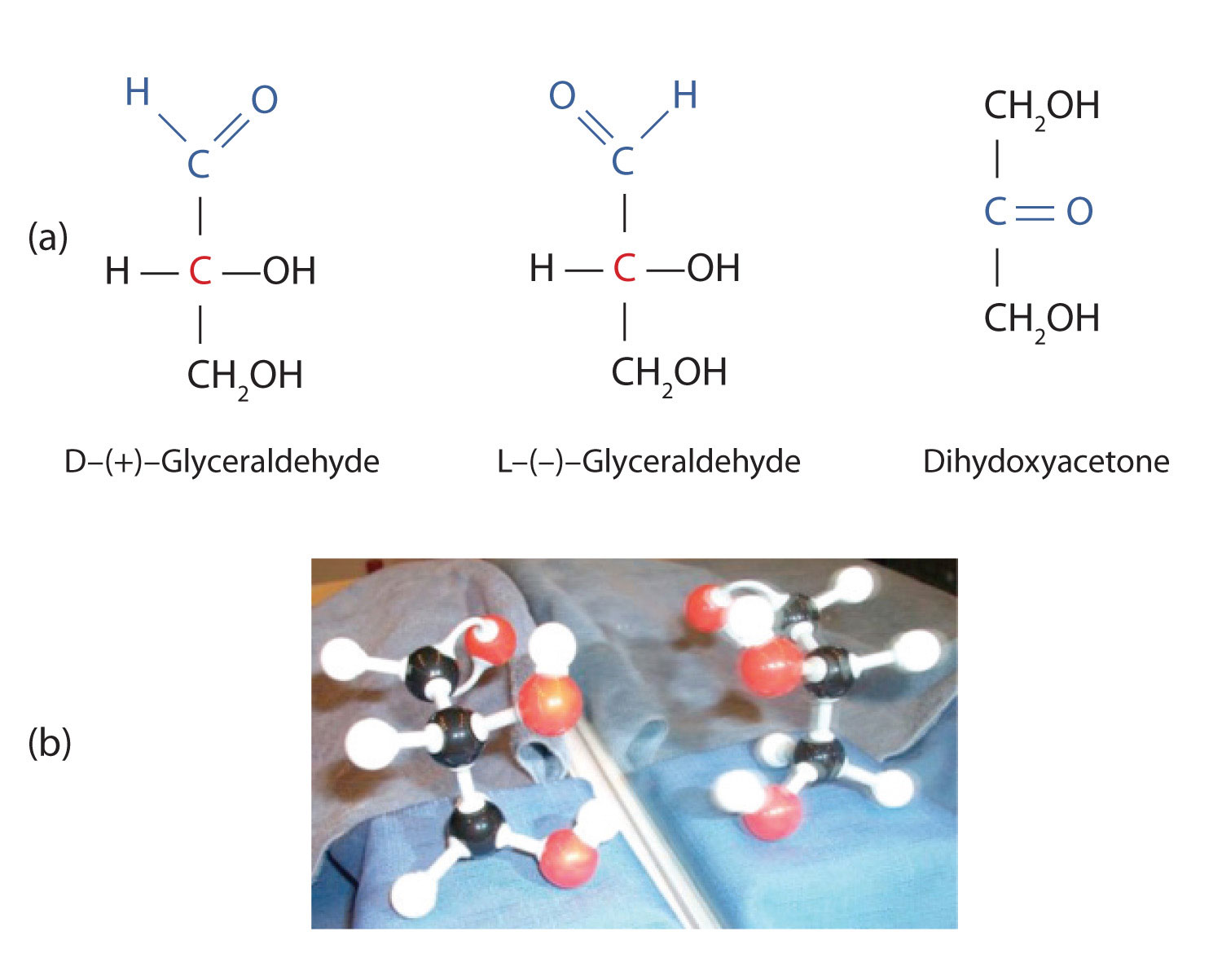
Figure 16.2 Structures of the Trioses
(a) D- and L-glyceraldehyde are mirror images of each other and represent a pair of enantiomers. (b) A ball-and-stick model of D-glyceraldehyde is reflected in a mirror. Note that the reflection has the same structure as L-glyceraldehyde.
A key characteristic of enantiomers is that they have a carbon atom to which four different groups are attached. Note, for example, the four different groups attached to the central carbon atom of glyceraldehyde (part (a) of Figure 16.2 "Structures of the Trioses"). A carbon atom that has four different groups attached is a chiral carbon[11]. If a molecule contains one or more chiral carbons, it is likely to exist as two or more stereoisomers. Dihydroxyacetone does not contain a chiral carbon and thus does not exist as a pair of stereoisomers. Glyceraldehyde, however, has a chiral carbon and exists as a pair of enantiomers. Except for the direction in which each enantiomer rotates plane-polarized light, these two molecules have identical physical properties. One enantiomer has a specific rotation of +8.7°, while the other has a specific rotation of −8.7°.
H. Emil Fischer, a German chemist, developed the convention commonly used for writing two-dimensional representations of the monosaccharides, such as those in part (a) of Figure 16.2 "Structures of the Trioses". In these structural formulas, the aldehyde group is written at the top, and the hydrogen atoms and OH groups that are attached to each chiral carbon are written to the right or left. (If the monosaccharide is a ketose, the ketone functional group is the second carbon atom.) Vertical lines represent bonds pointing away from you, while horizontal lines represent bonds coming toward you. The formulas of chiral molecules represented in this manner are referred to as Fischer projections.
The two enantiomers of glyceraldehyde are especially important because monosaccharides with more than three carbon atoms can be considered as being derived from them. Thus, D- and L-glyceraldehyde provide reference points for designating and drawing all other monosaccharides. Sugars whose Fischer projections terminate in the same configuration as D-glyceraldehyde are designated as D sugars[12]; those derived from L-glyceraldehyde are designated as L sugars[13].
Concept Review Exercises
What is a chiral carbon?
Describe how enantiomers differ.
Answers
A chiral carbon is a carbon atom with four different groups attached to it.
Enantiomers are mirror images of each other; they differ in the arrangements of atoms around a chiral carbon.
Exercises
Identify each sugar as an aldose or a ketose and then as a triose, tetrose, pentose, or hexose.
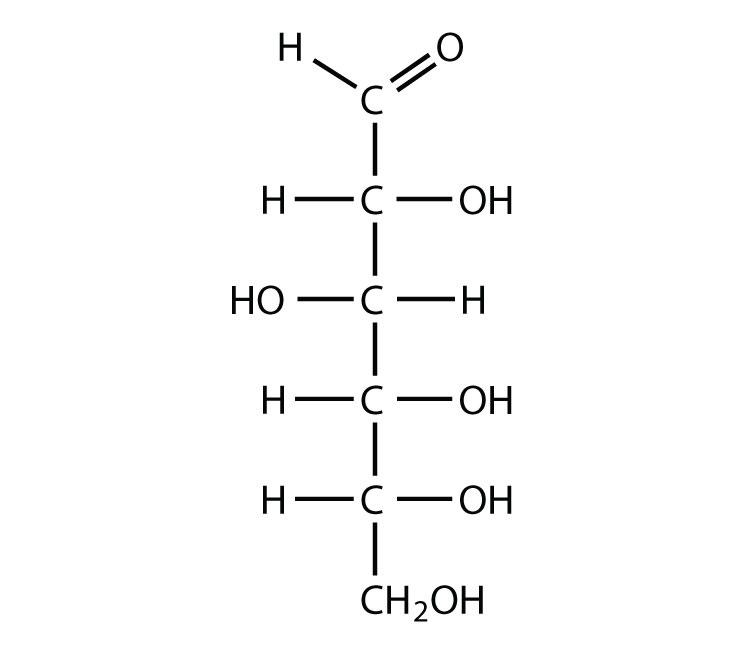
D-glucose
L-ribulose
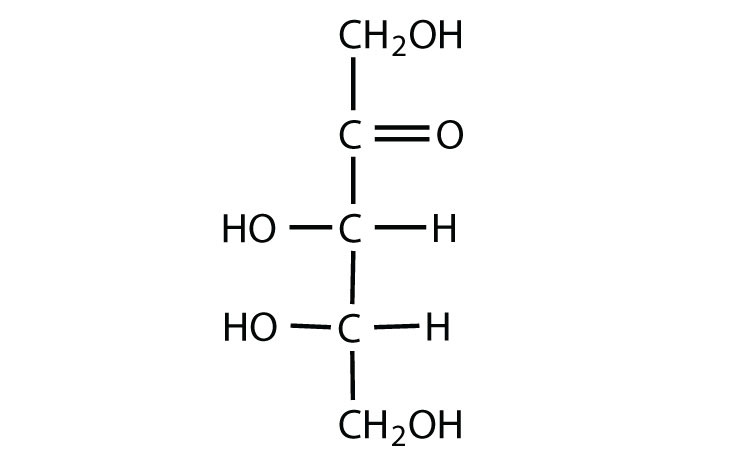
D-glyceraldehyde
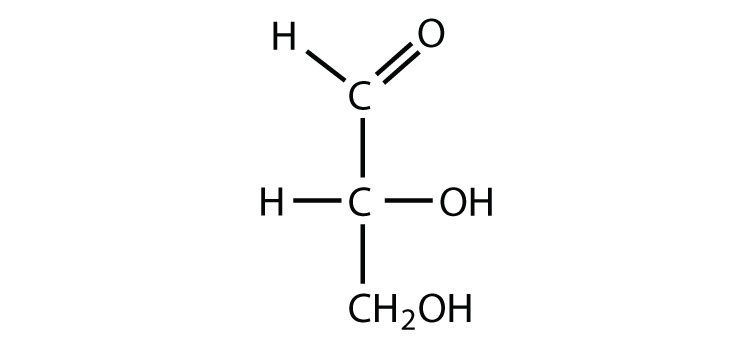
Identify each sugar as an aldose or a ketose and then as a triose, tetrose, pentose, or hexose.
dihydroxyacetone

D-ribose
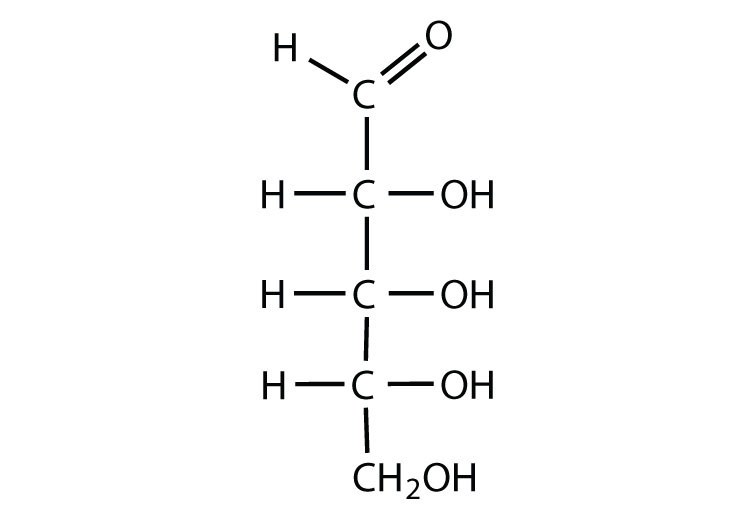
D-galactose
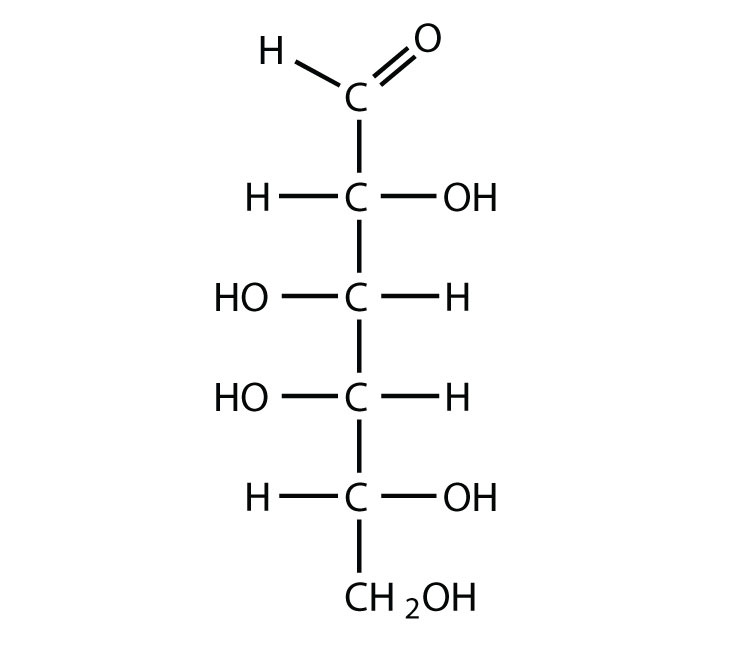
Identify each sugar as an aldose or a ketose and then as a D sugar or an L sugar.
Identify each sugar as an aldose or a ketose and then as a D sugar or an L sugar.
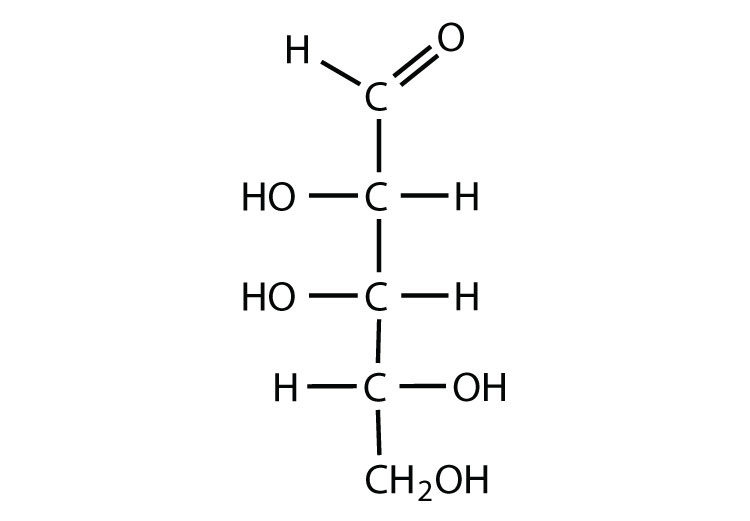
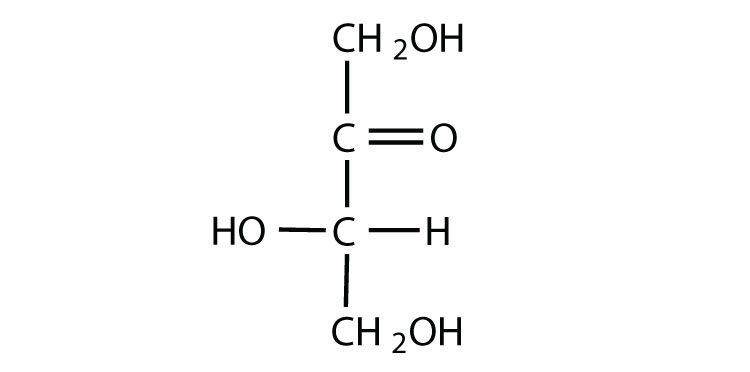
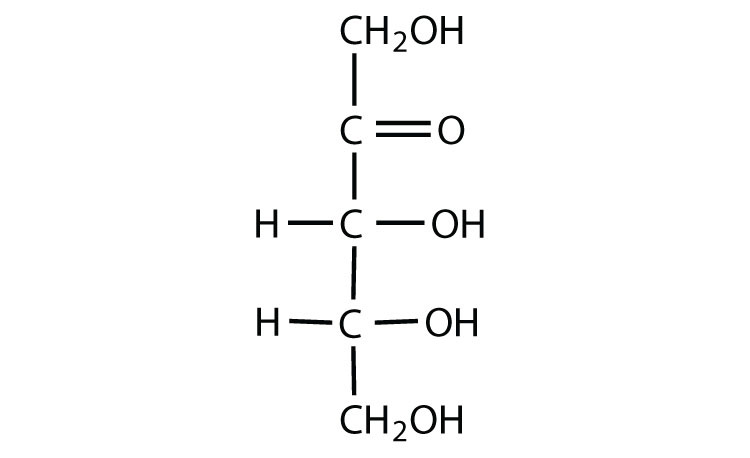
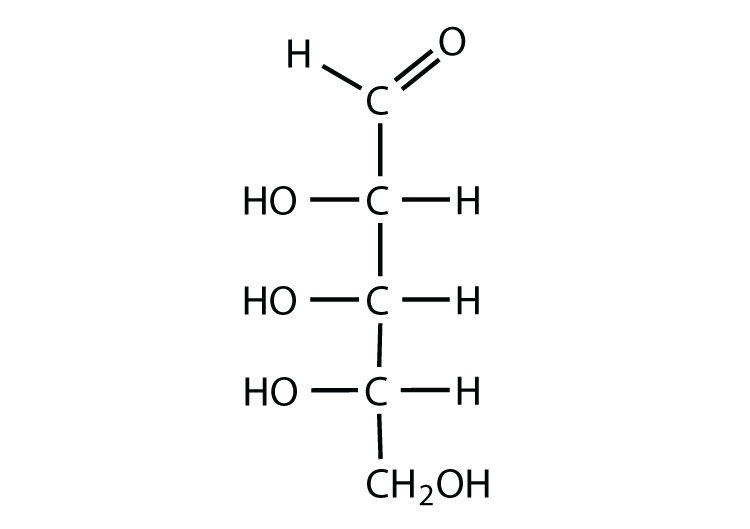
Answers
aldose; hexose
ketose; pentose
aldose; triose
aldose; D sugar
ketose; L sugar
16.3 Important Hexoses
Although a variety of monosaccharides are found in living organisms, three hexoses are particularly abundant: D-glucose, D-galactose, and D-fructose (Figure 16.4 "Structures of Three Important Hexoses"). Glucose and galactose are both aldohexoses, while fructose is a ketohexose.
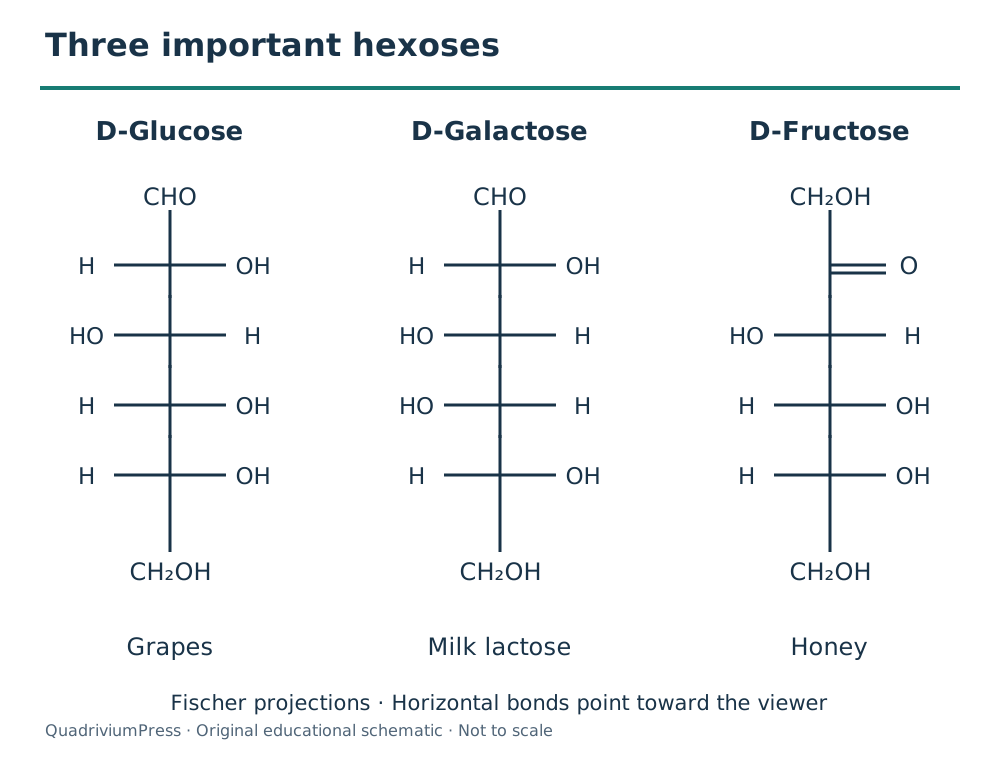
Figure 16.4 Structures of Three Important Hexoses
Fischer projections of D-glucose, D-galactose, and D-fructose show the different positions of carbonyl and hydroxyl groups. Food-source examples are grapes, milk lactose (a source of galactose after digestion), and honey.
Credit: QuadriviumPress; CC BY-NC-SA 3.0. Source.
Glucose
D-Glucose, generally referred to as simply glucose, is the most abundant sugar found in nature; most of the carbohydrates we eat are eventually converted to it in a series of biochemical reactions that produce energy for our cells. It is also known by three other names: dextrose, from the fact that it rotates plane-polarized light in a clockwise (dextrorotatory) direction; corn sugar because in the United States cornstarch is used in the commercial process that produces glucose from the hydrolysis of starch; and blood sugar because it is the carbohydrate found in the circulatory system of animals. Normal blood sugar values range from 70 to 105 mg glucose/dL plasma, and normal urine may contain anywhere from a trace to 20 mg glucose/dL urine.
The Fischer projection of D-glucose is given in Figure 16.5 "Cyclization of D-Glucose". Glucose is a D sugar because the OH group on the fifth carbon atom (the chiral center farthest from the carbonyl group) is on the right. In fact, all the OH groups except the one on the third carbon atom are to the right.
Galactose
D-Galactose does not occur in nature in the uncombined state. It is released when lactose, a disaccharide found in milk, is hydrolyzed. The galactose needed by the human body for the synthesis of lactose is obtained by the metabolic conversion of D-glucose to D-galactose. Galactose is also an important constituent of the glycolipids that occur in the brain and the myelin sheath of nerve cells. (For more information about glycolipids, see Chapter 17 "Lipids", Section 17.3 "Membranes and Membrane Lipids".) For this reason it is also known as brain sugar. The structure of D-galactose is shown in Figure 16.4 "Structures of Three Important Hexoses". Notice that the configuration differs from that of glucose only at the fourth carbon atom.
Fructose
D-Fructose, also shown in Figure 16.4 "Structures of Three Important Hexoses", is the most abundant ketohexose. Note that from the third through the sixth carbon atoms, its structure is the same as that of glucose. It occurs, along with glucose and sucrose, in honey (which is 40% fructose) and sweet fruits. Fructose (from the Latin fructus, meaning “fruit”) is also referred to as levulose because it has a specific rotation that is strongly levorotatory (−92.4°). It is the sweetest sugar, being 1.7 times sweeter than sucrose, although many nonsugars are several hundred or several thousand times as sweet (Table 16.1 "The Relative Sweetness of Some Compounds (Sucrose = 100)").
Table 16.1 The Relative Sweetness of Some Compounds (Sucrose = 100)
Compound | Relative Sweetness |
|---|---|
lactose | 16 |
maltose | 32 |
glucose | 74 |
sucrose | 100 |
fructose | 173 |
aspartame | 18,000 |
acesulfame K | 20,000 |
saccharin | 30,000 |
sucralose | 60,000 |
Concept Review Exercises
Describe the similarities and differences in the structures of D-glucose and D-galactose.
Describe similarities and differences in the structures of D-glucose and D-fructose.
Answers
Both monosaccharides are aldohexoses. The two monosaccharides differ in the configuration around the fourth carbon atom.
Both monosaccharides are hexoses. D-glucose is an aldohexose, while D-fructose is a ketohexose.
Exercises
Identify each sugar by its common chemical name.
blood sugar
levulose
Identify each sugar by its common chemical name.
dextrose
brain sugar
Identify each sugar as an aldohexose or a ketohexose.
glucose
galactose
fructose
What hexose would you expect to be most abundant in each food?
honey
milk
cornstarch
Answers
D-glucose
D-fructose
aldohexose
aldohexose
ketohexose
16.4 Cyclic Structures of Monosaccharides
So far we have represented monosaccharides as linear molecules, but many of them also adopt cyclic structures. This conversion occurs because of the ability of aldehydes and ketones to react with alcohols:
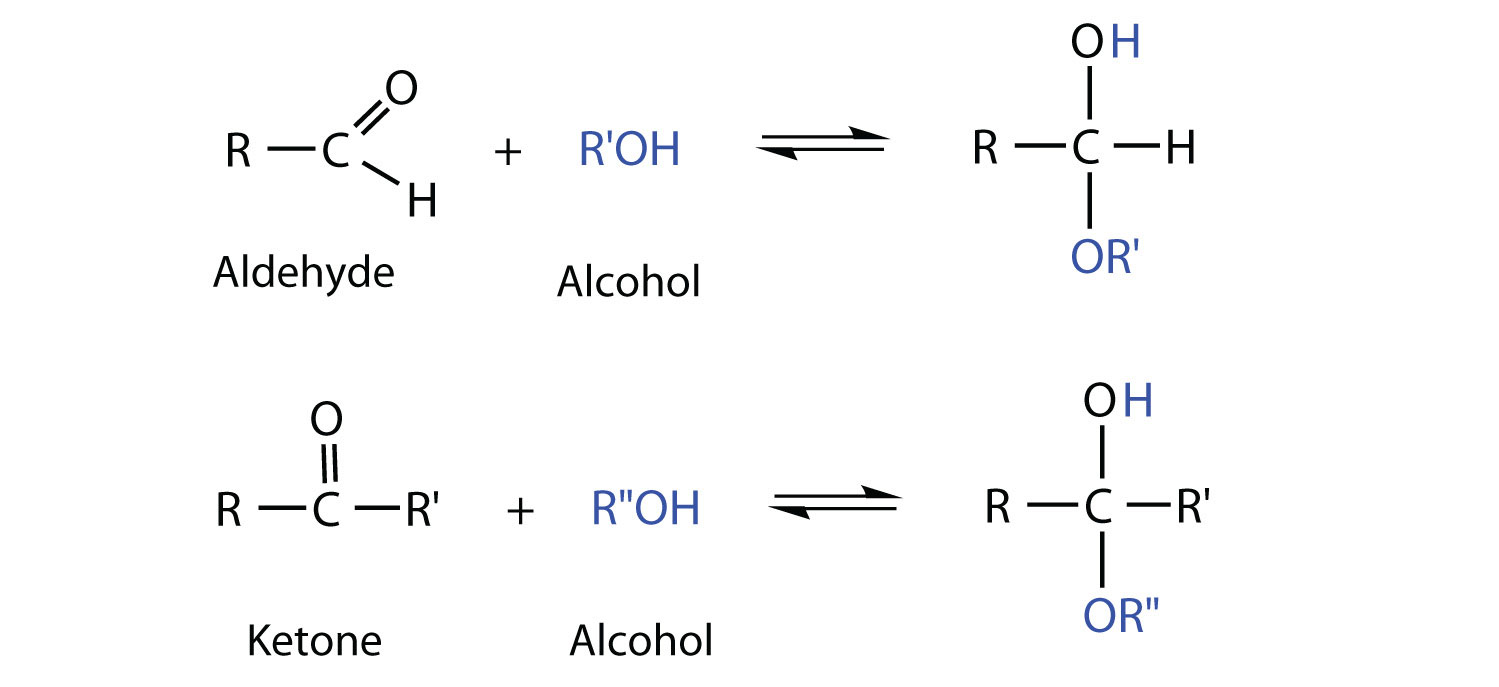
In some cases, OH and carbonyl groups on the same molecule are able to react with one another in an intramolecular reaction. Thus, monosaccharides larger than tetroses exist mainly as cyclic compounds (Figure 16.5 "Cyclization of D-Glucose"). You might wonder why the aldehyde reacts with the OH group on the fifth carbon atom rather than the OH group on the second carbon atom next to it. Recall from Chapter 12 "Organic Chemistry: Alkanes and Halogenated Hydrocarbons", Section 12.9 "Cycloalkanes", that cyclic alkanes containing five or six carbon atoms in the ring are the most stable. The same is true for monosaccharides that form cyclic structures: rings consisting of five or six carbon atoms are the most stable.
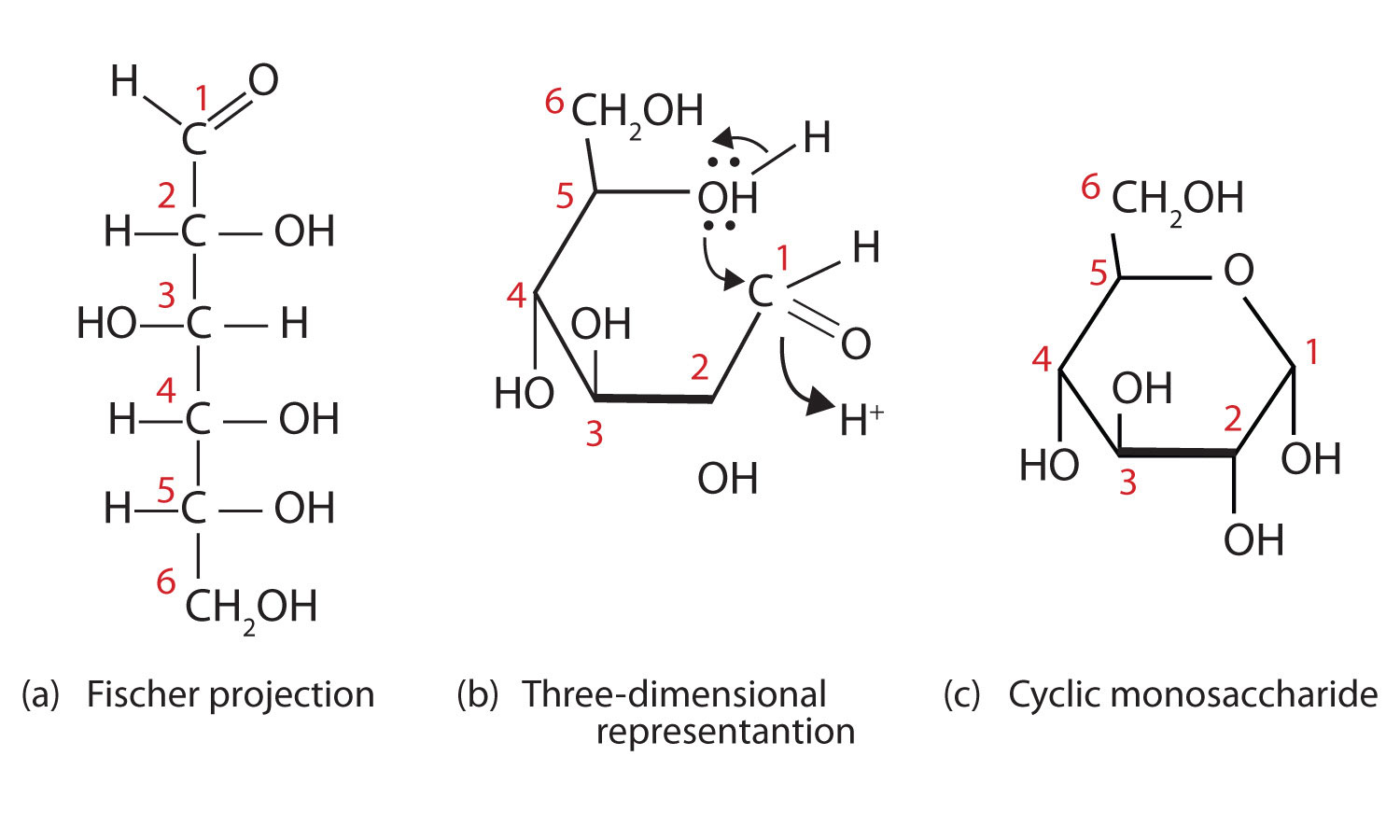
Figure 16.5 Cyclization of D-Glucose
D-Glucose can be represented with a Fischer projection (a) or three dimensionally (b). By reacting the OH group on the fifth carbon atom with the aldehyde group, the cyclic monosaccharide (c) is produced.
When a straight-chain monosaccharide, such as any of the structures shown in Figure 16.4 "Structures of Three Important Hexoses", forms a cyclic structure, the carbonyl oxygen atom may be pushed either up or down, giving rise to two stereoisomers, as shown in Figure 16.6 "Monosaccharides". The structure shown on the left side of Figure 16.6 "Monosaccharides", with the OH group on the first carbon atom projected downward, represents what is called the alpha (α) form. The structure on the right side, with the OH group on the first carbon atom pointed upward, is the beta (β) form. These two stereoisomers of a cyclic monosaccharide are known as anomers[14]; they differ in structure around the anomeric carbon[15]---that is, the carbon atom that was the carbonyl carbon atom in the straight-chain form.
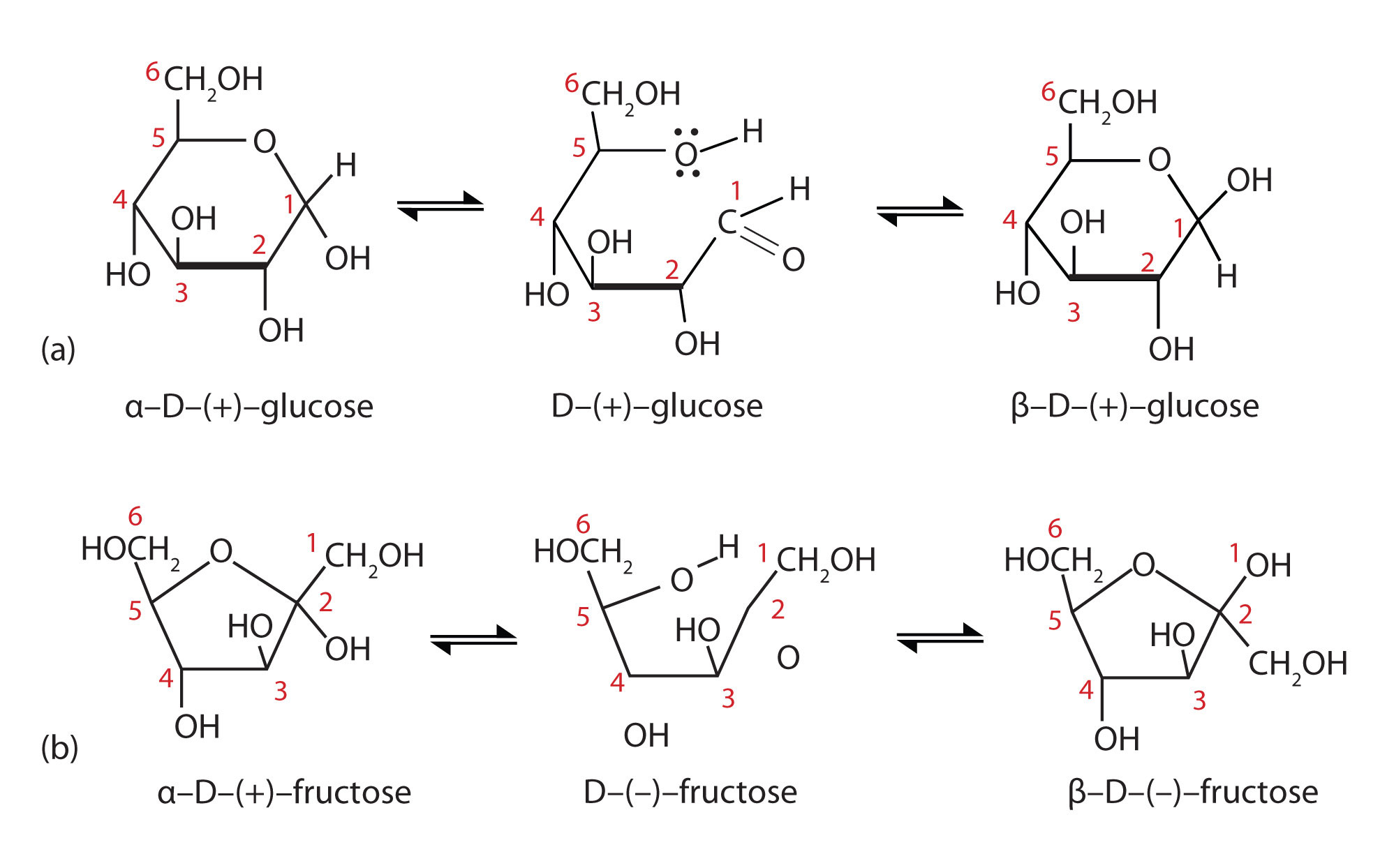
Figure 16.6 Monosaccharides
In an aqueous solution, monosaccharides exist as an equilibrium mixture of three forms. The interconversion between the forms is known as mutarotation, which is shown for D-glucose (a) and D-fructose (b).
It is possible to obtain a sample of crystalline glucose in which all the molecules have the α structure or all have the β structure. The α form melts at 146°C and has a specific rotation of +112°, while the β form melts at 150°C and has a specific rotation of +18.7°. When the sample is dissolved in water, however, a mixture is soon produced containing both anomers as well as the straight-chain form, in dynamic equilibrium (part (a) of Figure 16.6 "Monosaccharides"). You can start with a pure crystalline sample of glucose consisting entirely of either anomer, but as soon as the molecules dissolve in water, they open to form the carbonyl group and then reclose to form either the α or the β anomer. The opening and closing repeats continuously in an ongoing interconversion between anomeric forms and is referred to as mutarotation[16] (Latin mutare, meaning “to change”). At equilibrium, the mixture consists of about 36% α-D-glucose, 64% β-D-glucose, and less than 0.02% of the open-chain aldehyde form. The observed rotation of this solution is +52.7°.
Even though only a small percentage of the molecules are in the open-chain aldehyde form at any time, the solution will nevertheless exhibit the characteristic reactions of an aldehyde. As the small amount of free aldehyde is used up in a reaction, there is a shift in the equilibrium to yield more aldehyde. Thus, all the molecules may eventually react, even though very little free aldehyde is present at a time.
In Figure 16.5 "Cyclization of D-Glucose" and Figure 16.6 "Monosaccharides", and elsewhere in this book, the cyclic forms of sugars are depicted using a convention first suggested by Walter N. Haworth, an English chemist. The molecules are drawn as planar hexagons with a darkened edge representing the side facing toward the viewer. The structure is simplified to show only the functional groups attached to the carbon atoms. Any group written to the right in a Fischer projection appears below the plane of the ring in a Haworth projection, and any group written to the left in a Fischer projection appears above the plane in a Haworth projection.
The difference between the α and the β forms of sugars may seem trivial, but such structural differences are often crucial in biochemical reactions. This explains why we can get energy from the starch in potatoes and other plants but not from cellulose, even though both starch and cellulose are polysaccharides composed of glucose molecules linked together. We will examine the effects of these differences more closely in Section 16.7 "Polysaccharides" and when we discuss enzyme specificity in Chapter 18 "Amino Acids, Proteins, and Enzymes", Section 18.5 "Enzymes".
Concept Review Exercises
Define each term.
mutarotation
anomer
anomeric carbon
How can you prove that a solution of α-D-glucose exhibits mutarotation?
Answers
the ongoing interconversion between anomers of a particular carbohydrate to form an equilibrium mixture
a stereoisomer that differs in structure around what was the carbonyl carbon atom in the straight-chain form of a monosaccharide
the carbon atom that was the carbonyl carbon atom in the straight-chain form of a monosaccharide
Place a sample of pure α-D-glucose in a polarimeter and measure its observed rotation. This value will change as mutarotation occurs.
Exercises
Draw the cyclic structure for β-D-glucose. Identify the anomeric carbon.
Draw the cyclic structure for α-D-fructose. Identify the anomeric carbon.
Given that the aldohexose D-mannose differs from D-glucose only in the configuration at the second carbon atom, draw the cyclic structure for α-D-mannose.
Given that the aldohexose D-allose differs from D-glucose only in the configuration at the third carbon atom, draw the cyclic structure for β-D-allose.
Answers


16.5 Properties of Monosaccharides
Monosaccharides such as glucose and fructose are crystalline solids at room temperature, but they are quite soluble in water, each molecule having several OH groups that readily engage in hydrogen bonding. The chemical behavior of these monosaccharides is likewise determined by their functional groups.
An important reaction of monosaccharides is the oxidation of the aldehyde group, one of the most easily oxidized organic functional groups. Aldehyde oxidation can be accomplished with any mild oxidizing agent, such as Tollens’ reagent or Benedict’s reagent. (For more information about aldehyde oxidation, see Chapter 14 "Organic Compounds of Oxygen", Section 14.5 "Reactions of Alcohols".) With the latter, complexed copper(II) ions are reduced to copper(I) ions that form a brick-red precipitate [copper(I) oxide; Figure 16.7 "Benedict’s Test"].
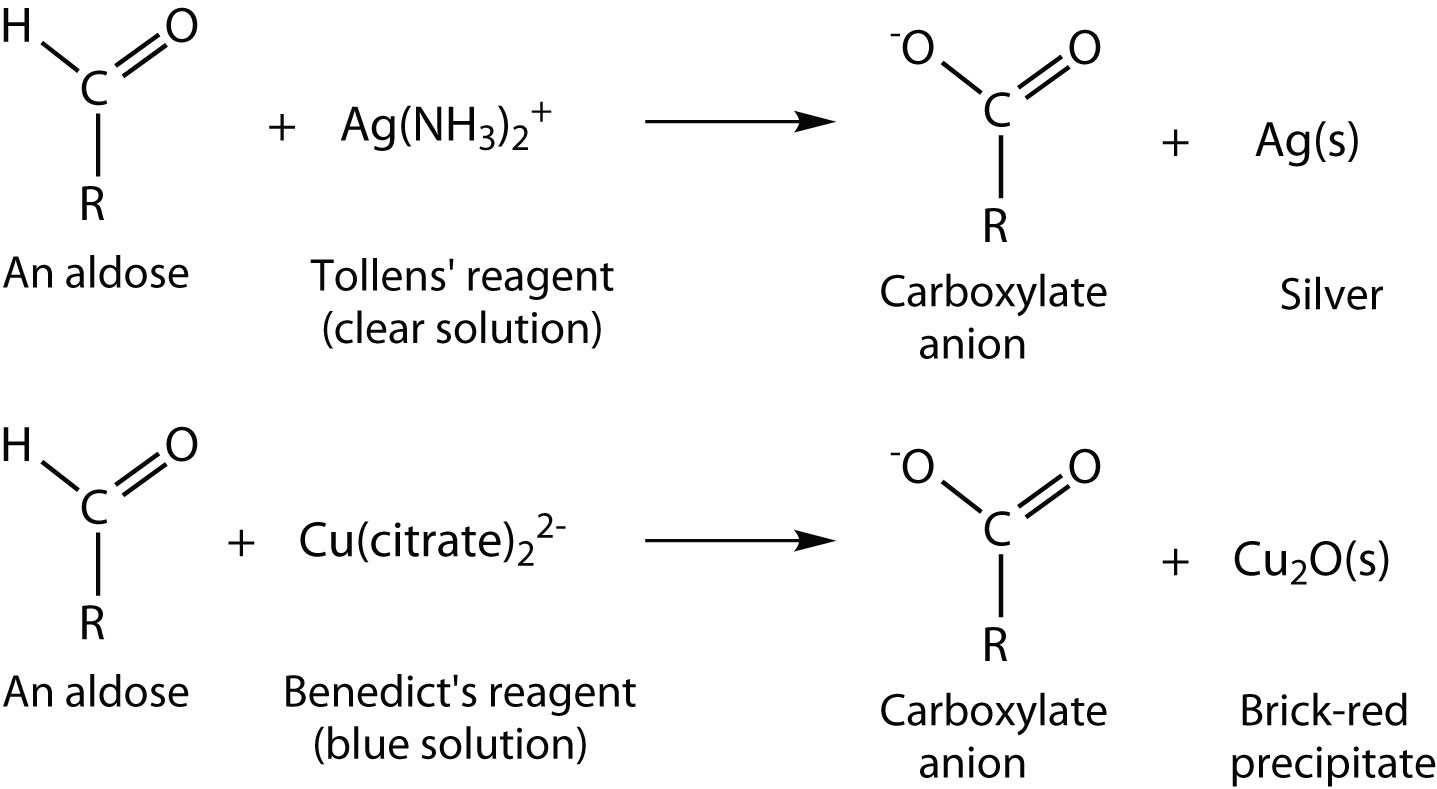
Any carbohydrate capable of reducing either Tollens’ or Benedict’s reagents without first undergoing hydrolysis is said to be a reducing sugar[17]. Because both the Tollens’ and Benedict’s reagents are basic solutions, ketoses (such as fructose) also give positive tests due to an equilibrium that exists between ketoses and aldoses in a reaction known as tautomerism.
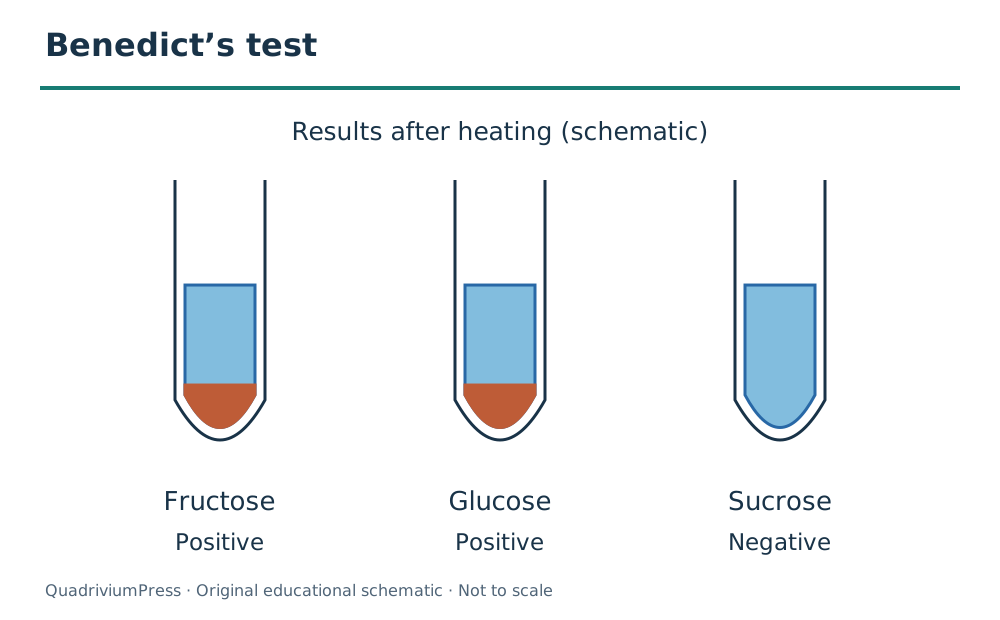
Figure 16.7 Benedict’s Test
In Benedict’s test, fructose and glucose give positive reducing-sugar results after heating, while sucrose remains blue without prior hydrolysis. These colors are schematic, since the amount and appearance of precipitate depend on conditions.
Credit: QuadriviumPress; CC BY-NC-SA 3.0. Source.
These reactions have been used as simple and rapid diagnostic tests for the presence of glucose in blood or urine. For example, Clinitest tablets, which are used to test for sugar in the urine, contain copper(II) ions and are based on Benedict’s test. A green color indicates very little sugar, whereas a brick-red color indicates sugar in excess of 2 g/100 mL of urine.
Concept Review Exercises
Why are monosaccharides soluble in water?
What is a reducing sugar?
Answers
Monosaccharides are quite soluble in water because of the numerous OH groups that readily engage in hydrogen bonding with water.
any carbohydrate capable of reducing a mild oxidizing agent, such as Tollens’ or Benedict’s reagents, without first undergoing hydrolysis
Exercises
Which gives a positive Benedict’s test---L-galactose, levulose, or D-glucose?
Which gives a positive Benedict’s test---D-glyceraldehyde, corn sugar, or L-fructose?
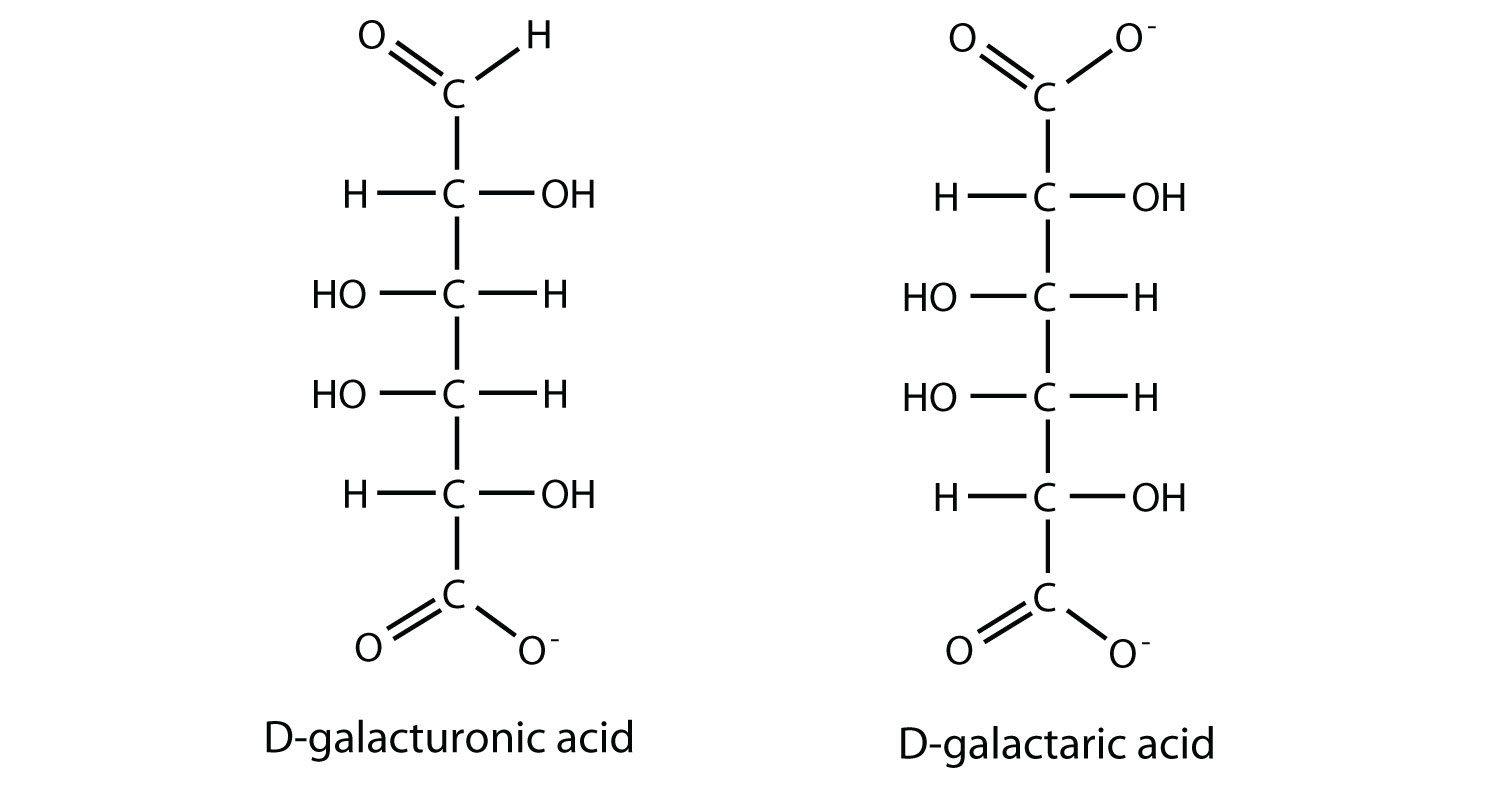
D-Galactose can be oxidized at the sixth carbon atom to yield D-galacturonic acid and at both the first and sixth carbon atoms to yield D-galactaric acid. Draw the Fischer projection for each oxidation product.
D-Glucose can be oxidized at the first carbon atom to form D-gluconic acid, at the sixth carbon atom to yield D-glucuronic acid, and at both the first and sixth carbon atoms to yield D-glucaric acid. Draw the Fischer projection for each oxidation product.
Answers
All three will give a positive Benedict’s test because they are all monosaccharides.
16.6 Disaccharides
In Section 16.4 "Cyclic Structures of Monosaccharides", you learned that monosaccharides can form cyclic structures by the reaction of the carbonyl group with an OH group. These cyclic molecules can in turn react with another alcohol. Disaccharides (C12H22O11) are sugars composed of two monosaccharide units that are joined by a carbon--oxygen-carbon linkage known as a glycosidic linkage[18]. This linkage is formed from the reaction of the anomeric carbon of one cyclic monosaccharide with the OH group of a second monosaccharide.
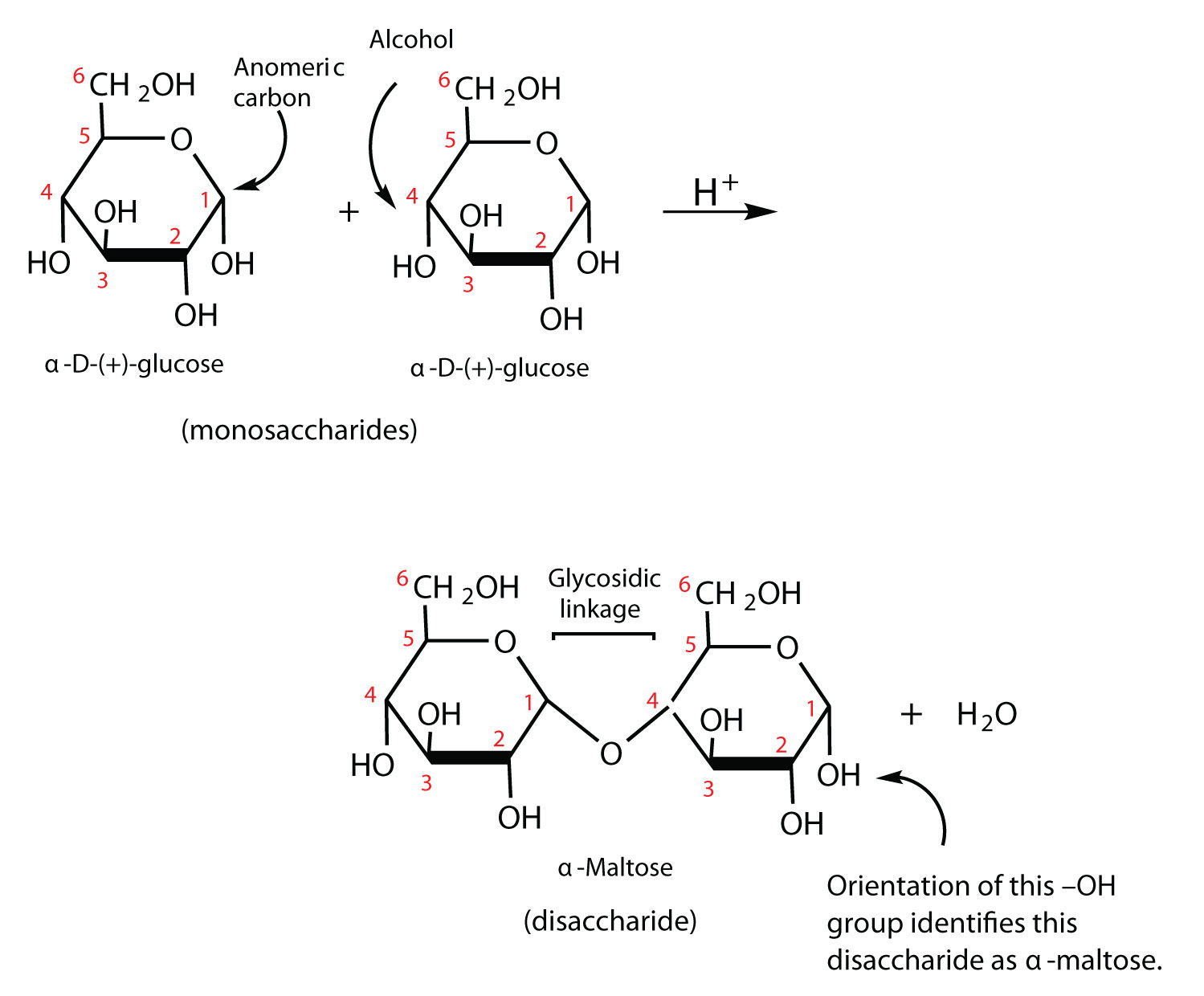
The disaccharides differ from one another in their monosaccharide constituents and in the specific type of glycosidic linkage connecting them. There are three common disaccharides: maltose, lactose, and sucrose. All three are white crystalline solids at room temperature and are soluble in water. We’ll consider each sugar in more detail.
Maltose
Maltose occurs to a limited extent in sprouting grain. It is formed most often by the partial hydrolysis of starch and glycogen. In the manufacture of beer, maltose is liberated by the action of malt (germinating barley) on starch; for this reason, it is often referred to as malt sugar. Maltose is about 30% as sweet as sucrose. The human body is unable to metabolize maltose or any other disaccharide directly from the diet because the molecules are too large to pass through the cell membranes of the intestinal wall. Therefore, an ingested disaccharide must first be broken down by hydrolysis into its two constituent monosaccharide units. In the body, such hydrolysis reactions are catalyzed by enzymes such as maltase. The same reactions can be carried out in the laboratory with dilute acid as a catalyst, although in that case the rate is much slower, and high temperatures are required. Whether it occurs in the body or a glass beaker, the hydrolysis of maltose produces two molecules of D-glucose.
Maltose is a reducing sugar. Thus, its two glucose molecules must be linked in such a way as to leave one anomeric carbon that can open to form an aldehyde group. The glucose units in maltose are joined in a head-to-tail fashion through an α-linkage from the first carbon atom of one glucose molecule to the fourth carbon atom of the second glucose molecule (that is, an α-1,4-glycosidic linkage; see Figure 16.8 "An Equilibrium Mixture of Maltose Isomers"). The bond from the anomeric carbon of the first monosaccharide unit is directed downward, which is why this is known as an α-glycosidic linkage. The OH group on the anomeric carbon of the second glucose can be in either the α or the β position, as shown in Figure 16.8 "An Equilibrium Mixture of Maltose Isomers".
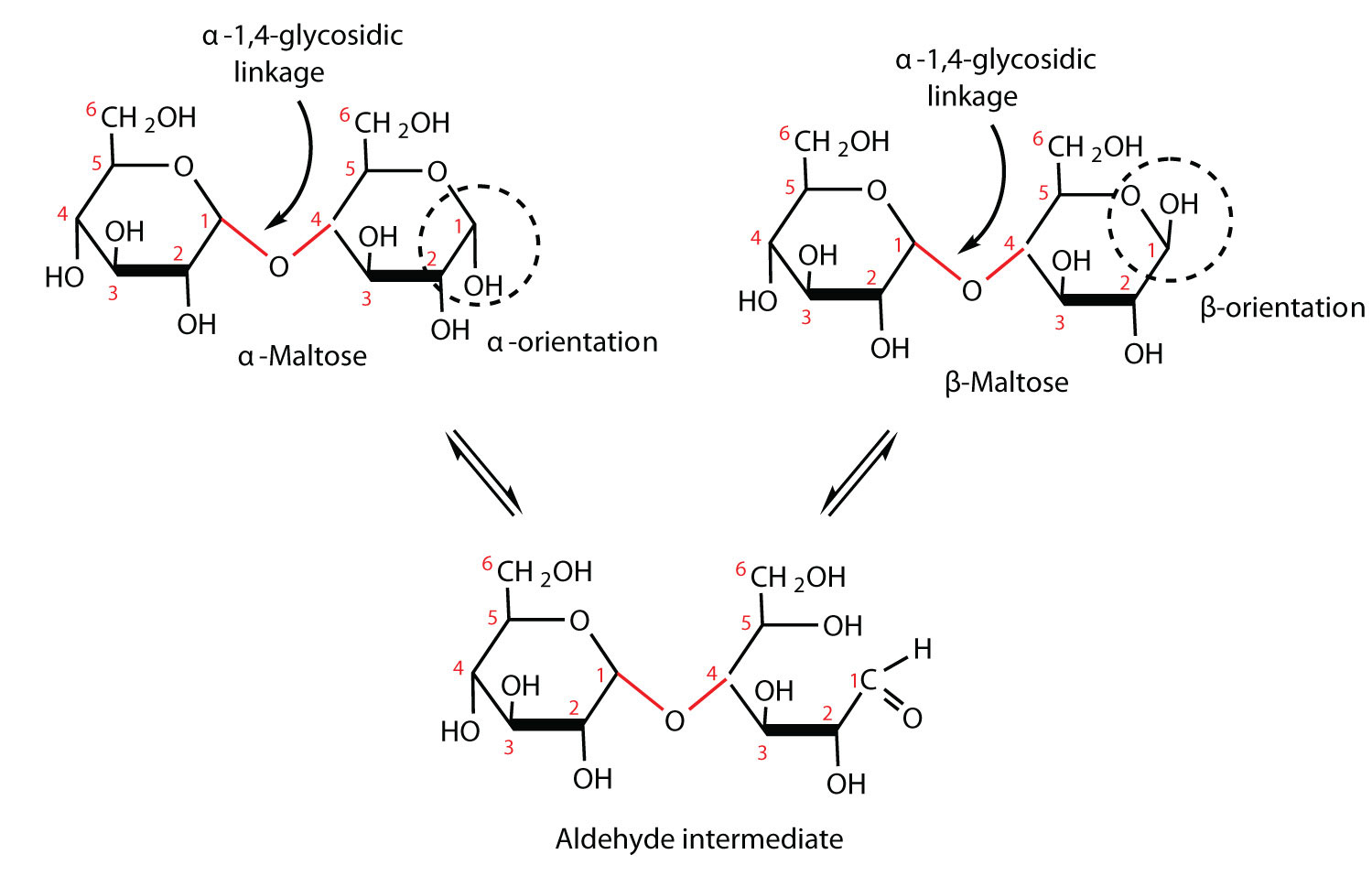
Figure 16.8 An Equilibrium Mixture of Maltose Isomers
Lactose
Lactose is known as milk sugar because it occurs in the milk of humans, cows, and other mammals. In fact, the natural synthesis of lactose occurs only in mammary tissue, whereas most other carbohydrates are plant products. Human milk contains about 7.5% lactose, and cow’s milk contains about 4.5%. This sugar is one of the lowest ranking in terms of sweetness, being about one-sixth as sweet as sucrose (see Table 16.1 "The Relative Sweetness of Some Compounds (Sucrose = 100)" in Section 16.3 "Important Hexoses"). Lactose is produced commercially from whey, a by-product in the manufacture of cheese. It is important as an infant food and in the production of penicillin.
Lactose is a reducing sugar composed of one molecule of D-galactose and one molecule of D-glucose joined by a β-1,4-glycosidic bond (the bond from the anomeric carbon of the first monosaccharide unit being directed upward). The two monosaccharides are obtained from lactose by acid hydrolysis or the catalytic action of the enzyme lactase:
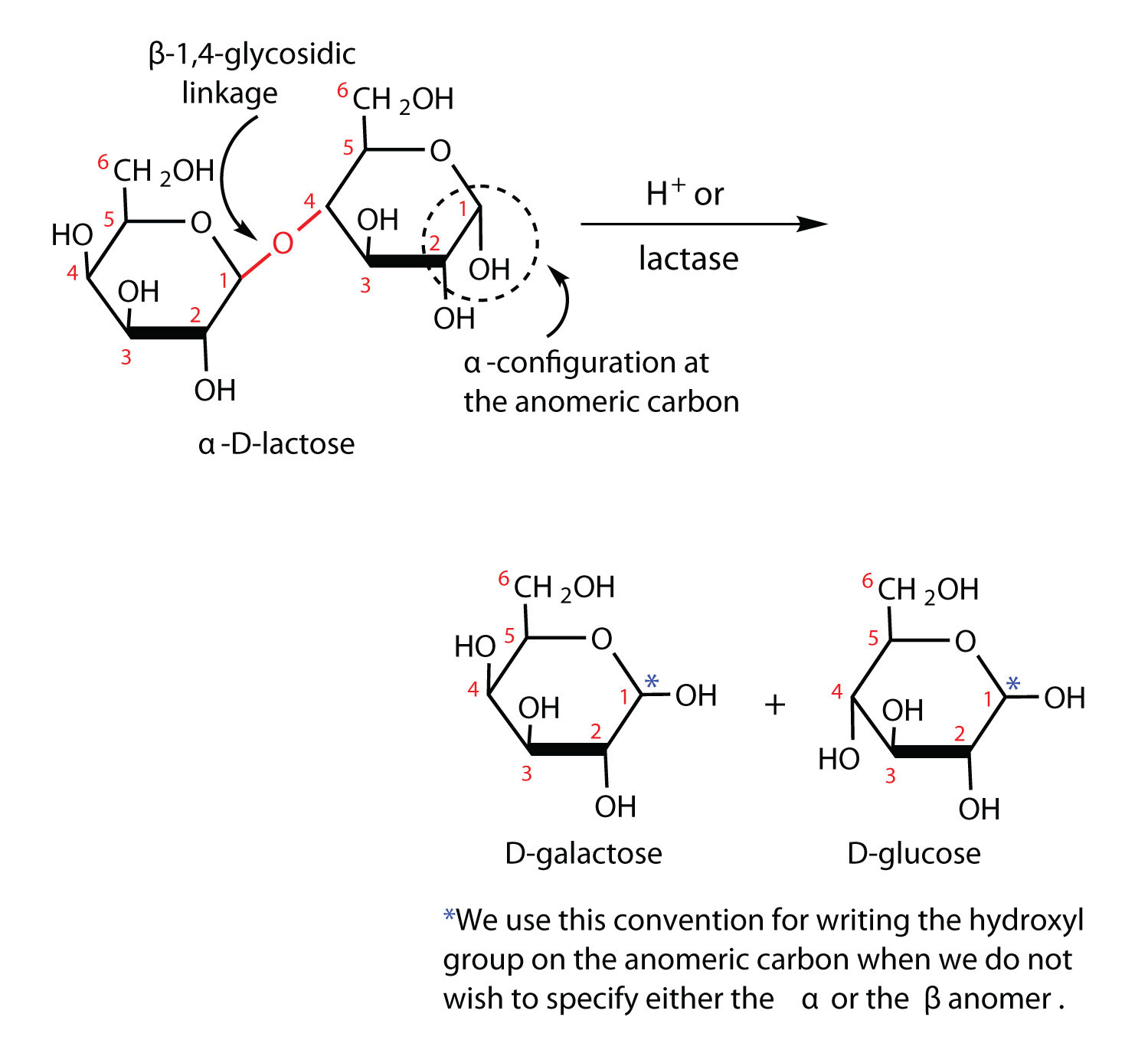
Many adults and some children suffer from a deficiency of lactase. These individuals are said to be lactose intolerant[19] because they cannot digest the lactose found in milk. A more serious problem is the genetic disease galactosemia[20], which results from the absence of an enzyme needed to convert galactose to glucose. Certain bacteria can metabolize lactose, forming lactic acid as one of the products. This reaction is responsible for the “souring” of milk.
Example 3
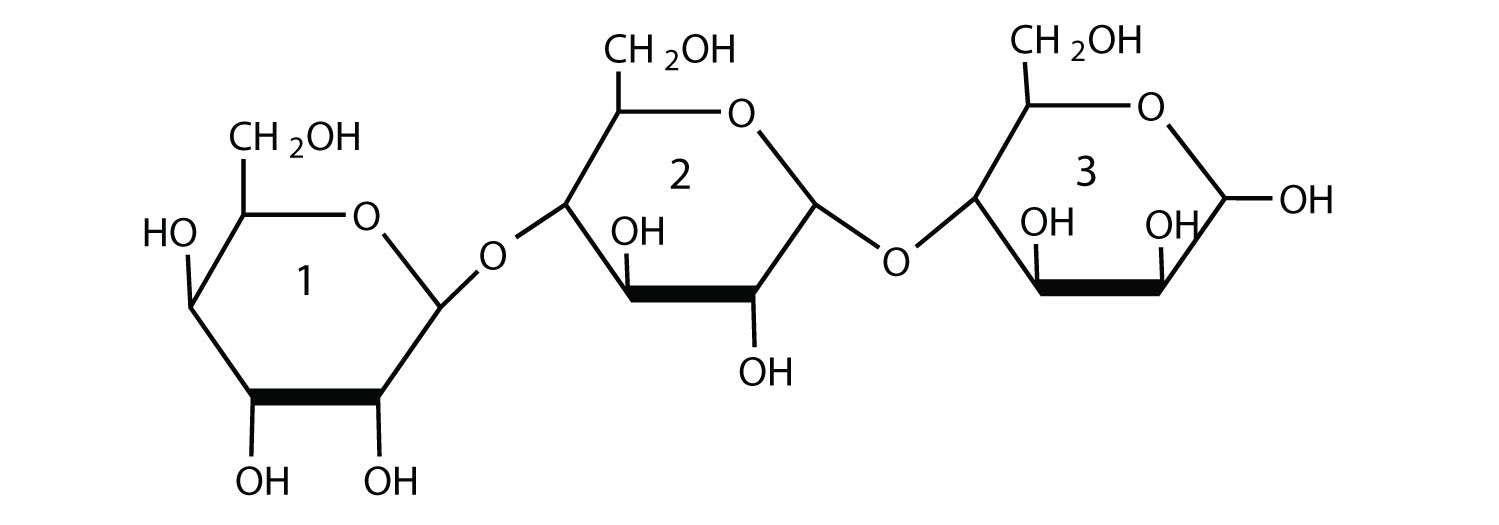
For this trisaccharide, indicate whether each glycosidic linkage is α or β.
Solution
The glycosidic linkage between sugars 1 and 2 is β because the bond is directed up from the anomeric carbon. The glycosidic linkage between sugars 2 and 3 is α because the bond is directed down from the anomeric carbon.
Skill-Building Exercise
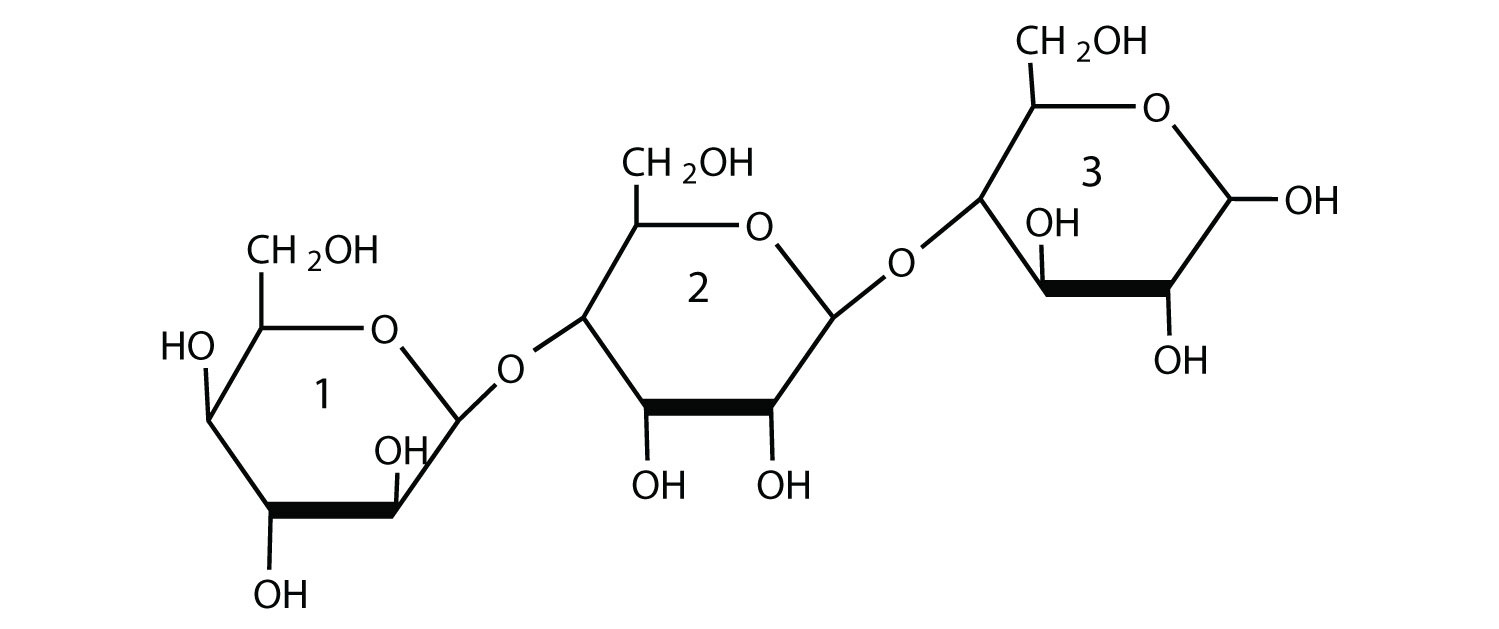
For this trisaccharide, indicate whether each glycosidic linkage is α or β.
Sucrose
Sucrose, probably the largest-selling pure organic compound in the world, is known as beet sugar, cane sugar, table sugar, or simply sugar. Most of the sucrose sold commercially is obtained from sugar cane and sugar beets (whose juices are 14%--20% sucrose) by evaporation of the water and recrystallization. The dark brown liquid that remains after the recrystallization of sugar is sold as molasses.
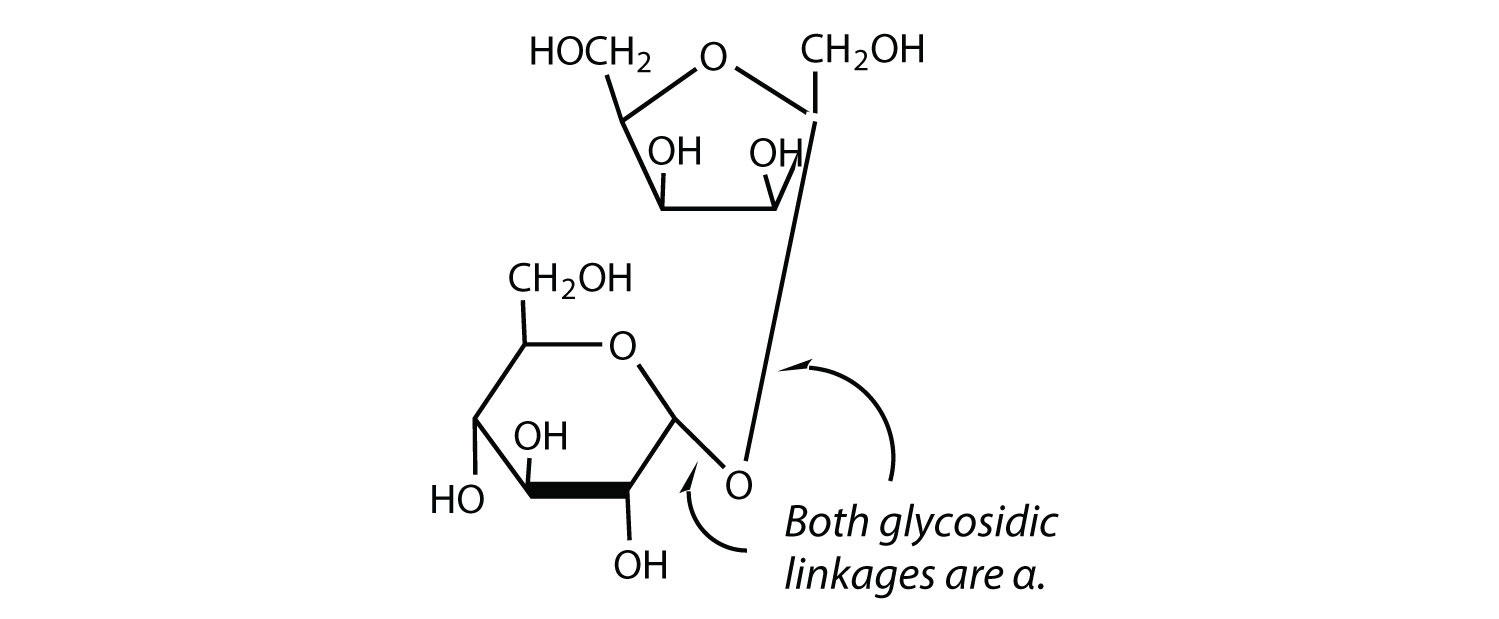
The sucrose molecule is unique among the common disaccharides in having an α-1,β-2-glycosidic (head-to-head) linkage. Because this glycosidic linkage is formed by the OH group on the anomeric carbon of α-D-glucose and the OH group on the anomeric carbon of β-D-fructose, it ties up the anomeric carbons of both glucose and fructose.
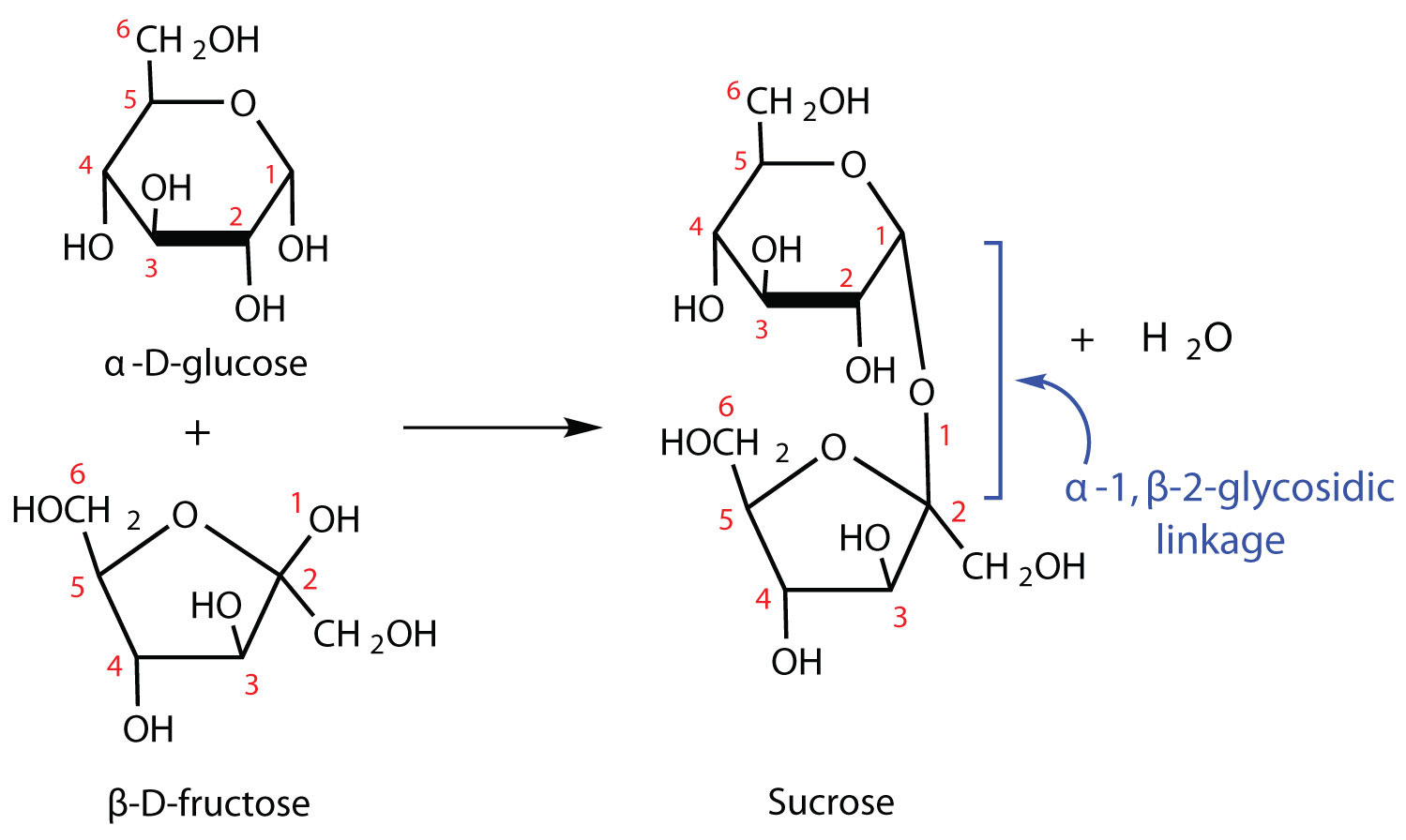
This linkage gives sucrose certain properties that are quite different from those of maltose and lactose. As long as the sucrose molecule remains intact, neither monosaccharide “uncyclizes” to form an open-chain structure. Thus, sucrose is incapable of mutarotation and exists in only one form both in the solid state and in solution. In addition, sucrose does not undergo reactions that are typical of aldehydes and ketones. Therefore, sucrose is a nonreducing sugar.
The hydrolysis of sucrose in dilute acid or through the action of the enzyme sucrase (also known as invertase) gives an equimolar mixture of glucose and fructose. This 1:1 mixture is referred to as invert sugar because it rotates plane-polarized light in the opposite direction than sucrose. The hydrolysis reaction has several practical applications. Sucrose readily recrystallizes from a solution, but invert sugar has a much greater tendency to remain in solution. In the manufacture of jelly and candy and in the canning of fruit, the recrystallization of sugar is undesirable. Therefore, conditions leading to the hydrolysis of sucrose are employed in these processes. Moreover, because fructose is sweeter than sucrose, the hydrolysis adds to the sweetening effect. Bees carry out this reaction when they make honey.
The average American consumes more than 100 lb of sucrose every year. About two-thirds of this amount is ingested in soft drinks, presweetened cereals, and other highly processed foods. The widespread use of sucrose is a contributing factor to obesity and tooth decay. Carbohydrates such as sucrose are converted to fat when the caloric intake exceeds the body’s requirements, and sucrose causes tooth decay by promoting the formation of plaque that sticks to teeth.
Concept Review Exercise
What monosaccharides are obtained by the hydrolysis of each disaccharide?
sucrose
maltose
lactose
Answer
D-glucose and D-fructose
two molecules of D-glucose
D-glucose and D-galactose
Exercises
Identify each sugar by its common chemical name.
milk sugar
table sugar
Identify each sugar by its common chemical name.
cane sugar
malt sugar
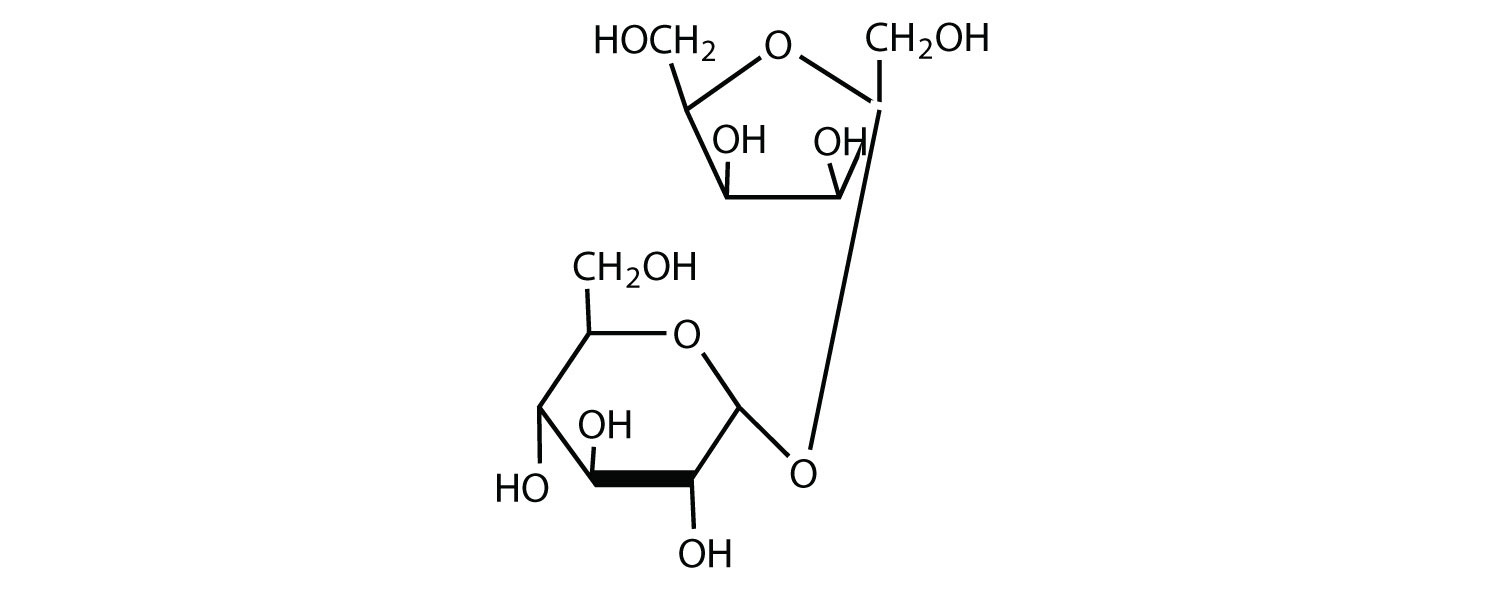
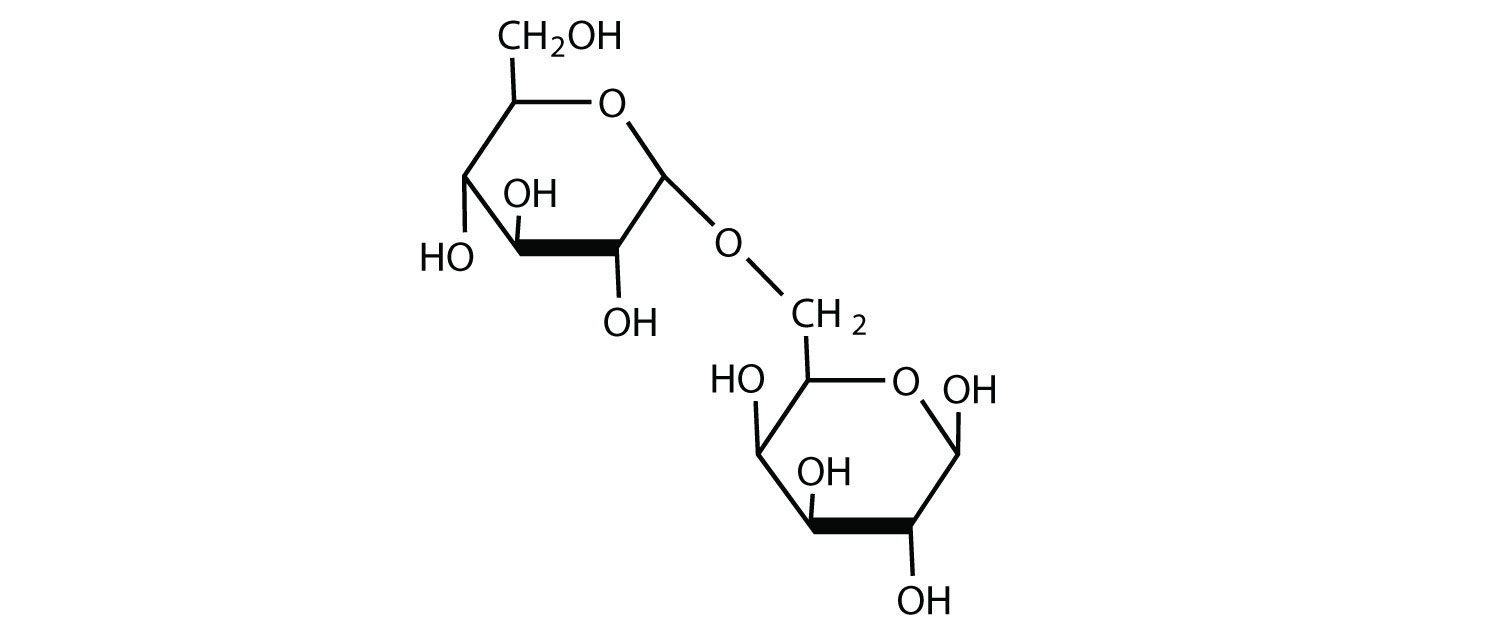
For each disaccharide, indicate whether the glycosidic linkage is α or β.
For each disaccharide, indicate whether the glycosidic linkage is α or β.
Identify each disaccharide in Exercise 3 as a reducing or nonreducing sugar. If it is a reducing sugar, draw its structure and circle the anomeric carbon. State if the OH group at the anomeric carbon is in the α or the β position.
Identify each disaccharide in Exercise 4 as a reducing or nonreducing sugar. If it is a reducing sugar, draw its structure and circle the anomeric carbon. State if the OH group at the anomeric carbon is in the α or β position.
Melibiose is a disaccharide that occurs in some plant juices. Its structure is as follows:
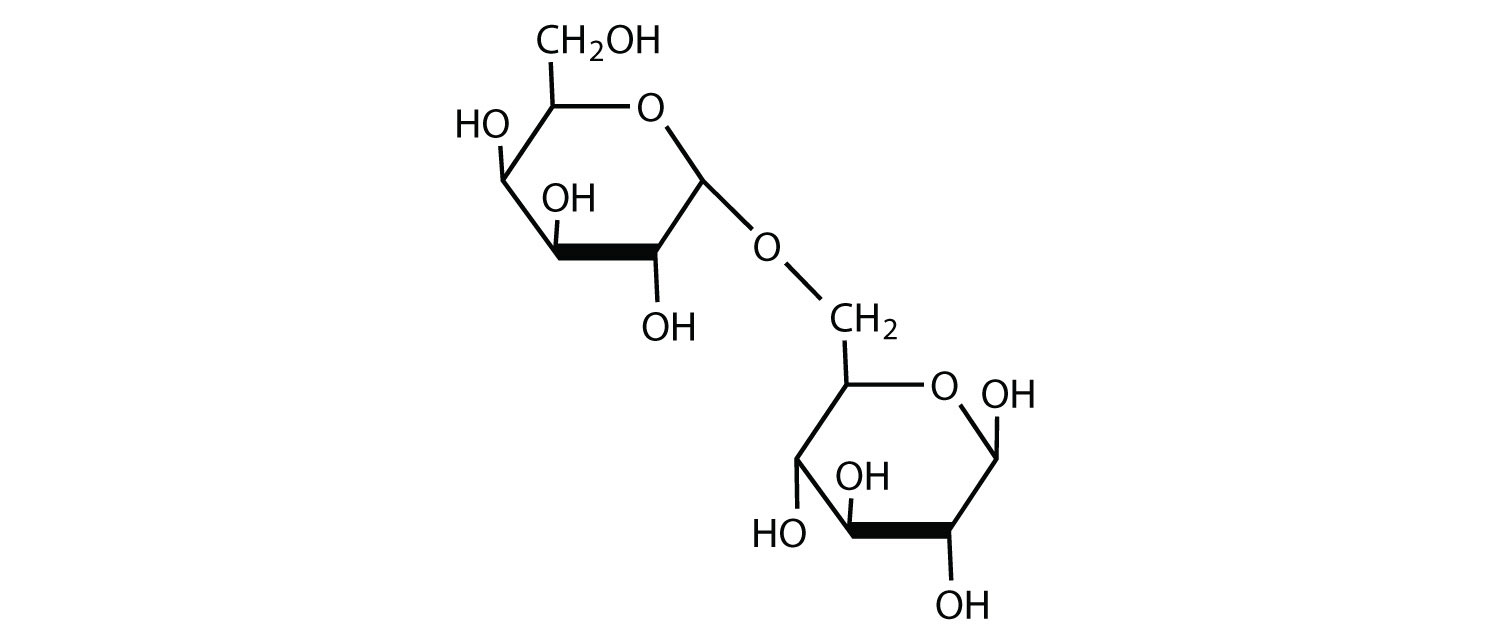
What monosaccharide units are incorporated into melibiose?
What type of linkage (α or β) joins the two monosaccharide units of melibiose?
Melibiose has a free anomeric carbon and is thus a reducing sugar. Circle the anomeric carbon and indicate whether the OH group is α or β.
Cellobiose is a disaccharide composed of two glucose units joined by a β-1,4-glycosidic linkage.
Draw the structure of cellobiose.
Is cellobiose a reducing or nonreducing sugar? Justify your answer.


Answers
lactose
sucrose
3a: nonreducing; 3b: reducing
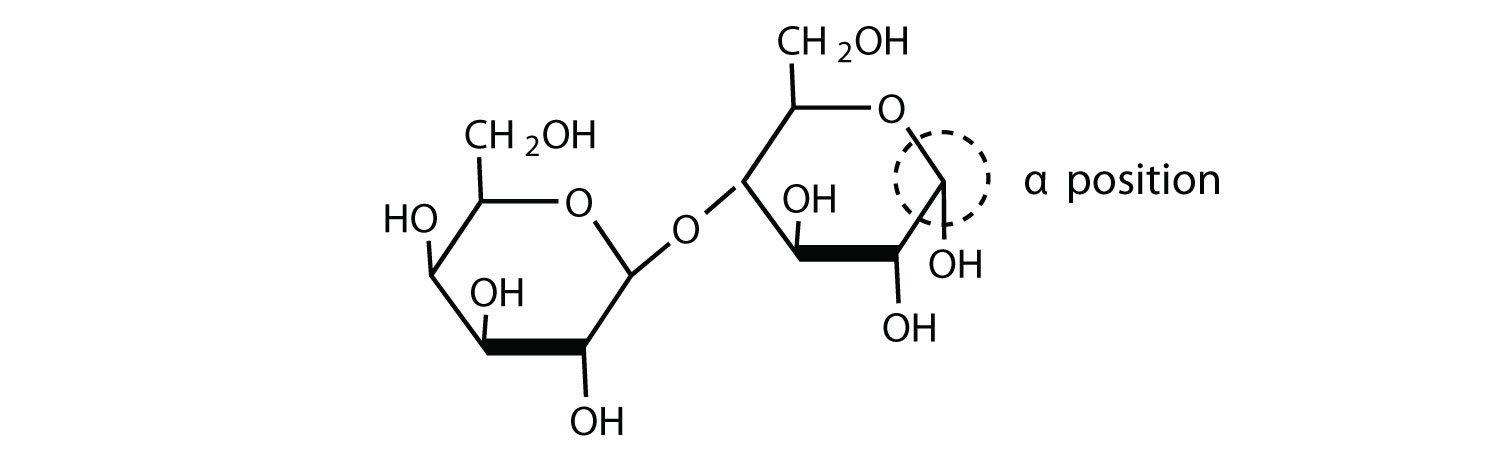
galactose and glucose
α-glycosidic linkage
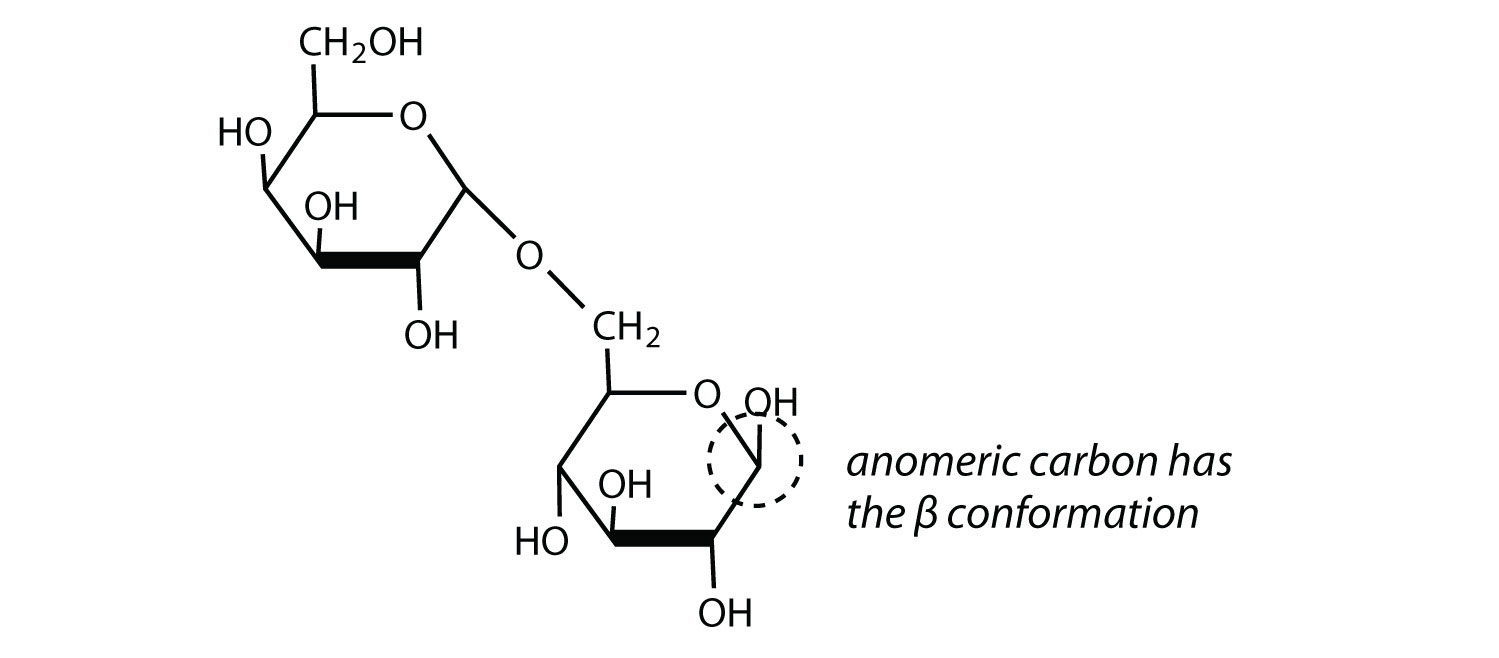

16.7 Polysaccharides
The polysaccharides are the most abundant carbohydrates in nature and serve a variety of functions, such as energy storage or as components of plant cell walls. Polysaccharides are very large polymers composed of tens to thousands of monosaccharides joined together by glycosidic linkages. The three most abundant polysaccharides are starch, glycogen, and cellulose. These three are referred to as homopolymers because each yields only one type of monosaccharide (glucose) after complete hydrolysis. Heteropolymers may contain sugar acids, amino sugars, or noncarbohydrate substances in addition to monosaccharides. Heteropolymers are common in nature (gums, pectins, and other substances) but will not be discussed further in this textbook. The polysaccharides are nonreducing carbohydrates, are not sweet tasting, and do not undergo mutarotation.
Starch
Starch is the most important source of carbohydrates in the human diet and accounts for more than 50% of our carbohydrate intake. It occurs in plants in the form of granules, and these are particularly abundant in seeds (especially the cereal grains) and tubers, where they serve as a storage form of carbohydrates. The breakdown of starch to glucose nourishes the plant during periods of reduced photosynthetic activity. We often think of potatoes as a “starchy” food, yet other plants contain a much greater percentage of starch (potatoes 15%, wheat 55%, corn 65%, and rice 75%). Commercial starch is a white powder.
Starch is a mixture of two polymers: amylose[21] and amylopectin[22]. Natural starches consist of about 10%--30% amylase and 70%--90% amylopectin. Amylose is a linear polysaccharide composed entirely of D-glucose units joined by the α-1,4-glycosidic linkages we saw in maltose (part (a) of Figure 16.9 "Amylose"). Experimental evidence indicates that amylose is not a straight chain of glucose units but instead is coiled like a spring, with six glucose monomers per turn (part (b) of Figure 16.9 "Amylose"). When coiled in this fashion, amylose has just enough room in its core to accommodate an iodine molecule. The characteristic blue-violet color that appears when starch is treated with iodine is due to the formation of the amylose-iodine complex. This color test is sensitive enough to detect even minute amounts of starch in solution.
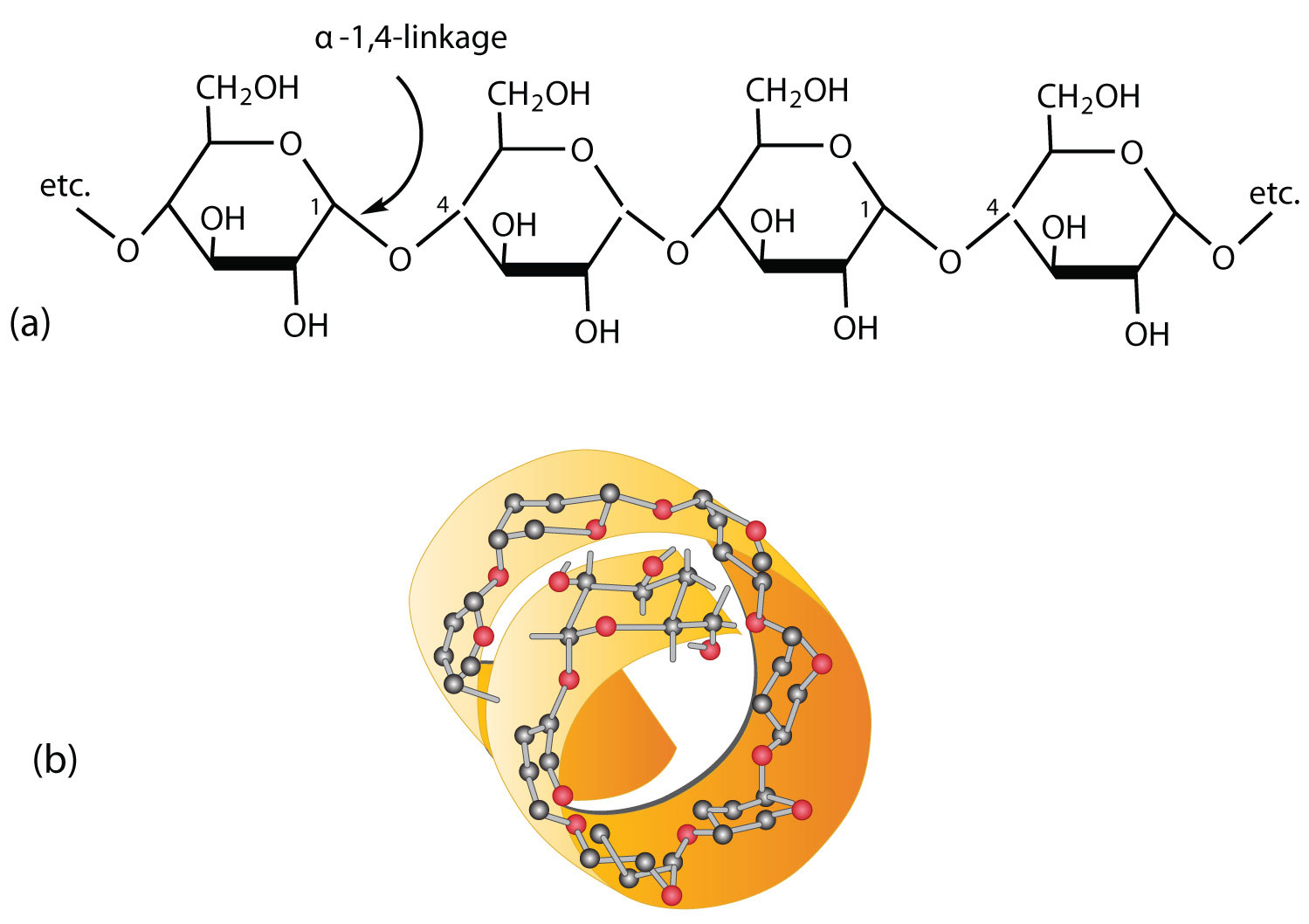
Figure 16.9 Amylose
(a) Amylose is a linear chain of α-D-glucose units joined together by α-1,4-glycosidic bonds. (b) Because of hydrogen bonding, amylose acquires a spiral structure that contains six glucose units per turn.
Amylopectin is a branched-chain polysaccharide composed of glucose units linked primarily by α-1,4-glycosidic bonds but with occasional α-1,6-glycosidic bonds, which are responsible for the branching. A molecule of amylopectin may contain many thousands of glucose units with branch points occurring about every 25--30 units (Figure 16.10 "Representation of the Branching in Amylopectin and Glycogen"). The helical structure of amylopectin is disrupted by the branching of the chain, so instead of the deep blue-violet color amylose gives with iodine, amylopectin produces a less intense reddish brown.
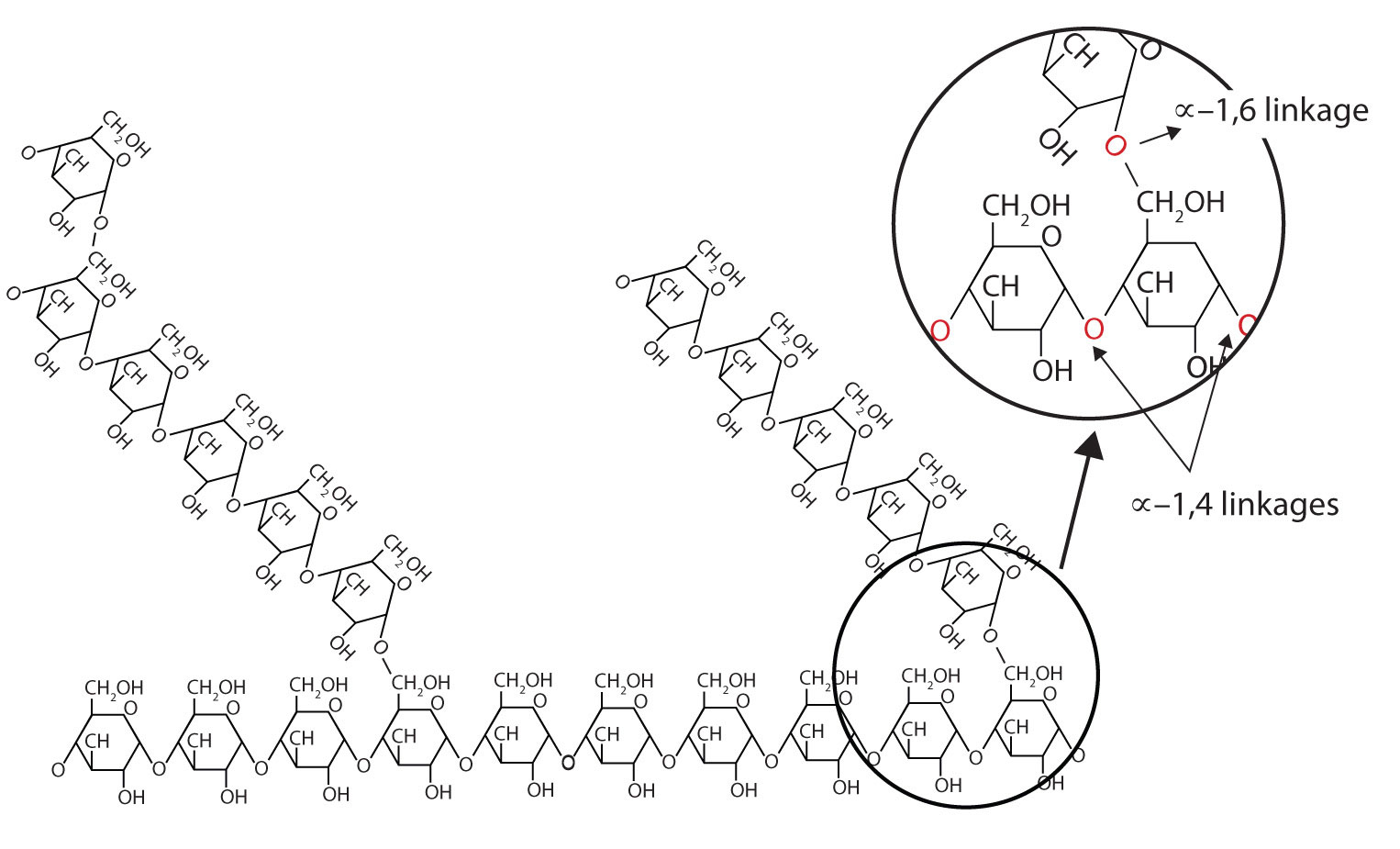
Figure 16.10 Representation of the Branching in Amylopectin and Glycogen
Both amylopectin and glycogen contain branch points that are linked through α-1,6-linkages. These branch points occur more often in glycogen.
Dextrins are glucose polysaccharides of intermediate size. The shine and stiffness imparted to clothing by starch are due to the presence of dextrins formed when clothing is ironed. Because of their characteristic stickiness with wetting, dextrins are used as adhesives on stamps, envelopes, and labels; as binders to hold pills and tablets together; and as pastes. Dextrins are more easily digested than starch and are therefore used extensively in the commercial preparation of infant foods.
The complete hydrolysis of starch yields, in successive stages, glucose:
starch → dextrins → maltose → glucose
In the human body, several enzymes known collectively as amylases degrade starch sequentially into usable glucose units.
Glycogen
Glycogen is the energy reserve carbohydrate of animals. Practically all mammalian cells contain some stored carbohydrates in the form of glycogen, but it is especially abundant in the liver (4%--8% by weight of tissue) and in skeletal muscle cells (0.5%--1.0%). Like starch in plants, glycogen is found as granules in liver and muscle cells. When fasting, animals draw on these glycogen reserves during the first day without food to obtain the glucose needed to maintain metabolic balance.
Glycogen is structurally quite similar to amylopectin, although glycogen is more highly branched (8--12 glucose units between branches) and the branches are shorter. When treated with iodine, glycogen gives a reddish brown color. Glycogen can be broken down into its D-glucose subunits by acid hydrolysis or by the same enzymes that catalyze the breakdown of starch. In animals, the enzyme phosphorylase catalyzes the breakdown of glycogen to phosphate esters of glucose.
Cellulose
Cellulose, a fibrous carbohydrate found in all plants, is the structural component of plant cell walls. Because the earth is covered with vegetation, cellulose is the most abundant of all carbohydrates, accounting for over 50% of all the carbon found in the vegetable kingdom. Cotton fibrils and filter paper are almost entirely cellulose (about 95%), wood is about 50% cellulose, and the dry weight of leaves is about 10%--20% cellulose. The largest use of cellulose is in the manufacture of paper and paper products. Although the use of noncellulose synthetic fibers is increasing, rayon (made from cellulose) and cotton still account for over 70% of textile production.
Like amylose, cellulose is a linear polymer of glucose. It differs, however, in that the glucose units are joined by β-1,4-glycosidic linkages, producing a more extended structure than amylose (part (a) of Figure 16.11 "Cellulose"). This extreme linearity allows a great deal of hydrogen bonding between OH groups on adjacent chains, causing them to pack closely into fibers (part (b) of Figure 16.11 "Cellulose"). As a result, cellulose exhibits little interaction with water or any other solvent. Cotton and wood, for example, are completely insoluble in water and have considerable mechanical strength. Because cellulose does not have a helical structure, it does not bind to iodine to form a colored product.
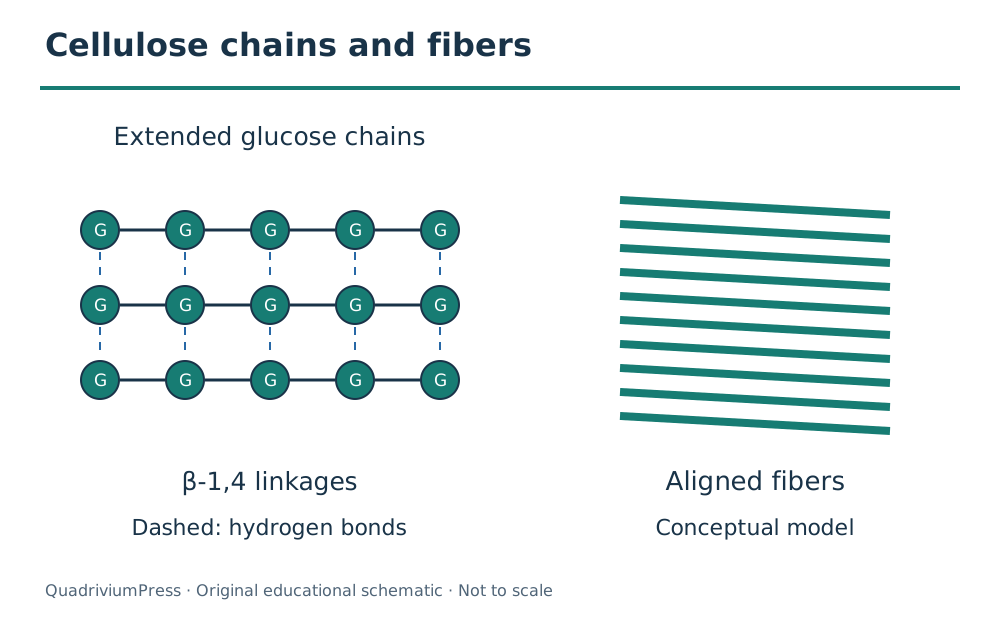
Figure 16.11 Cellulose
Cellulose is built from glucose units joined by β-1,4-glycosidic linkages. Hydrogen bonds between extended chains help hold parallel chains together in fibers. This conceptual model replaces both the source structure panel and its uncredited micrograph.
Credit: QuadriviumPress; CC BY-NC-SA 3.0. Source.
Cellulose yields D-glucose after complete acid hydrolysis, yet humans are unable to metabolize cellulose as a source of glucose. Our digestive juices lack enzymes that can hydrolyze the β-glycosidic linkages found in cellulose, so although we can eat potatoes, we cannot eat grass. However, certain microorganisms can digest cellulose because they make the enzyme cellulase, which catalyzes the hydrolysis of cellulose. The presence of these microorganisms in the digestive tracts of herbivorous animals (such as cows, horses, and sheep) allows these animals to degrade the cellulose from plant material into glucose for energy. Termites also contain cellulase-secreting microorganisms and thus can subsist on a wood diet. This example once again demonstrates the extreme stereospecificity of biochemical processes.
Concept Review Exercises
What purposes do starch and cellulose serve in plants?
What purpose does glycogen serve in animals?
Answers
Starch is the storage form of glucose (energy) in plants, while cellulose is a structural component of the plant cell wall.
Glycogen is the storage form of glucose (energy) in animals.
Exercises
What monosaccharide is obtained from the hydrolysis of each carbohydrate?
starch
cellulose
glycogen
For each carbohydrate listed in Exercise 1, indicate whether it is found in plants or mammals.
Describe the similarities and differences between amylose and cellulose.
Describe the similarities and differences between amylopectin and glycogen.
Answers
glucose
glucose
glucose
Amylose and cellulose are both linear polymers of glucose units, but the glycosidic linkages between the glucose units differ. The linkages in amylose are α-1,4-glycosidic linkages, while the linkages in cellulose are β-1,4-glycosidic linkages.
16.8 End-of-Chapter Material
Additional Exercises
Draw the Fischer projections for D-glucose and D-ribose. Identify all the functional groups in each structure.
Draw the Fischer projections for D-galactose and D-fructose. Identify all the functional groups in each structure.
L-Fucose is an aldohexose that is often incorporated into oligosaccharides attached to cell membranes. It is also known as 6-deoxy-L-galactose. Draw the structure of L-fucose.
D-glucitol, also known as sorbitol, is added to shredded coconut to keep it soft and to pharmaceutical products to increase the absorption of nutrients. It is prepared industrially by the reduction of D-glucose. Propose a structure for D-glucitol.
Which would give a positive Benedict’s test---lactose, amylopectin, D-ribose, sucrose, D-glyceraldehyde, or amylose?
Which enzyme hydrolyzes each carbohydrate?
maltose
lactose
cellulose
sucrose
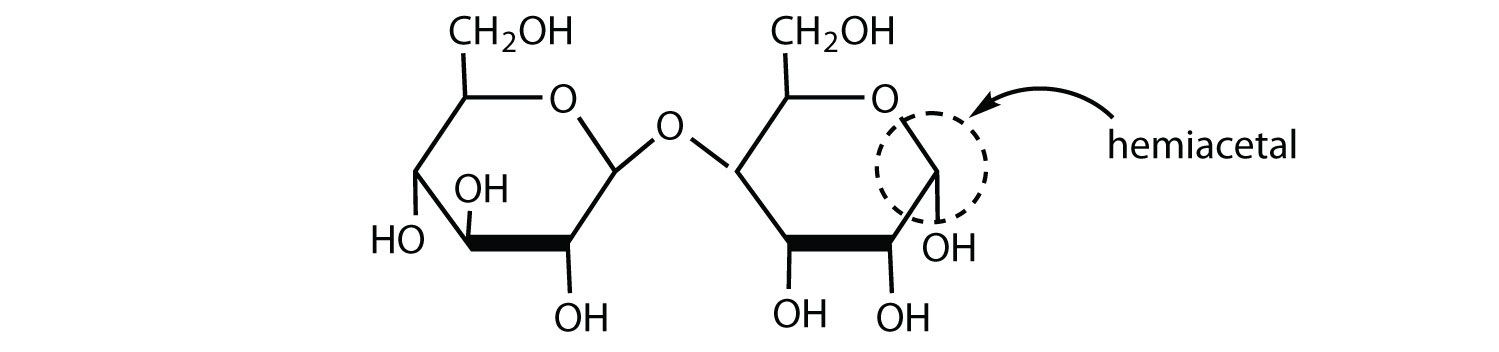
What structural characteristics are necessary if a disaccharide is to be a reducing sugar? Draw the structure of a hypothetical reducing disaccharide composed of two aldohexoses.
Raffinose, a trisaccharide found in beans and sugar beets, contains D-galactose, D-glucose, and D-fructose. The enzyme α-galactase catalyzes the hydrolysis of raffinose to galactose and sucrose. Draw the structure of raffinose. (The linkage from galactose to the glucose unit is α-1,6).
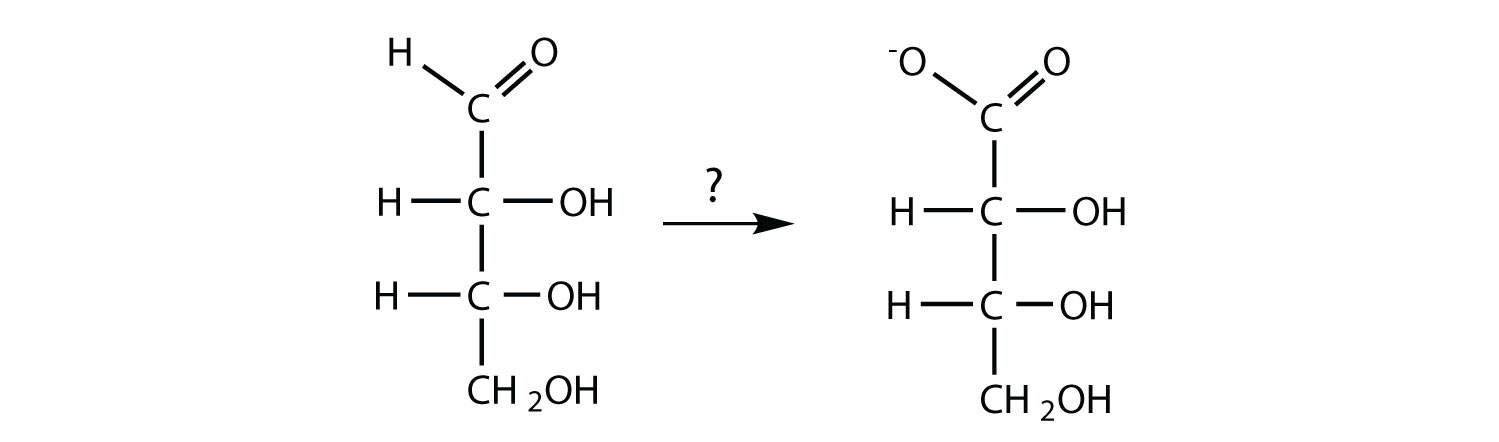
What reagent(s) could be used to carry out each conversion?
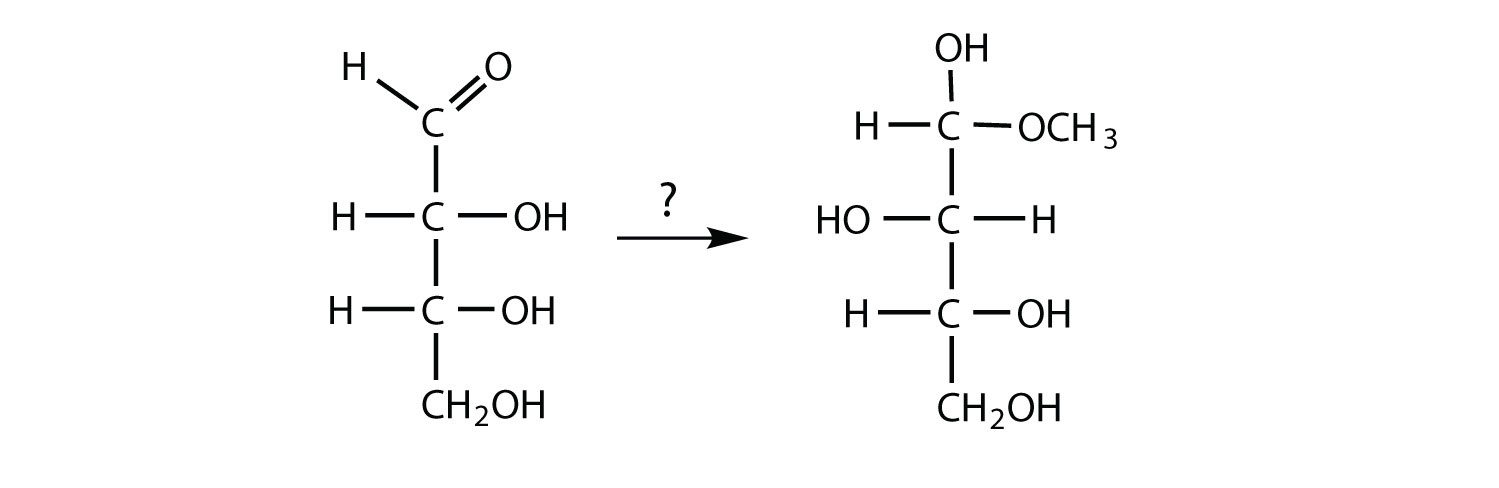
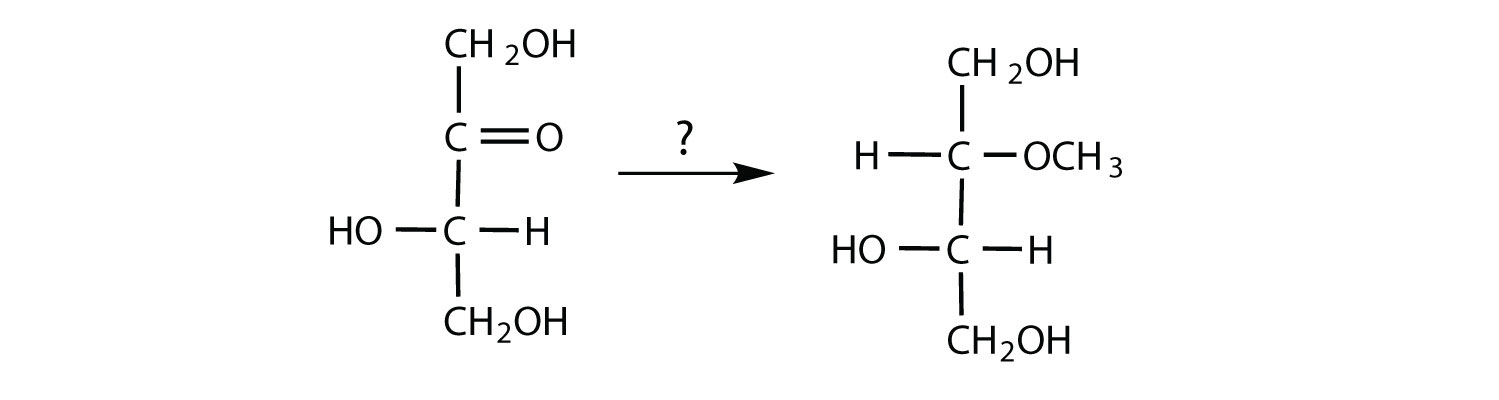
What reagents are necessary to carry out each conversion?
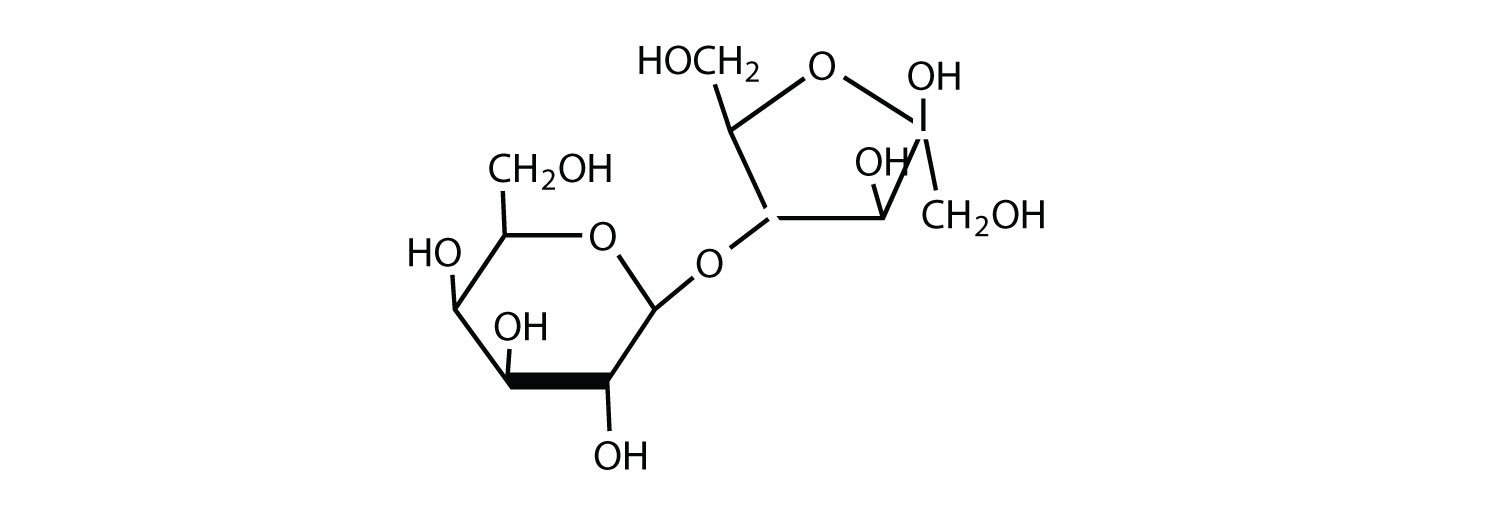
The structure of lactulose is shown here. What monosaccharide units compose this disaccharide?
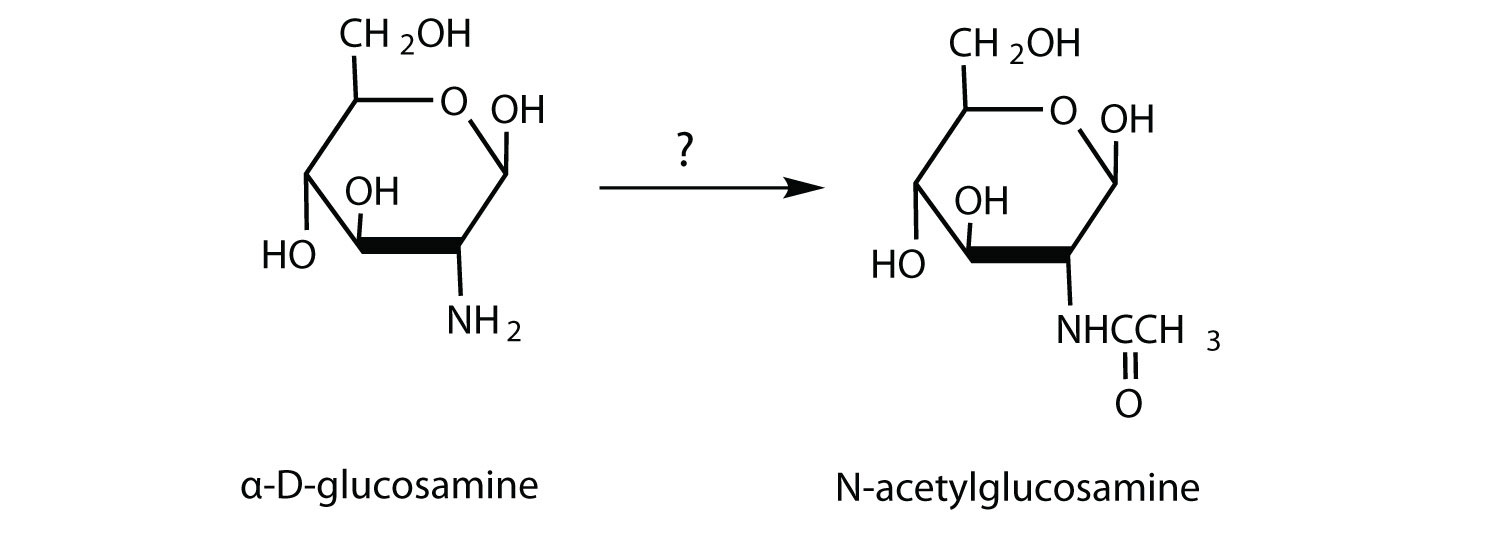
N-acetylglucosamine is synthesized from D-glucosamine, which in turn is obtained from D-glucose. What reagents are needed for the conversion of D-glucosamine to N-acetylglucosamine?
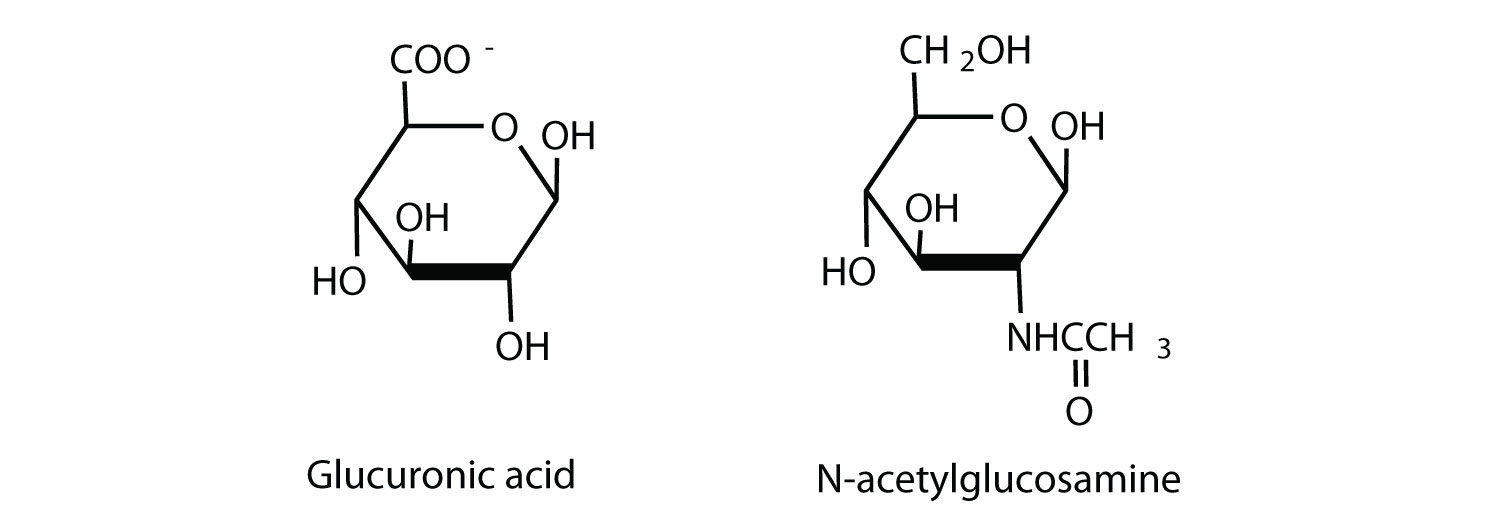
Hyaluronic acid is a heteropolymer that acts as a lubricating agent in the fluids of joints and the eyes. Its structure consists of repeating disaccharide units containing glucuronic acid and N-acetylglucosamine connected by a β-1,3-linkage. Draw the structure of the disaccharide unit found in hyaluronic acid.
Several artificial sweeteners are discussed in this chapter.
Which are currently approved for use in the United States?
Which has (or have) a bitter, metallic aftertaste?
Which was (or were) most recently approved for use in the United States?
Which contain(s) potassium?
If 3.0 mmol (3.0 × 10⁻³ mol) samples of saccharin, cyclamate, aspartame, and acesulfame K were each dissolved in separate beakers containing 500 mL of pure water, which solution would have the sweetest taste? Which solution would have the least sweet taste? Justify your answers.
Identify two functional groups found in aspartame, acesulfame K, and sucralose.
Why does a deficiency of lactase lead to cramps and diarrhea?
How does galactosemia differ from lactose intolerance in terms of the cause of the disease and its symptoms and severity?

Answers
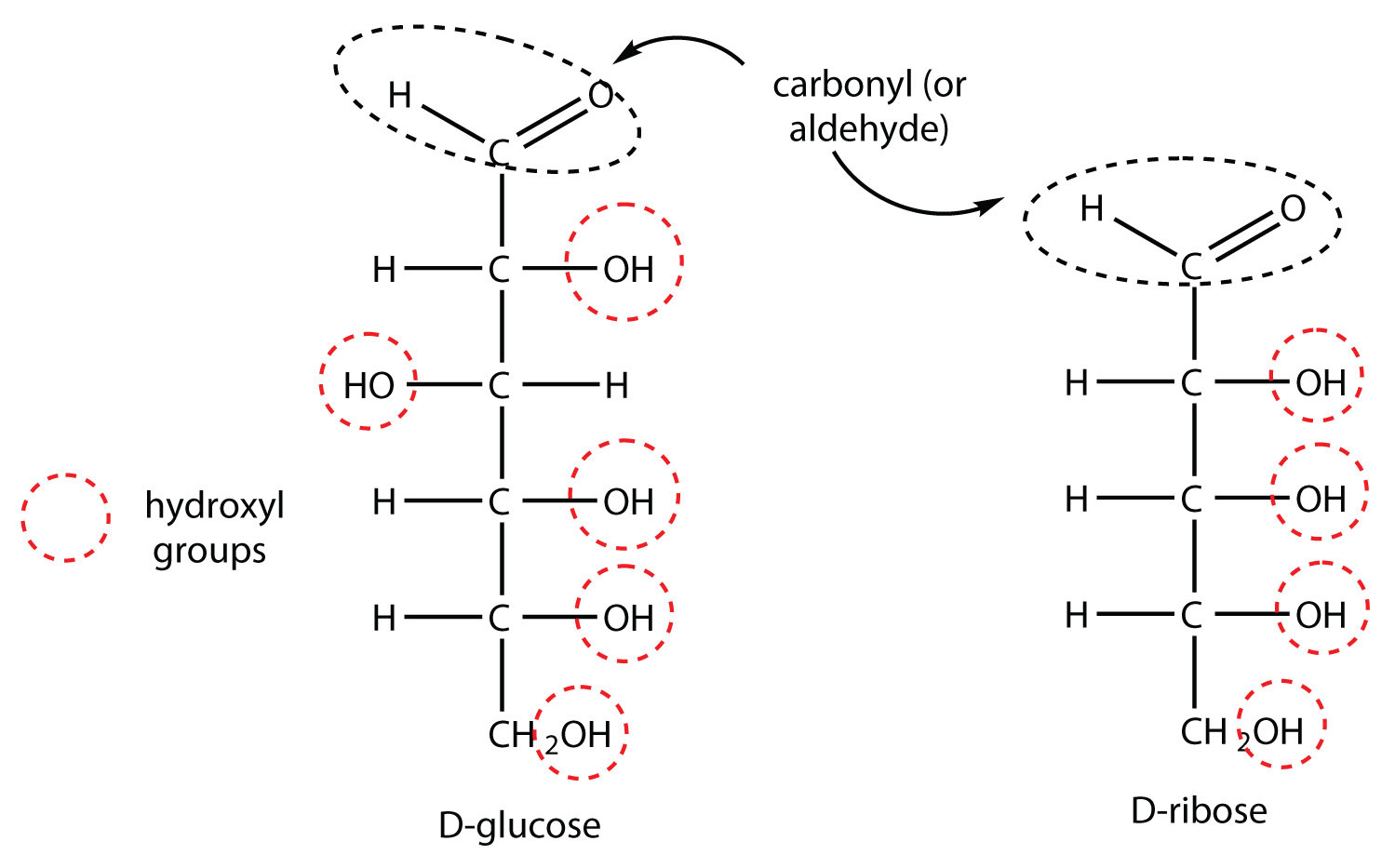
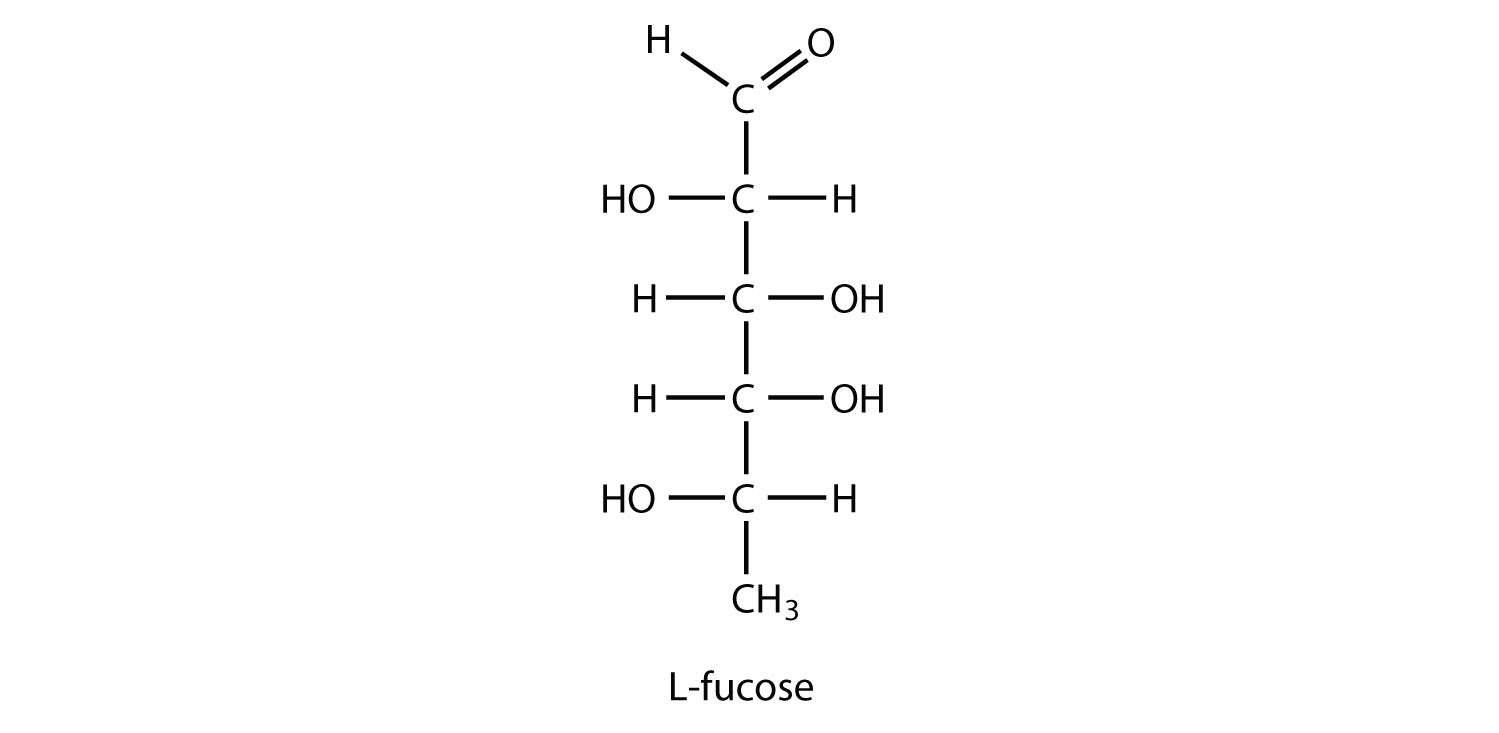
Lactose, D-ribose, and D-glyceraldehyde would give a positive Benedict’s test.
To be a reducing sugar, a disaccharide must contain an anomeric carbon atom that can open up to form an aldehyde functional group, as shown in this disaccharide (answers will vary).
The carbohydrate is being oxidized; Tollens’ or Benedict’s reagent could be used.
To form the compound shown, an aldehyde must react with methanol (CH3OH) and an acid catalyst.
galactose and fructose
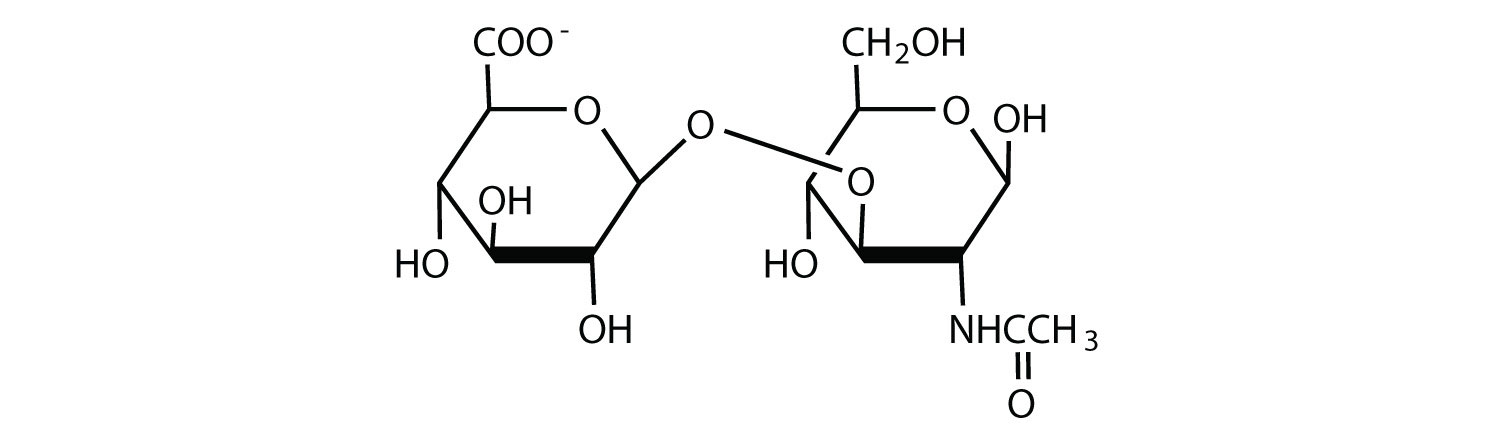
Sucralose would be expected to have the sweetest taste because its relative sweetness is the highest. Lactose would have the least sweet taste because it has the lowest relative sweetness.
Intestinal bacteria can act on the lactose present in the intestine to produce organic acids and gases. The buildup of water and bacterial decay products leads to cramps and diarrhea.
The chemistry of molecules found in living organisms.
A compound composed of carbon, hydrogen, and oxygen atoms that is a polyhydroxy aldehyde or ketone or a compound that can be broken down to form such a compound. It is one of the three main components of the human diet.
The process by which plants use solar energy to convert carbon dioxide and water to glucose.
The simplest carbohydrate that cannot be hydrolyzed to produce smaller carbohydrate molecules.
A carbohydrate containing two monosaccharide units.
A carbohydrate containing many monosaccharide units.
A monosaccharide that contains an aldehyde functional group.
A monosaccharide that contains a ketone functional group on the second carbon atom.
An isomer that has the same structural formula but differs in the arrangement of atoms or groups of atoms in three-dimensional space.
Stereoisomers that are nonsuperimposable mirror images of each other.
A carbon atom that has four different groups attached to it.
A sugar whose Fischer projection terminates in the same configuration as D-glyceraldehyde.
A sugar whose Fischer projection terminates in the same configuration as L-glyceraldehyde.
Stereoisomers that differ in structure around what was the carbonyl carbon atom in the straight-chain form of a monosaccharide.
The carbon atom that was the carbonyl carbon atom in the straight-chain form of a monosaccharide.
The ongoing interconversion between anomeric forms of a monosaccharide to form an equilibrium mixture.
Any carbohydrate capable of reducing a mild oxidizing agent, such as Tollens’ or Benedict’s reagents, without first undergoing hydrolysis.
The carbon--oxygen-carbon linkage between monosaccharide units in more complex carbohydrates, such as disaccharides or polysaccharides.
The inability to digest the lactose found in milk or dairy products due to a deficiency of the enzyme lactase.
A genetic disease caused by the absence of one of the enzymes needed to convert galactose to glucose.
A linear polymer of glucose units found in starch.
A branched polymer of glucose units found in starch.