The organic compounds that we consider in this chapter are organic acids and bases. We will also consider two derivatives of carboxylic acids: esters and amides. An ester is derived from a carboxylic acid and an alcohol. Fats and oils are esters, as are many important fragrances and flavors. (For more information about fats and oils, see Chapter 17 "Lipids", Section 17.2 "Fats and Oils".) An amide is derived from a carboxylic acid and either ammonia or an amine. Proteins, often called “the stuff of life,” are polyamides. (For more information about proteins, see Chapter 18 "Amino Acids, Proteins, and Enzymes", Section 18.4 "Proteins".)
15.1 Functional Groups of the Carboxylic Acids and Their Derivatives
We introduced the carbonyl group (C=O)---the functional group of aldehydes and ketones---in Chapter 14 "Organic Compounds of Oxygen". The carbonyl group is also found in carboxylic acids, esters, and amides. However, in these compounds, the carbonyl group is only part of the functional group.
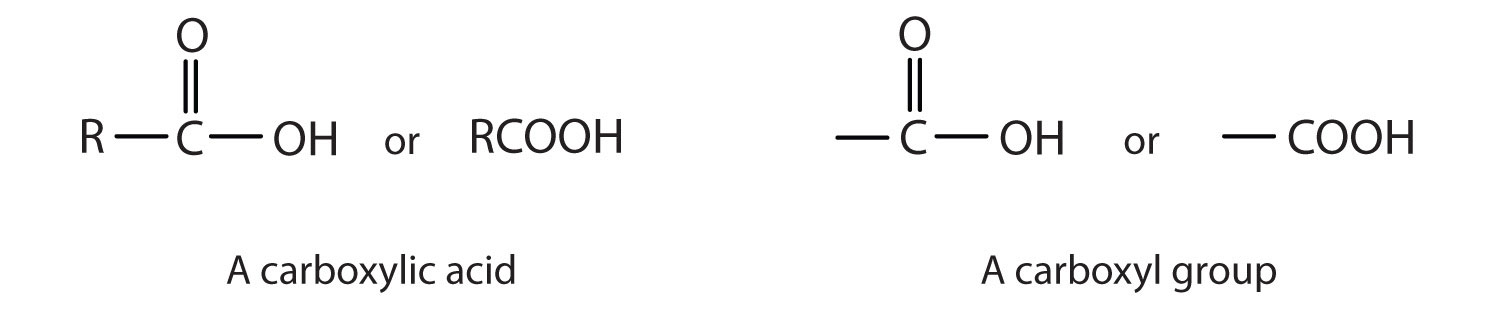
A carboxylic acid[1] is an organic compound that has a carboxyl group[2]. The carboxyl group is a functional group that contains a carbon--oxygen double bond and an OH group also attached to the same carbon atom, but it has characteristic properties of its own. As with aldehydes and ketones, carboxylic acid formulas can be written to show the carbon-to-oxygen double bond explicitly, or the carboxyl group can be written in condensed form on one line. In general, carboxylic acids are represented by the formula RCOOH, where R is a hydrocarbon group.
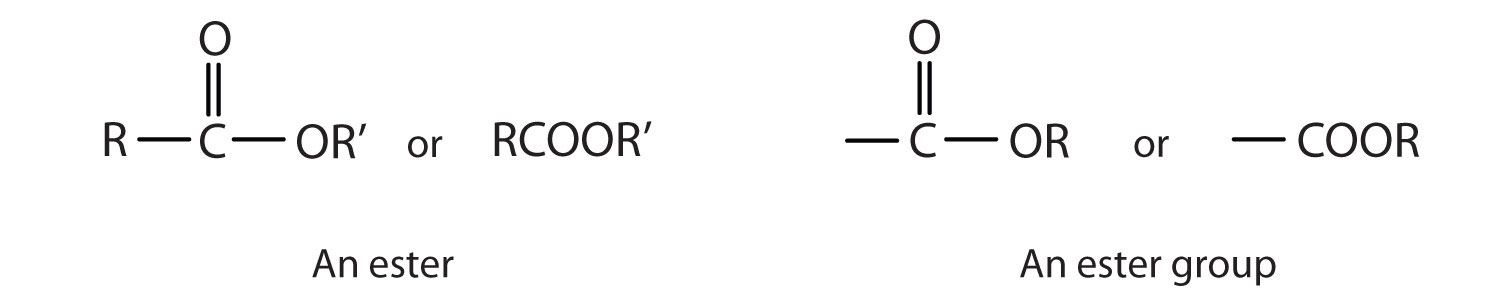
Esters are represented by the formula RCOOR’, where R and R’ are hydrocarbon groups. The ester[3], which is an organic compound derived from a carboxylic acid and an alcohol in which the OH of the acid is replaced by an OR group, looks somewhat like an ether and also somewhat like a carboxylic acid. Even so, compounds in this group react neither like carboxylic acids nor like ethers; they make up a distinctive family. Unlike ethers, esters have a carbonyl group. Unlike carboxylic acids, esters have no acidic hydrogen atom; they have a hydrocarbon group in its place.
An amine[4] is a compound derived from ammonia (NH3); it has one, two, or all three of the hydrogen atoms of NH3 replaced by an alkyl (or an aryl) group. Like NH3, amines are weak bases. The functional group of an amine is a nitrogen atom with a lone pair of electrons and with one, two, or three alkyl or aryl groups attached.

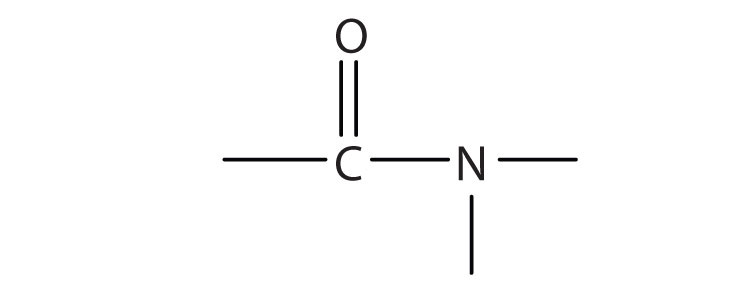
The amide[5] functional group has a carbonyl group joined to a nitrogen atom from ammonia or an amine. The properties of the amide functional group differ from those of the simple carbonyl group, NH3, and amines.
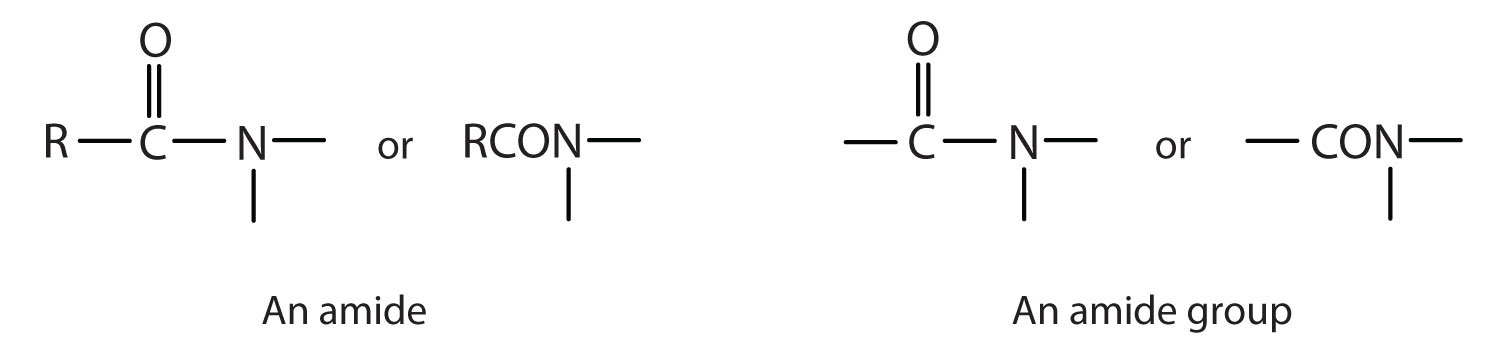
Esters and amides are considered to be derivatives of carboxylic acids because the OH in the carboxyl group is replaced with another group. These functional groups are listed in Table 15.1 "Organic Acids, Bases, and Acid Derivatives", along with an example (identified by common and International Union of Pure and Applied Chemistry [IUPAC] names) for each type of compound.
Table 15.1 Organic Acids, Bases, and Acid Derivatives
Family | Functional Group | Example | Common Name | IUPAC Name |
|---|---|---|---|---|
carboxylic acid | 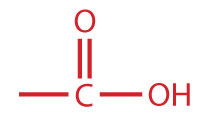 | 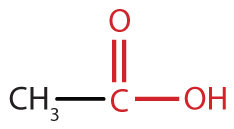 | acetic acid | ethanoic acid |
amine | 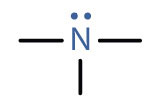 | CH3NH2 | methylamine | methanamine (aminomethane) |
amide | 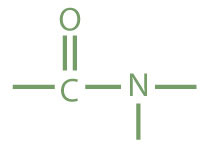 | 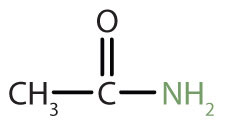 | acetamide | ethanamide |
ester | 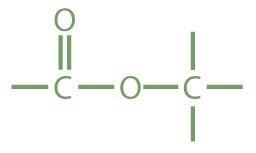 | 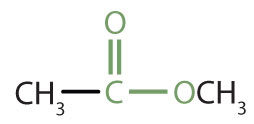 | methyl acetate | methyl ethanoate |
Concept Review Exercises
How is the carboxyl group related to the carbonyl group and the OH group?
How is the amide group related to the carboxyl group and amines?
Answers
The carboxyl group has a carbonyl group joined to an OH group.
The amide group has a carboxyl group joined to an amino group.
Exercises
Draw the functional group in each class of compounds.
aldehydes
esters
carboxylic acids
How are the functional groups in Exercise 1 alike and different?
Draw the functional group in each class of compounds.
amides
ketones
ethers
How are the functional groups in Exercise 2 alike and different?
Answers





15.2 Carboxylic Acids: Structures and Names
Carboxylic acids occur widely in nature, often combined with alcohols or other functional groups, as in fats, oils, and waxes. They are components of many foods, medicines, and household products (Figure 15.1 "Carboxylic Acids in the Home"). Not surprisingly, many of them are best known by common names based on Latin and Greek words that describe their source. What you learn in this chapter about the chemistry of carboxylic acids will help you understand biochemistry (Chapter 16 "Carbohydrates" through Chapter 20 "Energy Metabolism").
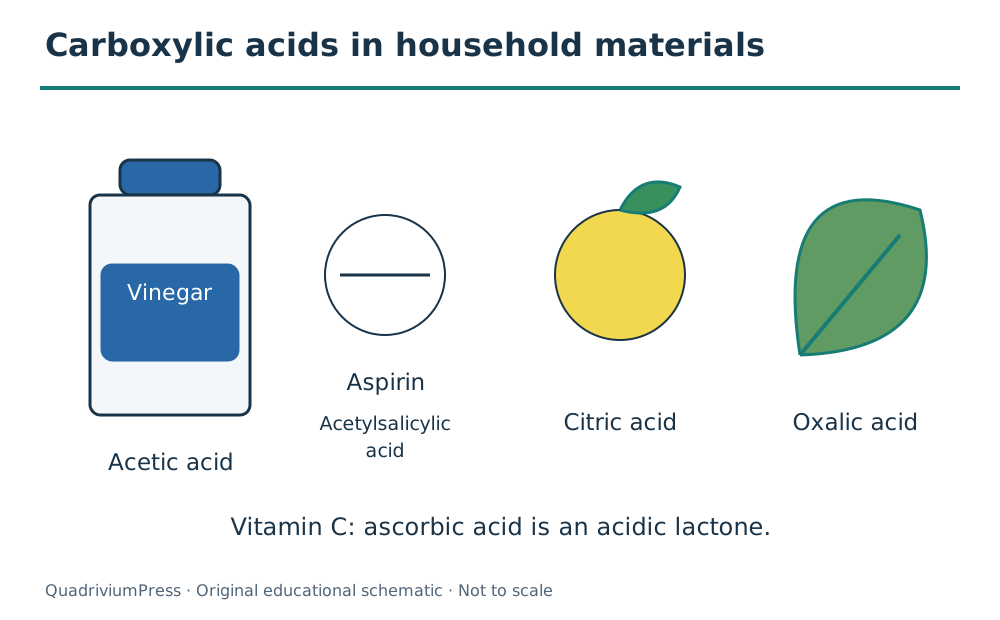
Figure 15.1 Carboxylic Acids in the Home
Vinegar contains acetic acid; aspirin is acetylsalicylic acid; vitamin C is ascorbic acid; lemons contain citric acid; spinach contains oxalic acid. Ascorbic acid is a lactone with acidic enediol hydroxyl groups, rather than a carboxylic acid.
Credit: QuadriviumPress; CC BY-NC-SA 3.0. Source.
The simplest carboxylic acid, formic acid (HCOOH), was first obtained by the distillation of ants (Latin formica, meaning “ant”). The bites of some ants inject formic acid, and the stings of wasps and bees contain formic acid (as well as other poisonous materials).

The next higher homolog is acetic acid, which is made by fermenting cider and honey in the presence of oxygen. This fermentation produces vinegar, a solution containing 4%--10% acetic acid, plus a number of other compounds that add to its flavor. Acetic acid is probably the most familiar weak acid used in educational and industrial chemistry laboratories.

The third homolog, propionic acid (CH3CH2COOH), is seldom encountered in everyday life. The fourth homolog, butyric acid (CH3CH2CH2COOH), is one of the most foul-smelling substances imaginable. It is found in rancid butter and is one of the ingredients of body odor. By recognizing extremely small amounts of this and other chemicals, bloodhounds are able to track fugitives. Models of the first four carboxylic acids are shown in Figure 15.2 "Ball-and-Stick Models of Carboxylic Acids".
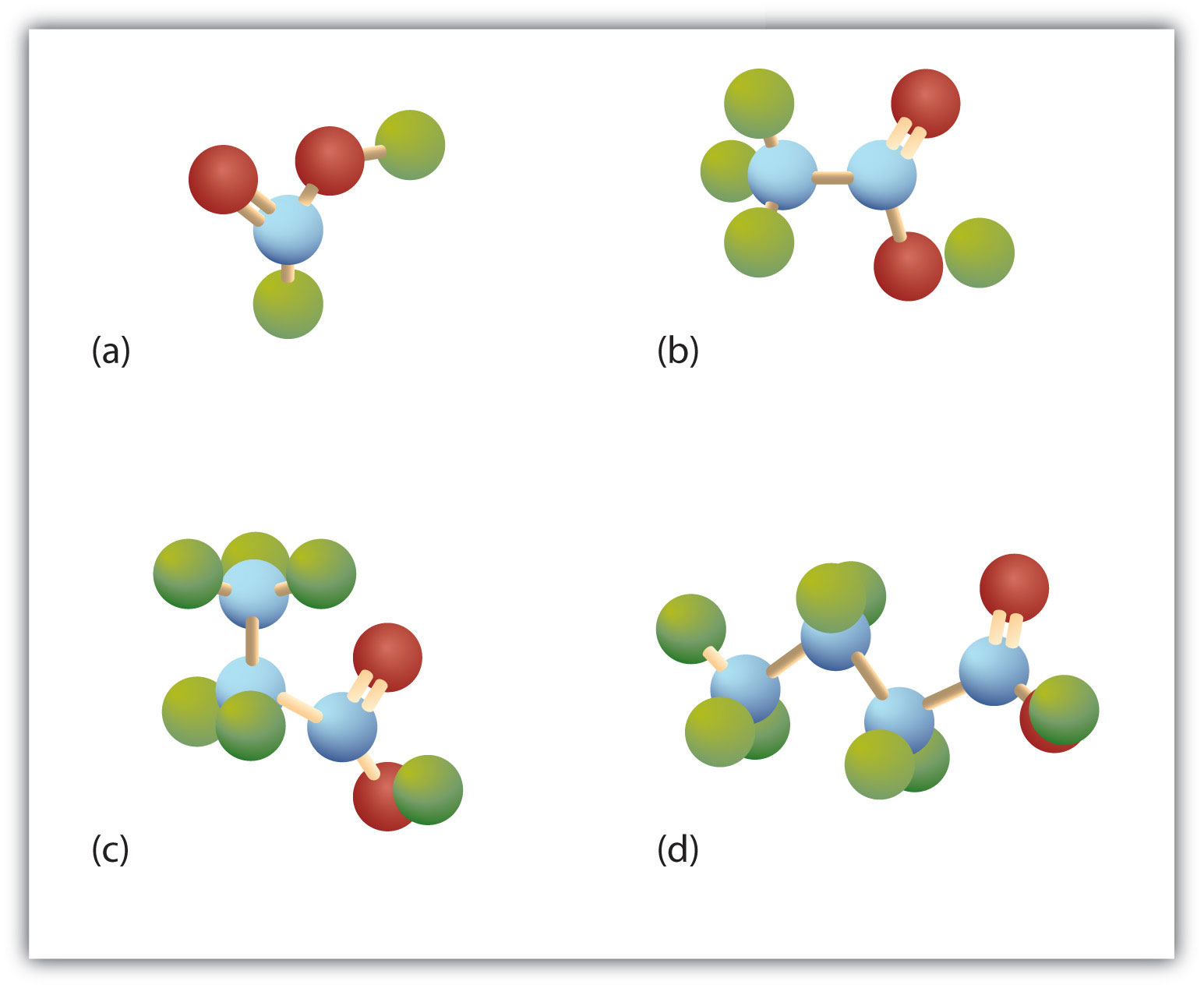
Figure 15.2 Ball-and-Stick Models of Carboxylic Acids
Carboxylic acids feature a carbon atom doubly bonded to an oxygen atom and also joined to an OH group. The four acids illustrated here are formic acid (a), acetic acid (b), propionic acid (c), and butyric acid (d).
The acid with the carboxyl group attached directly to a benzene ring is called benzoic acid (C6H5COOH).

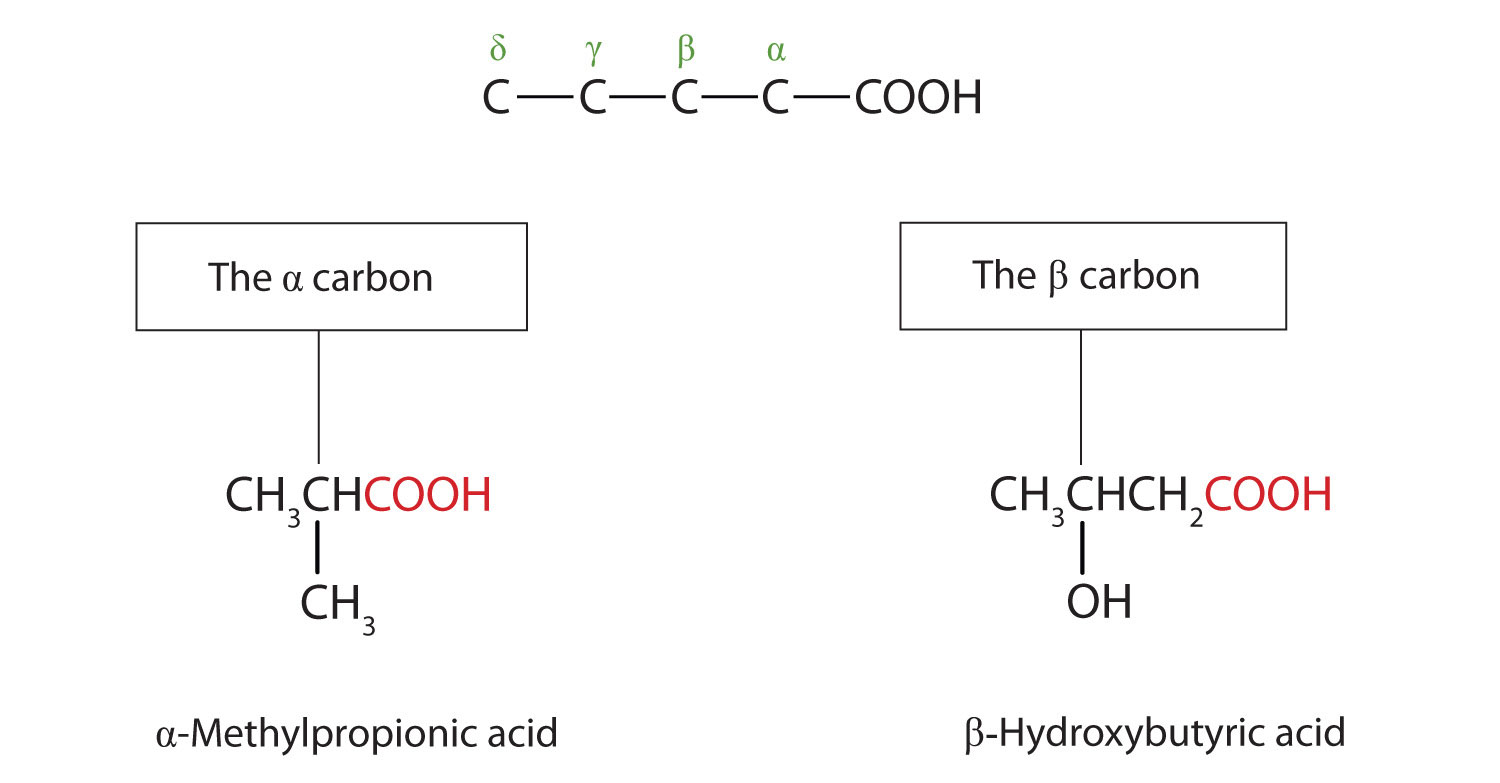
The common names of carboxylic acids use Greek letters (α, β, γ, δ, and so forth), not numbers, to designate the position of substituent groups in acids. These letters refer to the position of the carbon atom in relation to the carboxyl carbon atom.
In the nomenclature system of the International Union of Pure and Applied Chemistry (IUPAC), the parent hydrocarbon is the one that corresponds to the longest continuous chain (LCC) containing the carboxyl group. The -e ending of the parent alkane is replaced by the suffix -oic and the word acid. For example, the carboxylic acid derived from pentane is pentanoic acid (CH3CH2CH2CH2COOH). As with aldehydes, the carboxyl carbon atom is counted first; numbers are used to indicate any substituted carbon atoms in the parent chain.
Example 1
Give the common and IUPAC names for each compound.
ClCH2CH2CH2COOH

Solution
The LCC contains four carbon atoms; the compound is therefore named as a substituted butyric (or butanoic) acid.

The chlorine atom is attached to the γ-carbon in the common system or C4 in the IUPAC system. The compound is γ-chlorobutyric acid or 2-bromobutanoic acid.
The LCC contains four carbon atoms; the compound is therefore named as a substituted butyric (or butanoic) acid.

The bromine (Br) atom is at the α-carbon in the common system or C2 in the IUPAC system. The compound is α-bromobutyric acid or 4-chlorobutanoic acid.
Skill-Building Exercise
Give the IUPAC name for each compound.
ClCH2CH2CH2CH2COOH
(CH3)2CHCH2CHBrCOOH
Example 2
Write the condensed structural formula for β-chloropropionic acid.
Solution
Propionic acid has three carbon atoms: C--C--COOH. Attach a chlorine (Cl) atom to the parent chain at the beta carbon atom, the second one from the carboxyl group: Cl--C--C--COOH. Then add enough hydrogen atoms to give each carbon atom four bonds: ClCH2CH2COOH.
Skill-Building Exercise
Write the condensed structural formula for 4-bromo-5-methylhexanoic acid.
Concept Review Exercises
What is the IUPAC name for the straight-chain carboxylic acid with six carbon atoms?
The straight-chain aldehyde with five carbon atoms has the common name valeraldehyde. What is the common name of the corresponding straight-chain carboxylic acid?
Answers
hexanoic acid
valeric acid
Exercises
Draw the structure for each compound.
heptanoic acid
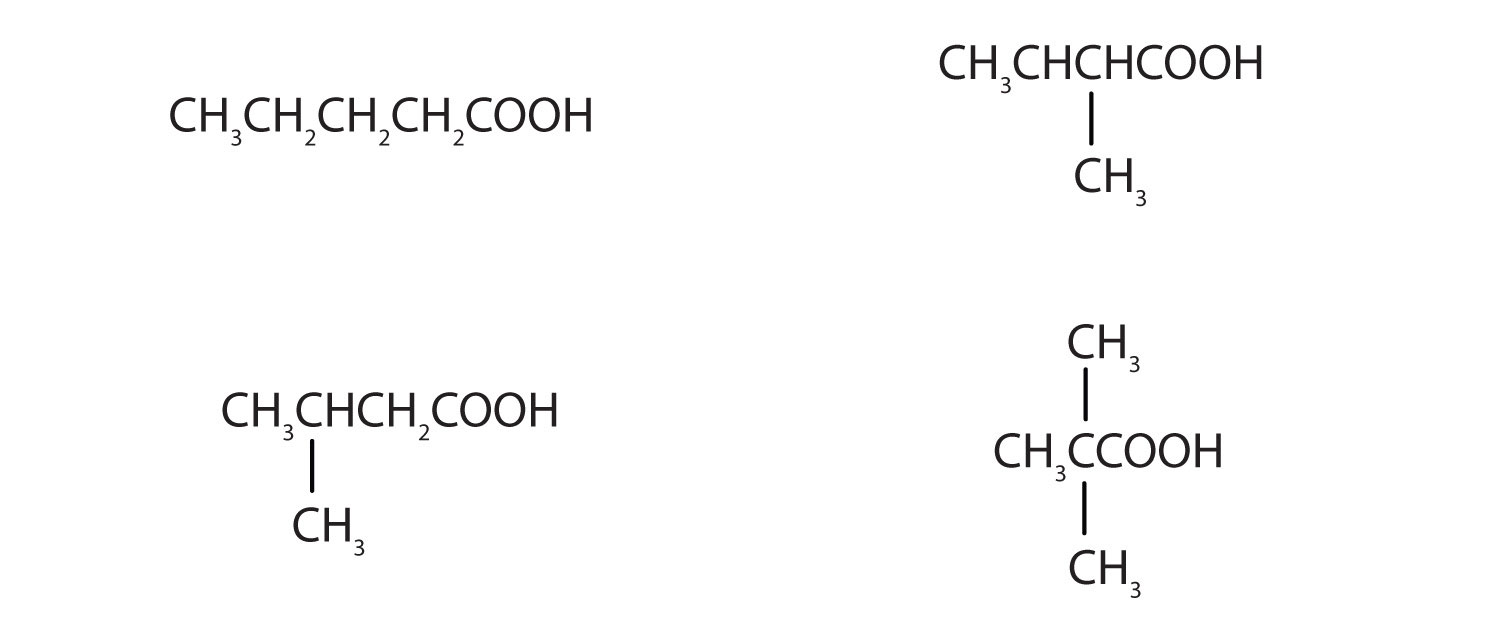
3-methylbutanoic acid
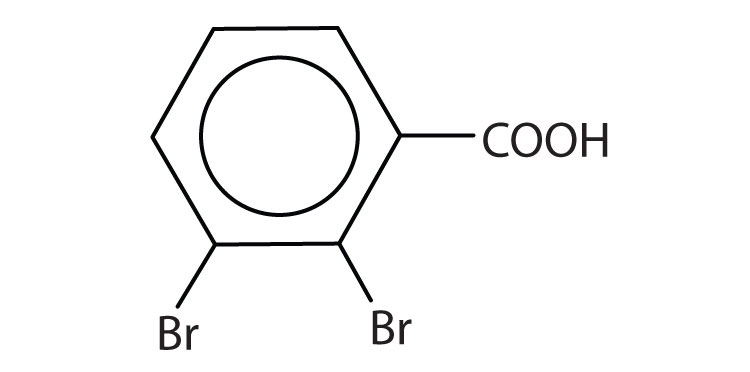
2,3-dibromobenzoic acid
β-hydroxybutyric acid
Draw the structure for each compound.
o-nitrobenzoic acid
p-chlorobenzoic acid
3-chloropentanoic acid
α-chloropropionic acid
Name each compound with either the IUPAC name, the common name, or both.
(CH3)2CHCH2COOH
(CH3)3CCH(CH3)CH2COOH
CH2OHCH2CH2COOH
Name each compound with its IUPAC name.
CH3(CH2)8COOH
(CH3)2CHCCl2CH2CH2COOH
CH3CHOHCH(CH2CH3)CHICOOH
Answers
CH3CH2CH2CH2CH2CH2COOH


3-methylbutanoic acid; β-methylbutyric acid
3,4,4-trimethylpentanoic acid
4-hydroxybutanoic acid; γ- hydroxybutyric acid
15.3 The Formation of Carboxylic Acids
As we noted in Chapter 14 "Organic Compounds of Oxygen", the oxidation of aldehydes or primary alcohols forms carboxylic acids:

In the presence of an oxidizing agent, ethanol is oxidized to acetaldehyde, which is then oxidized to acetic acid.

This process also occurs in the liver, where enzymes catalyze the oxidation of ethanol to acetic acid.
Acetic acid can be further oxidized to carbon dioxide and water.
Concept Review Exercises
Caproic acid (hexanoic acid) can be prepared in an oxidation reaction from
what alcohol?
what aldehyde?
Give the structures of the aldehyde and the carboxylic acid formed by the oxidation of isobutyl alcohol [(CH3)2CHCH2OH].
Answers
CH3CH2CH2CH2CH2CH2OH
CH3CH2CH2CH2CH2CHO

Exercises
Caprylic acid (octanoic acid) can be prepared in an oxidation reaction from
what alcohol?
what aldehyde?
Give the structures of the aldehyde and the carboxylic acid formed by the oxidation of 1,4-butanediol (HOCH2CH2CH2CH2OH).
Answer
CH3CH2CH2CH2CH2CH2CH2CH2OH
CH3CH2CH2CH2CH2CH2CH2CHO
15.4 Physical Properties of Carboxylic Acids
Many carboxylic acids are colorless liquids with disagreeable odors. The carboxylic acids with 5 to 10 carbon atoms all have “goaty” odors (explaining the odor of Limburger cheese). These acids are also produced by the action of skin bacteria on human sebum (skin oils), which accounts for the odor of poorly ventilated locker rooms. The acids with more than 10 carbon atoms are waxlike solids, and their odor diminishes with increasing molar mass and resultant decreasing volatility.
Carboxylic acids exhibit strong hydrogen bonding between molecules. They therefore have high boiling points compared to other substances of comparable molar mass.
The carboxyl group readily engages in hydrogen bonding with water molecules (Figure 15.3 "Hydrogen Bonding between an Acetic Acid Molecule and Water Molecules"). The acids with one to four carbon atoms are completely miscible with water. Solubility decreases as the carbon chain length increases because dipole forces become less important and dispersion forces become more predominant. Hexanoic acid [CH3(CH2)4COOH] is barely soluble in water (about 1.0 g/100 g of water). Palmitic acid [CH3(CH2)14COOH], with its large nonpolar hydrocarbon component, is essentially insoluble in water. The carboxylic acids generally are soluble in such organic solvents as ethanol, toluene, and diethyl ether.
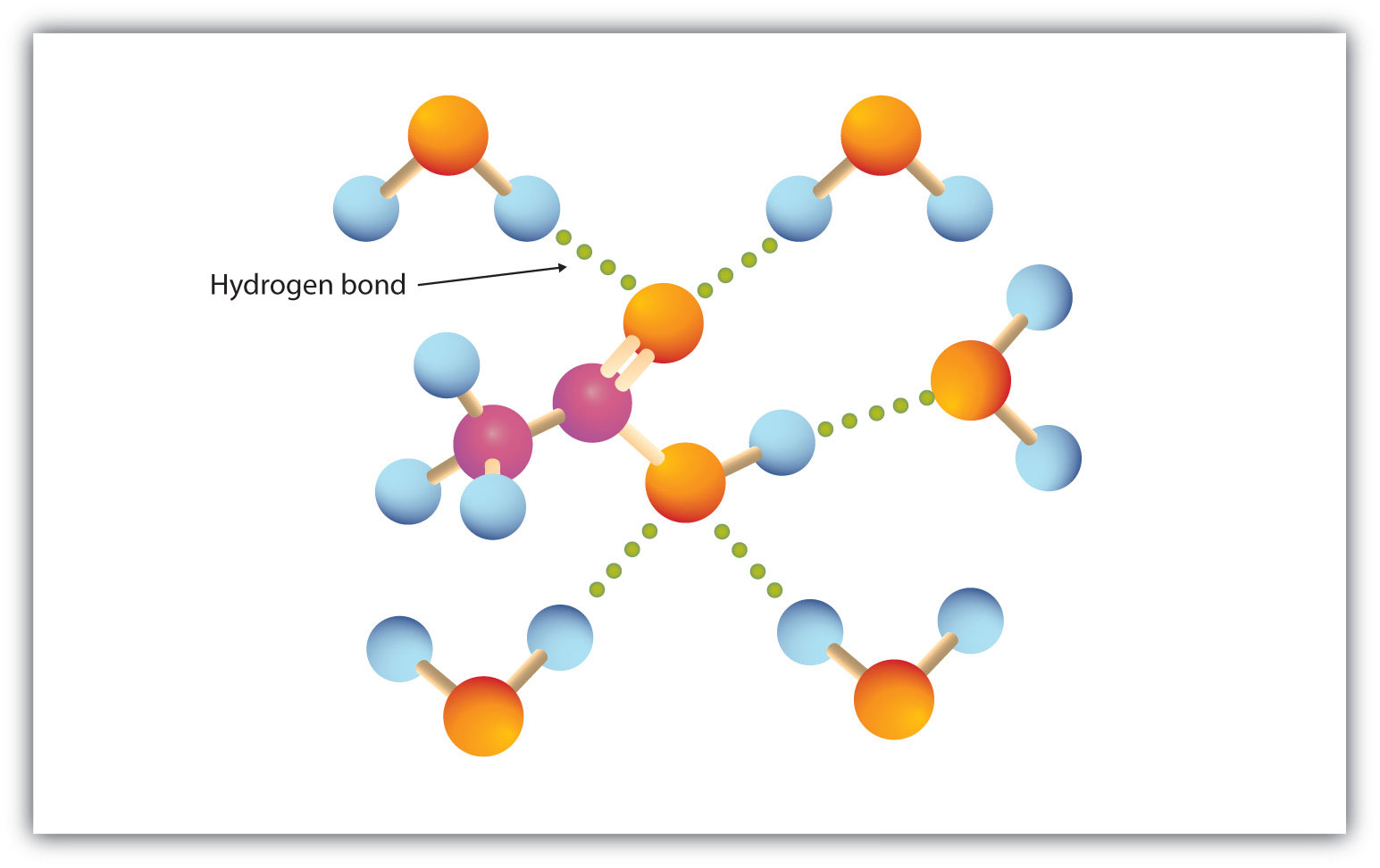
Figure 15.3 Hydrogen Bonding between an Acetic Acid Molecule and Water Molecules
Carboxylic acids of low molar mass are quite soluble in water.
Table 15.2 "Physical Constants of Carboxylic Acids" lists some physical properties for selected carboxylic acids. The first six are homologs. Notice that the boiling points increase with increasing molar mass, but the melting points show no regular pattern.
Table 15.2 Physical Constants of Carboxylic Acids
Condensed Structural Formula | Name of Acid | Melting Point (°C) | Boiling Point (°C) | Solubility (g/100 g of Water) |
|---|---|---|---|---|
HCOOH | formic acid | 8 | 100 | miscible |
CH3COOH | acetic acid | 17 | 118 | miscible |
CH3CH2COOH | propionic acid | --22 | 141 | miscible |
CH3(CH2)2COOH | butyric acid | --5 | 163 | miscible |
CH3(CH2)3COOH | valeric acid | --35 | 187 | 5 |
CH3(CH2)4COOH | caproic acid | --3 | 205 | 1.1 |
C6H5COOH | benzoic acid | 122 | 249 | 0.29 |
Concept Review Exercises
Which compound has the higher boiling point---butanoic acid (molar mass 88) or 2-pentanone (molar mass 86)? Explain.
Would you expect butyric acid (butanoic acid) to be more or less soluble than 1-butanol in water? Explain.
Answers
butyric acid because of hydrogen bonding (There is no intermolecular hydrogen bonding in 2-pentanone.)
more soluble because there is more extensive hydrogen bonding
Exercises
Which compound has the higher boiling point---CH3CH2CH2OCH2CH3 or CH3CH2CH2COOH? Explain.
Which compound has the higher boiling point---CH3CH2CH2CH2CH2OH or CH3CH2CH2COOH? Explain.
Which compound is more soluble in water---CH3COOH or CH3CH2CH2CH3? Explain.
Which compound is more soluble in water---CH3CH2COOH or CH3CH2CH2CH2CH2COOH? Explain.
Answers
CH3CH2CH2COOH because of hydrogen bonding (There is no intermolecular hydrogen bonding with CH3CH2CH2OCH2CH3.)
CH3COOH because it engages in hydrogen bonding with water (There is no intermolecular hydrogen bonding with CH3CH2CH2CH3.)
15.5 Chemical Properties of Carboxylic Acids: Ionization and Neutralization
Water-soluble carboxylic acids ionize slightly in water to form moderately acidic solutions.
Their aqueous solutions exhibit the typical properties of acids, such as changing litmus from blue to red.
Whether soluble in water or not, carboxylic acids react with aqueous solutions of sodium hydroxide (NaOH), sodium carbonate (Na2CO3), and sodium bicarbonate (NaHCO3) to form salts:
RCOOH + NaOH(aq) → RCOO−Na+(aq) + H2O 2RCOOH + Na2CO3(aq) → 2RCOO−Na+(aq) + H2O + CO2(g) RCOOH + NaHCO3(aq) → RCOO−Na+(aq) + H2O + CO2(g)
In these reactions, the carboxylic acids act like inorganic acids: they neutralize basic compounds. With solutions of carbonate (CO3) and bicarbonate (HCO3) ions, they also form carbon dioxide gas.
Carboxylic acid salts are named in the same manner as inorganic salts: the name of the cation is followed by the name of the organic anion. The name of the anion is obtained by dropping the -ic ending of the acid name and replacing it with the suffix -ate. This rule applies whether we are using common names or International Union of Pure and Applied Chemistry (IUPAC) names:

Example 3
Write an equation for each reaction.
the ionization of propionic acid in water (H2O)
the neutralization of propionic acid with aqueous sodium hydroxide (NaOH)
Solution
Propionic acid has three carbon atoms, so its formula is CH2CH2COOH.
Propionic acid ionizes in water to form a propionate ion and a hydronium (H3O+) ion.
CH3CH2COOH(aq) + H2O(ℓ) → CH3CH2COO−(aq) + H3O+(aq)
Propionic acid reacts with NaOH(aq) to form sodium propionate and water.
CH3CH2COOH(aq) + NaOH(aq) → CH3CH2COO−Na+(aq) + H2O(ℓ)
Skill-Building Exercise
Write an equation for each reaction.
the ionization of formic acid in water
the ionization of p-chlorobenzoic acid in water
Example 4
Write an equation for the reaction of decanoic acid with each compound.
aqueous sodium hydroxide (NaOH)
aqueous sodium bicarbonate (NaHCO3)
Solution
Decanoic acid has 10 carbon atoms. It reacts with NaOH to form a salt and water (H2O).
CH3(CH2)8COOH + NaOH(aq) → CH3(CH2)8COO−Na+(aq) + H2O(ℓ)
With NaHCO3, the products are a salt, H2O, and carbon dioxide (CO2).
CH3(CH2)8COOH + NaHCO3(aq) → CH3(CH2)8COO−Na+(aq) + H2O(ℓ) + CO2(g)
Skill-Building Exercise
Write an equation for the reaction of benzoic acid with each compound.
aqueous sodium hydroxide (NaOH)
aqueous sodium bicarbonate (NaHCO3)
Concept Review Exercises
How does the neutralization of a carboxylic acid differ from that of an inorganic acid? How are they similar?
What products are formed when a carboxylic acid is neutralized with a strong base? What additional product is formed when a carboxylic acid is neutralized with a carbonate or a bicarbonate?
Answers
Insoluble carboxylic acids often form soluble carboxylate salts. Both form a salt and water.
a carboxylate salt and water; carbon dioxide
Exercises
Write the equation for the ionization of CH3CH2CH2COOH in water.
Write the equation for the neutralization of CH3CH2CH2COOH with sodium hydroxide [NaOH(aq)].
Write the equation for the reaction of CH3COOH with sodium carbonate [Na2CO3(aq)].
Write the equation for the reaction of CH3CH2COOH with sodium bicarbonate [NaHCO3(aq)].
Write the equation for the ionization of propionic acid in water.
Write the equation for the ionization of γ-chloropentanoic acid in water.
Write an equation for the reaction of butyric acid with each compound.
aqueous NaOH
aqueous NaHCO3
Write the condensed structural formula for each compound.
potassium acetate
calcium propanoate
Name each compound.
CH3CH2CH2COO−Li+
CH3CH2CH2COO−NH4+
Answers
CH3CH2CH2COOH(aq) + H2O(ℓ) → CH3CH2CH2COO−(aq) + H3O+(aq)
2CH3COOH + Na2CO3(aq) → 2CH3COO−Na+(aq) + H2O(ℓ) + CO2(g)
CH3CH2COOH(aq) + H2O(ℓ) → CH3CH2COO−(aq) + H3O+(aq)
CH3CH2CH2COOH(aq) + NaOH(aq) → CH3CH2CH2COO−Na+(aq) + H2O(ℓ)
CH3(CH2)2COOH + NaHCO3(aq) → CH3(CH2)COO−Na+(aq) + H2O(ℓ) + CO2(g)
lithium butyrate (lithium butanoate)
ammonium butanoate or ammonium butyrate
15.6 Esters: Structures and Names
Esters have the general formula RCOOR′, where R may be a hydrogen atom, an alkyl group, or an aryl group, and R′ may be an alkyl group or an aryl group but not a hydrogen atom. (If it were a hydrogen atom, the compound would be a carboxylic acid.) Figure 15.4 "The Structure of Esters" shows models for two common esters.
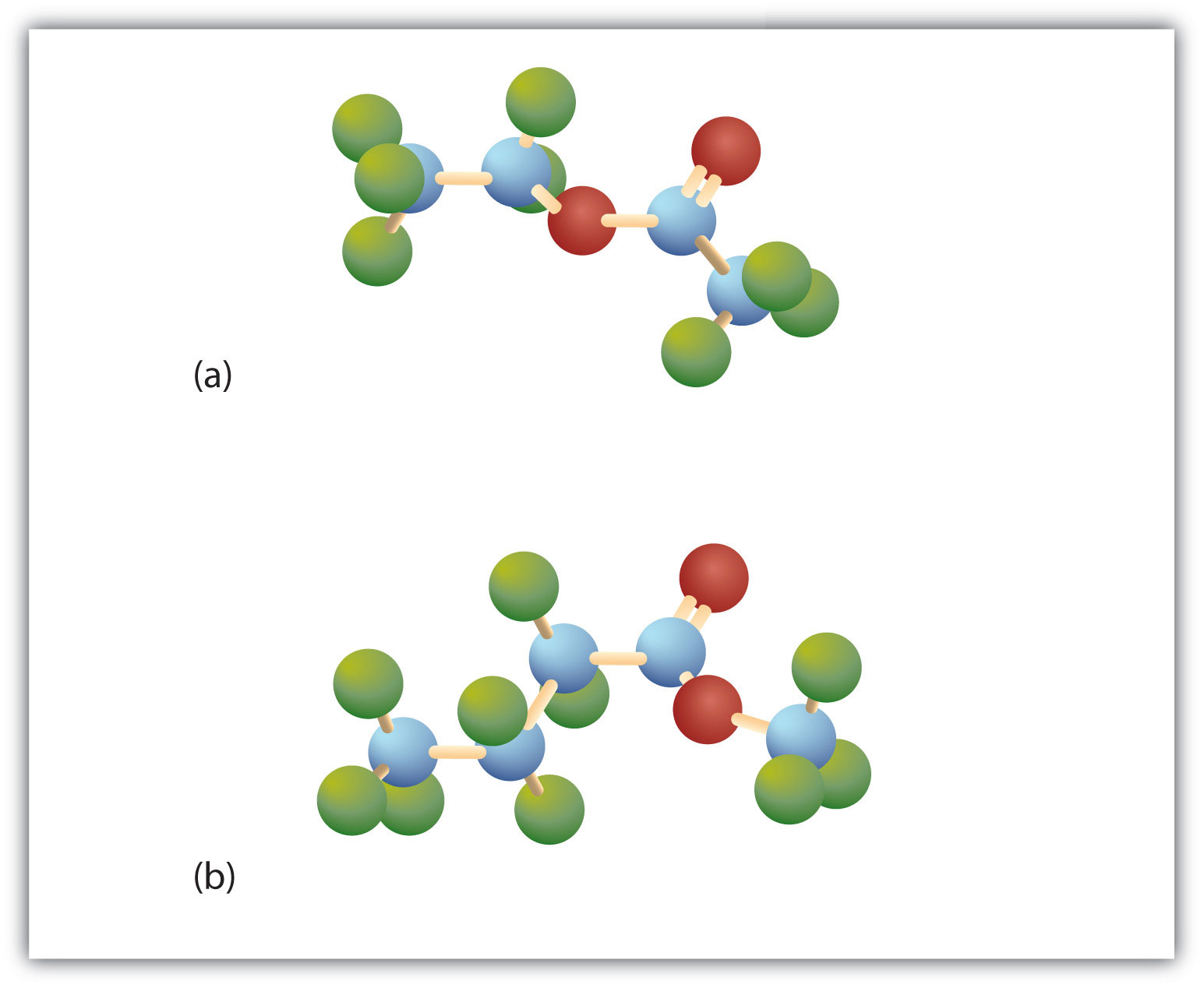
Figure 15.4 The Structure of Esters
Esters feature a carbon-to-oxygen double bond that is also singly bonded to a second oxygen atom, which is then joined to an alkyl or an aryl group. The esters shown here are ethyl acetate (a) and methyl butyrate (b).
Esters occur widely in nature. Unlike carboxylic acids, esters generally have pleasant odors and are often responsible for the characteristic fragrances of fruits and flowers. Once a flower or fruit has been chemically analyzed, flavor chemists can attempt to duplicate the natural odor or taste. Both natural and synthetic esters are used in perfumes and as flavoring agents.
Names of Esters
Although esters are covalent compounds and salts are ionic, esters are named in a manner similar to that used for naming salts. The group name of the alkyl or aryl portion is given first and is followed by the name of the acid portion. In both common and International Union of Pure and Applied Chemistry (IUPAC) nomenclature, the -ic ending of the parent acid is replaced by the suffix -ate (Table 15.3 "Nomenclature of Esters").
Table 15.3 Nomenclature of Esters
Condensed Structural Formula | Common Name | IUPAC Name |
|---|---|---|
HCOOCH3 | methyl formate | methyl methanoate |
CH3COOCH3 | methyl acetate | methyl ethanoate |
CH3COOCH2CH3 | ethyl acetate | ethyl ethanoate |
CH3CH2COOCH2CH3 | ethyl propionate | ethyl propanoate |
CH3CH2CH2COOCH(CH3)2 | isopropyl butyrate | isopropyl butanoate |
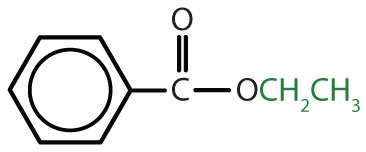 | ethyl benzoate | ethyl benzoate |
Example 5
Give the common and IUPAC names for each compound.


Solution
The alkyl group attached directly to the oxygen atom is a butyl group (in green).

The part of the molecule derived from the carboxylic acid (in red) has three carbon atoms. It is called propionate (common) or propanoate (IUPAC). The ester is therefore butyl propionate or butyl propanoate.
An alkyl group (in green) is attached directly to the oxygen atom by its middle carbon atom; it is an isopropyl group. The part derived from the acid (that is, the benzene ring and the carbonyl group, in red) is benzoate. The ester is therefore isopropyl benzoate (both the common name and the IUPAC name).

Skill-Building Exercise
Give the common and IUPAC names for each compound.


Example 6
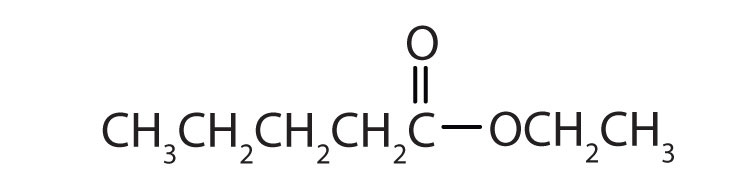
Draw the structure for ethyl pentanoate.
Solution
Start with the portion from the acid. Draw the pentanoate (five carbon atoms) group first, keeping in mind that the last carbon atom is a part of the carboxyl group.

Then attach the ethyl group to the bond that ordinarily holds the hydrogen atom in the carboxyl group.

Skill-Building Exercise
Draw the structure for phenyl pentanoate.
Concept Review Exercises
From what carboxylic acid and what alcohol can isopropyl hexanoate be made?
From what carboxylic acid and what alcohol can cyclobutyl butyrate be made?
Answers
hexanoic acid and isopropyl alcohol
butyric acid and cyclobutyl alcohol
Exercises
Draw the structure for each compound.
methyl acetate
ethyl pentanoate
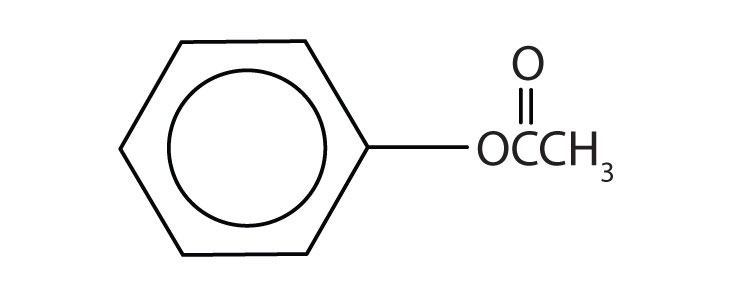
phenyl acetate
isopropyl propionate
Draw the structure for each compound.
ethyl hexanoate
ethyl benzoate
phenyl benzoate
ethyl 3-methylhexanoate
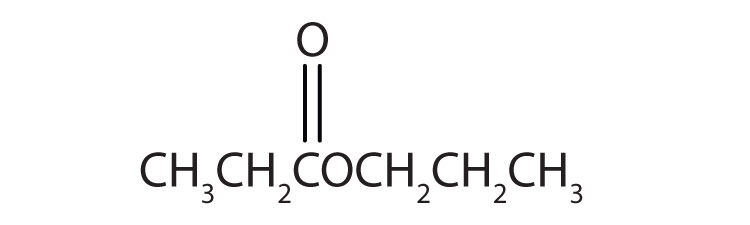
Name each compound with both the common name and the IUPAC name.
Name each compound with both the common name and the IUPAC name.
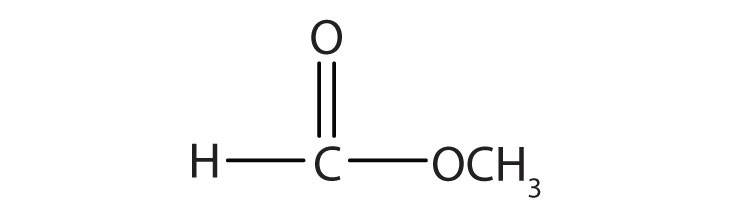

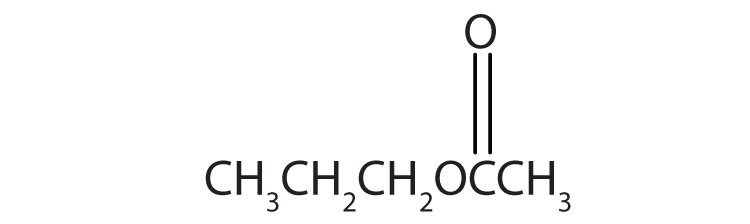
Answers
methyl formate; methyl methanoate
ethyl propionate; ethyl propanoate

15.7 Physical Properties of Esters
Ester molecules are polar but have no hydrogen atom attached directly to an oxygen atom. They are therefore incapable of engaging in intermolecular hydrogen bonding with one another and thus have considerably lower boiling points than their isomeric carboxylic acid counterparts. Because ester molecules can engage in hydrogen bonding with water molecules, however, esters of low molar mass are somewhat soluble in water. Borderline solubility occurs in those molecules that have three to five carbon atoms. Table 15.4 "Physical Properties of Some Esters" lists the physical properties of some common esters.
Table 15.4 Physical Properties of Some Esters
Condensed Structural Formula | Name | Molar Mass | Melting Point (°C) | Boiling Point (°C) | Aroma |
|---|---|---|---|---|---|
HCOOCH3 | methyl formate | 60 | −99 | 32 | |
HCOOCH2CH3 | ethyl formate | 74 | −80 | 54 | rum |
CH3COOCH3 | methyl acetate | 74 | −98 | 57 | |
CH3COOCH2CH3 | ethyl acetate | 88 | −84 | 77 | |
CH3CH2CH2COOCH3 | methyl butyrate | 102 | −85 | 102 | apple |
CH3CH2CH2COOCH2CH3 | ethyl butyrate | 116 | −101 | 121 | pineapple |
CH3COO(CH2)4CH3 | pentyl acetate | 130 | −71 | 148 | pear |
CH3COOCH2CH2CH(CH3)2 | isopentyl acetate | 130 | −79 | 142 | banana |
CH3COOCH2C6H5 | benzyl acetate | 150 | −51 | 215 | jasmine |
CH3CH2CH2COO(CH2)4CH3 | pentyl butyrate | 158 | −73 | 185 | apricot |
CH3COO(CH2)7CH3 | octyl acetate | 172 | −39 | 210 | orange |
Concept Review Exercises
Which compound has the higher boiling point---CH3CH2CH2CH2OH or CH3COOCH3? Explain.
Which compound is more soluble in water---methyl butyrate or butyric acid? Explain.
Answers
CH3CH2CH2CH2OH because there is intermolecular hydrogen bonding (There is no intermolecular hydrogen bonding in CH3COOCH3.)
butyric acid because of hydrogen bonding with water
Exercises
Which compound has the higher boiling point---CH3CH2CH2COOH or CH3CH2CH2COOCH3? Explain.
Which compound is more soluble in water---methyl acetate or octyl acetate? Explain.
Answer
CH3CH2CH2COOH because there is intermolecular hydrogen bonding (There is no intermolecular hydrogen bonding in CH3CH2COOCH3.)
15.8 Preparation of Esters
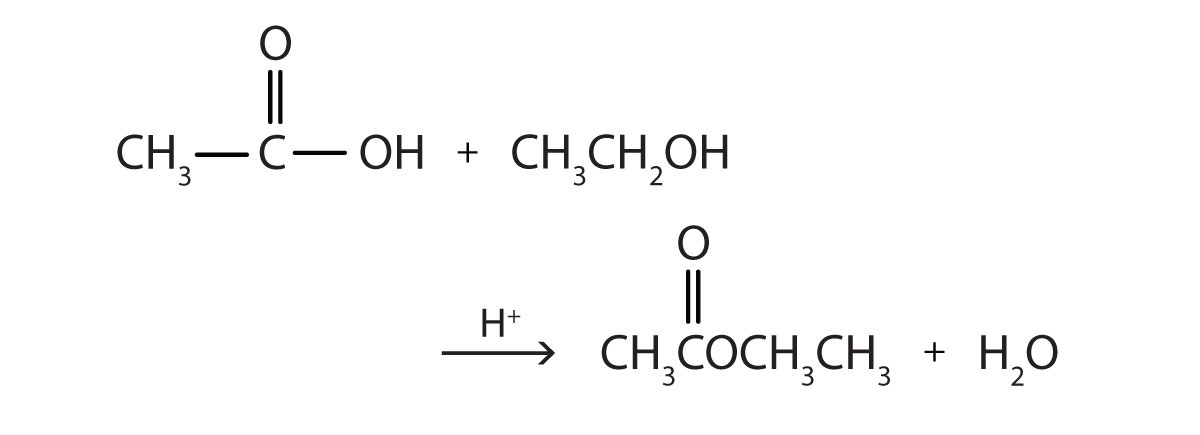
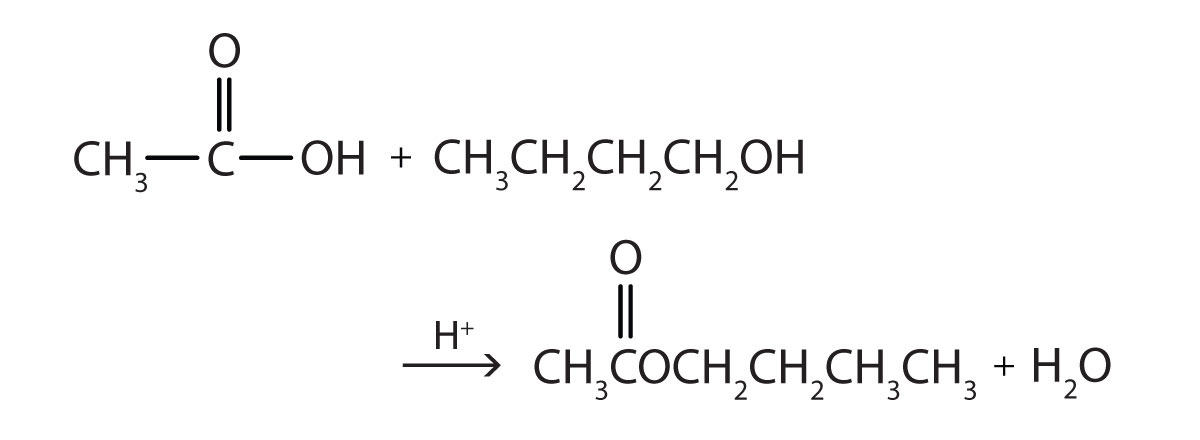
Some esters can be prepared by esterification[6], a reaction in which a carboxylic acid and an alcohol, heated in the presence of a mineral acid catalyst, form an ester and water:

The reaction is reversible. As a specific example of an esterification reaction, butyl acetate can be made from acetic acid and 1-butanol.

Concept Review Exercises
From what carboxylic acid and what alcohol can the ester isopropyl nonanoate be made?
From what carboxylic acid and what alcohol can the ester cyclobutyl butyrate be made?
Answers
nonanoic acid and isopropyl alcohol
butyric acid and cyclobutyl alcohol
Exercises
Write the equation for the reaction of acetic acid with each compound.
ethanol
1-butanol in the presence of a mineral acid catalyst
Write the equation for the reaction of benzoic acid with each compound.
methanol
1-propanol in the presence of a mineral acid catalyst
Answer
15.9 Hydrolysis of Esters
Esters are neutral compounds, unlike the acids from which they are formed. In typical reactions, the alkoxy (OR′) group of an ester is replaced by another group. One such reaction is hydrolysis[7], literally “splitting with water.” The hydrolysis of esters is catalyzed by either an acid or a base.
Acidic hydrolysis is simply the reverse of esterification. The ester is heated with a large excess of water containing a strong-acid catalyst. Like esterification, the reaction is reversible and does not go to completion.

As a specific example, butyl acetate and water react to form acetic acid and 1-butanol. The reaction is reversible and does not go to completion.

Example 7
Write an equation for the acidic hydrolysis of ethyl butyrate (CH3CH2CH2COOCH2CH3) and name the products.
Solution
Remember that in acidic hydrolysis, water (HOH) splits the ester bond. The H of HOH joins to the oxygen atom in the OR part of the original ester, and the OH of HOH joins to the carbonyl carbon atom:

The products are butyric acid (butanoic acid) and ethanol.
Skill-Building Exercise
Write an equation for the acidic hydrolysis of methyl butanoate and name the products.
When a base (such as sodium hydroxide [NaOH] or potassium hydroxide [KOH]) is used to hydrolyze an ester, the products are a carboxylate salt and an alcohol. Because soaps are prepared by the alkaline hydrolysis of fats and oils, alkaline hydrolysis of esters is called saponification[8] (Latin sapon, meaning “soap,” and facere, meaning “to make”). In a saponification reaction, the base is a reactant, not simply a catalyst. The reaction goes to completion:

As a specific example, ethyl acetate and NaOH react to form sodium acetate and ethanol:

Example 8
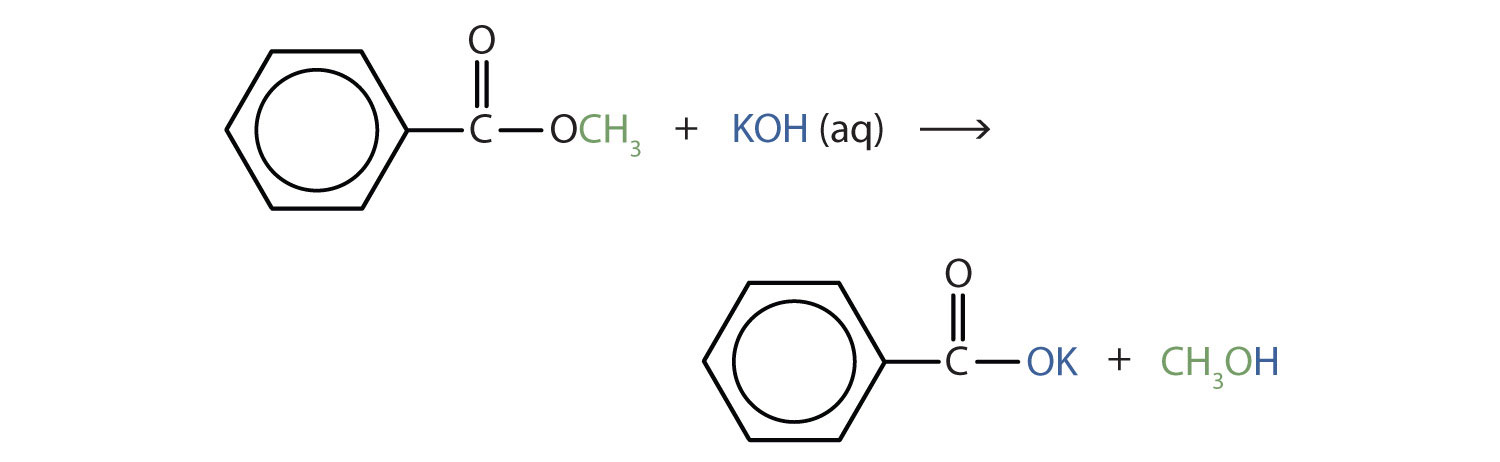
Write an equation for the hydrolysis of methyl benzoate in a potassium hydroxide solution.
Solution
In basic hydrolysis, the molecule of the base splits the ester linkage. The acid portion of the ester ends up as the salt of the acid (in this case, the potassium salt). The alcohol portion of the ester ends up as the free alcohol.
Skill-Building Exercise
Write the equation for the hydrolysis of ethyl propanoate in a sodium hydroxide solution.
Concept Review Exercises
How do acidic hydrolysis and basic hydrolysis of an ester differ in terms of
products obtained?
the extent of reaction?
What is saponification?
Answers
acidic hydrolysis: carboxylic acid + alcohol; basic hydrolysis: carboxylate salt + alcohol
basic hydrolysis: completion; acidic hydrolysis: incomplete reaction
the basic hydrolysis of an ester
Exercises
Write an equation for the acid-catalyzed hydrolysis of ethyl acetate.
Write an equation for the base-catalyzed hydrolysis of ethyl acetate.
Complete each equation.
Complete each equation.
CH3COOCH(CH3)2 + KOH(aq) →


Answers
CH3COONa(aq) + CH3CH2CH2OH
CH3CH2CH2COOH + CH3CH2OH
15.10 Esters of Phosphoric Acid
Just as carboxylic acids do, inorganic acids such as nitric acid (HNO3), sulfuric acid (H2SO4), and phosphoric acid (H3PO4) also form esters. The esters of phosphoric acid are especially important in biochemistry. A phosphoric acid molecule can form a monoalkyl, a dialkyl, or a trialkyl ester by reaction with one, two, or three molecules of an alcohol.
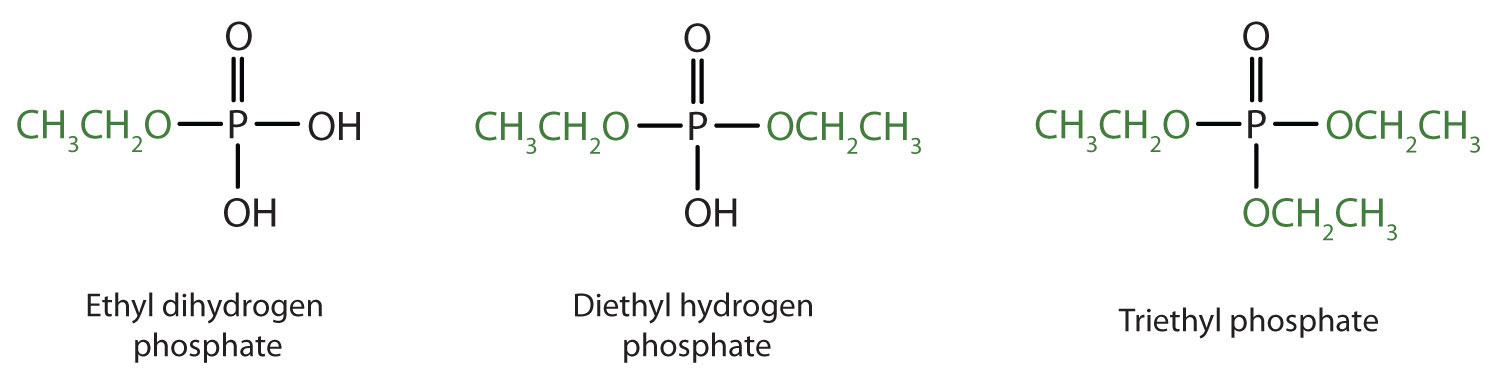
Esters of pyrophosphoric acid and triphosphoric acid are also important in biochemistry.
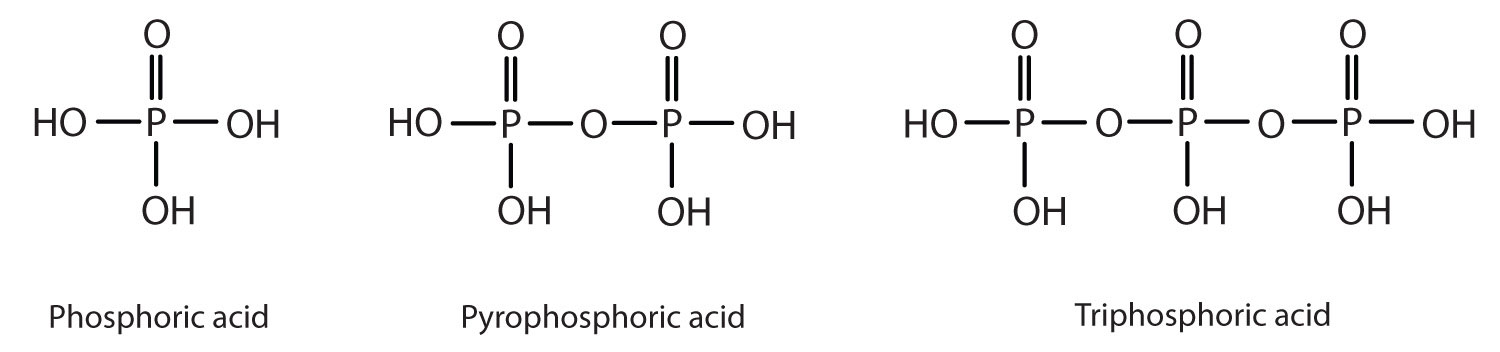
Esters of these acids are present in every plant and animal cell. They are biochemical intermediates in the transformation of food into usable energy. The bonds between phosphate units in adenosine triphosphate (ATP) are called phosphoanhydride bonds. These are high-energy bonds that store energy from the metabolism of foods. Hydrolysis of ATP releases energy as it is needed for biochemical processes (for instance, for muscle contraction). Phosphate esters are also important structural constituents of phospholipids and nucleic acids. (For more information about phospholipids and nucleic acids, see Chapter 17 "Lipids", Section 17.3 "Membranes and Membrane Lipids", and Chapter 19 "Nucleic Acids", respectively.)
Concept Review Exercise
What compounds combine to form phosphate esters?
Answer
phosphoric acids and alcohols
Exercises
Draw the structure for each compound.
diethyl hydrogen phosphate
methyl dihydrogen phosphate
1-glycerol phosphate
Name each compound.



Answer



15.11 Amines: Structures and Names
Amines are classified according to the number of carbon atoms bonded directly to the nitrogen atom. A primary (1°) amine[9] has one alkyl (or aryl) group on the nitrogen atom, a secondary (2°) amine[10] has two, and a tertiary (3°) amine[11] has three (Figure 15.5 "The Structure of Amines Compared to Water, an Alcohol, and an Ether").
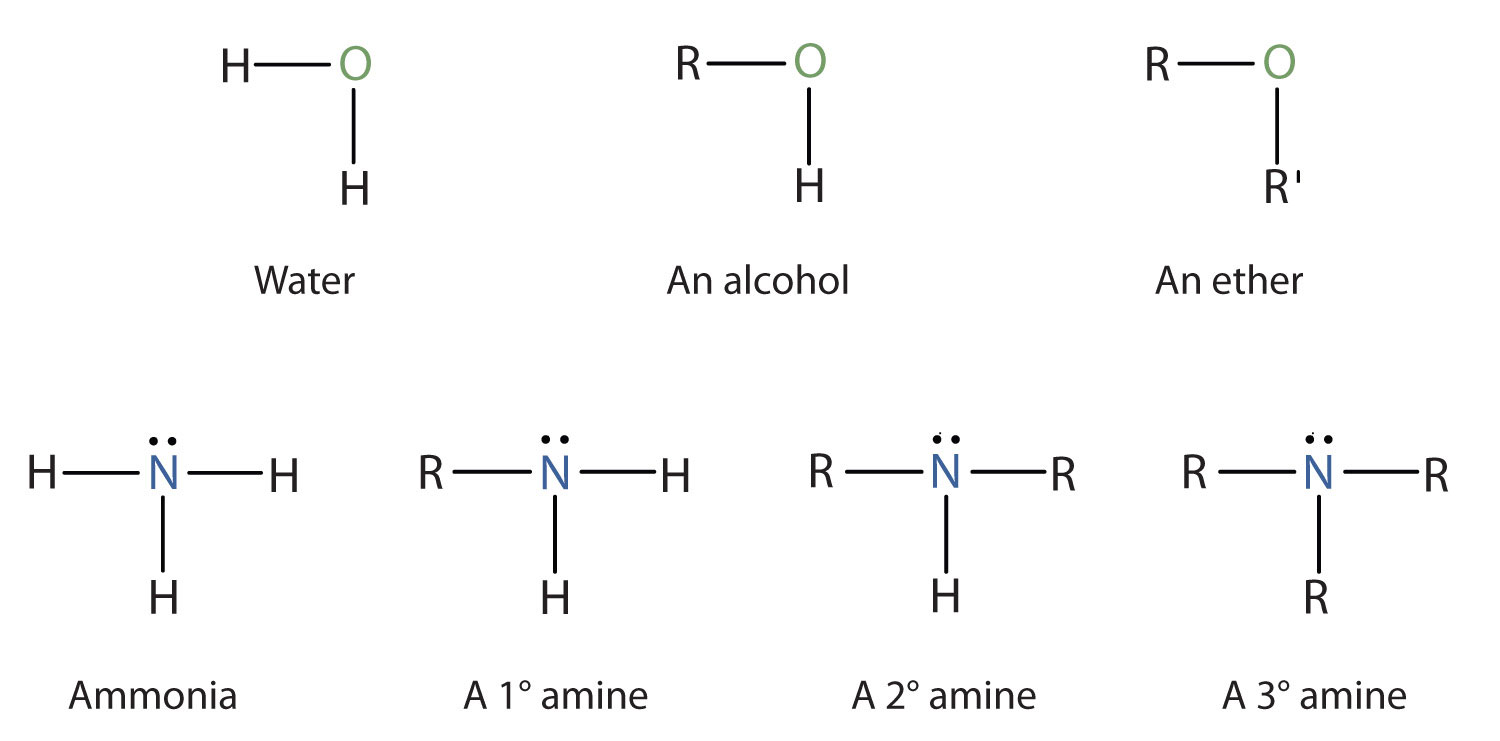
Figure 15.5 The Structure of Amines Compared to Water, an Alcohol, and an Ether
The common names for simple aliphatic amines consist of an alphabetic list of alkyl groups attached to the nitrogen atom, followed by the suffix -amine. (Systematic names are often used by some chemists.) The amino group[12] (NH2) is named as a substituent in more complicated amines, such as those that incorporate other functional groups or in which the alkyl groups cannot be simply named.
Example 9
Name and classify each compound.
CH3CH2CH2NH2

CH3CH2NHCH2CH3
CH3CH2CH2NHCH3
Solution
There is only one alkyl group attached to the nitrogen atom, so the amine is primary. A group of three carbon atoms (a propyl group) is attached to the NH2 group through an end carbon atom, so the name is propylamine.
There are two methyl groups and one ethyl group on the nitrogen atom. The compound is ethyldimethylamine, a tertiary amine.
There are two ethyl groups attached to the nitrogen atom; the amine is secondary, so the compound is diethylamine.
The nitrogen atom has a methyl group and a propyl group, so the compound is methylpropylamine, a secondary amine.
Skill-Building Exercise
Name and classify each compound.


CH3CH2CH2CH2NH2
CH3CH2CH2NHCH2CH2 CH3
Example 10
Draw the structure for each compound and classify.
isopropyldimethylamine
dipropylamine
Solution
The name indicates that there are an isopropyl group (in red) and two methyl groups (in green) attached to the nitrogen atom; the amine is tertiary.

The name indicates that there are two propyl groups attached to the nitrogen atom; the amine is secondary. (The third bond on the nitrogen atom goes to a hydrogen atom.)
CH3CH2CH2NHCH2CH2CH3
Skill-Building Exercise
Draw the structure for each compound and classify.
ethylisopropylamine
diethylpropylamine
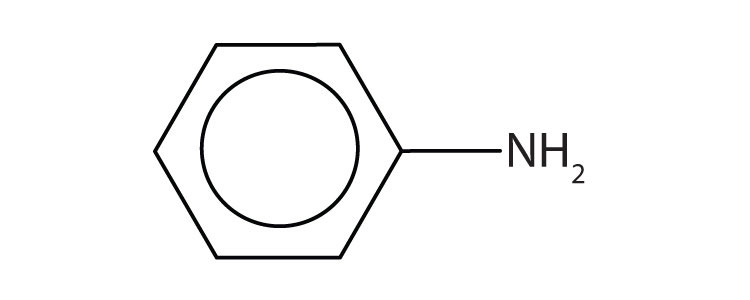
The primary amine in which the nitrogen atom is attached directly to a benzene ring has a special name---aniline. Aryl amines are named as derivatives of aniline.
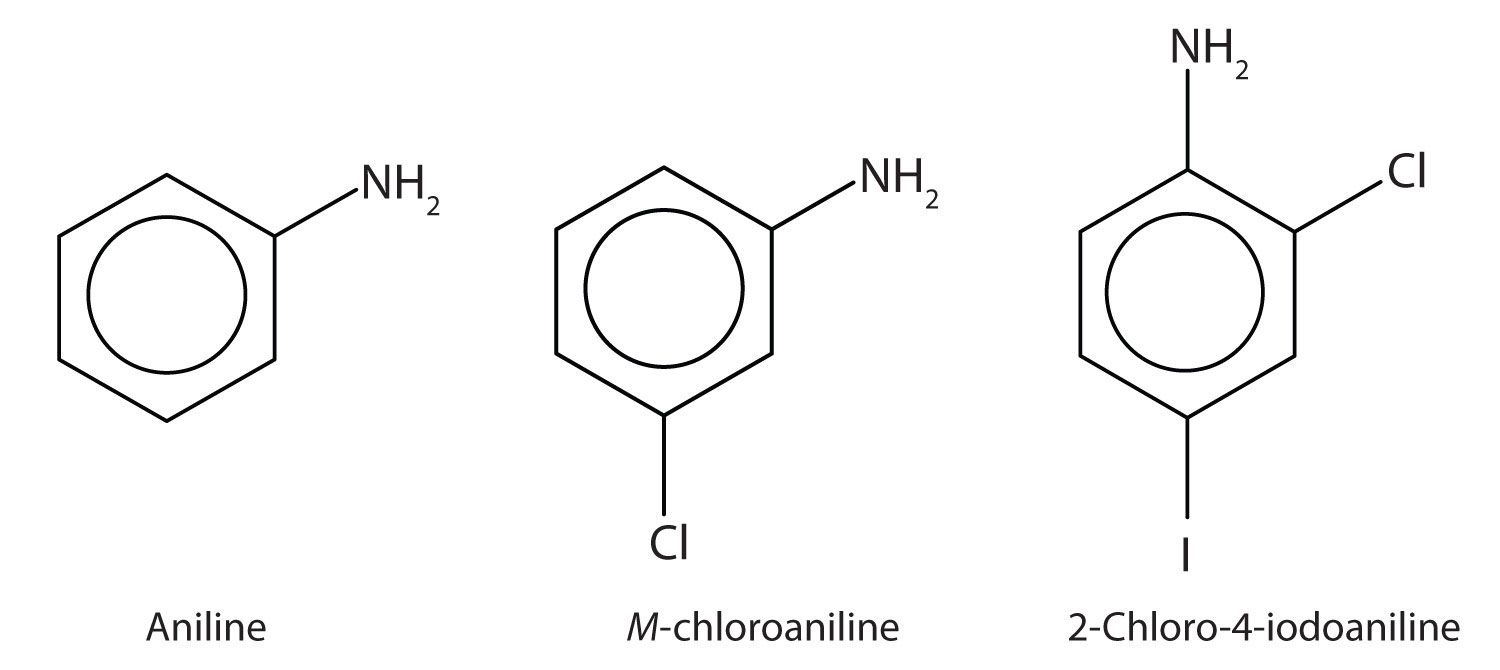
Example 11
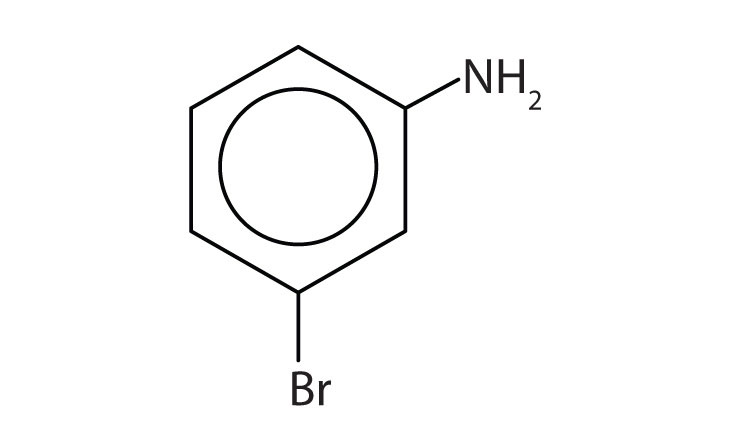
Name this compound.

Solution
The benzene ring with an amino (NH2) group is aniline. The compound is named as a derivative of aniline: 3-bromoaniline or m-bromoaniline.
Skill-Building Exercise
Name this compound.

Example 12
Draw the structure for p-ethylaniline and classify.
Solution
The compound is a derivative of aniline. It is a primary amine having an ethyl group located para to the amino (NH2) group.

Skill-Building Exercise
Draw the structure for p-isopropylaniline and classify.
Example 13
Draw the structure for 2-amino-3-methylpentane.
Solution
Always start with the parent compound: draw the pentane chain. Then attach a methyl group at the third carbon atom and an amino group at the second carbon atom.

Skill-Building Exercise
Draw the structure for 2-amino-3-ethyl-1-chloroheptane.
Ammonium (NH4+) ions, in which one or more hydrogen atoms are replaced with alkyl groups, are named in a manner analogous to that used for simple amines. The alkyl groups are named as substituents, and the parent species is regarded as the NH4+ ion. For example, CH3NH3+ is the methylammonium ion. The ion formed from aniline (C6H5NH3+) is called the anilinium ion.
Example 14
Name each ion.
CH3NH3+
(CH3)2NH2+
(CH3)3NH+
(CH3)4N+
Solution
The ions have one, two, three, and four methyl (CH3) groups attached to a nitrogen atom. Their names are as follows:
methylammonium ion
dimethylammonium ion
trimethylammonium ion
tetramethylammonium ion
Skill-Building Exercise
Name each ion.
CH3CH2NH3+
(CH3CH2)3NH+
(CH3CH2CH2)2NH2+
(CH3CH2CH2CH2)4N+
Concept Review Exercises
To what inorganic compound are the amines related?
How are amines classified?
Answers
ammonia
by the number of hydrocarbon groups on the nitrogen atom: primary amine, one group; secondary amine, two groups; tertiary amine, three groups
Exercises
Draw the structure for each compound and classify the amine as primary, secondary, or tertiary.
dimethylamine
diethylmethylamine
2-aminoethanol
Draw the structure for each compound and classify the amine as primary, secondary, or tertiary.
3-aminopentane
1,6-diaminohexane
ethylphenylamine
Draw the structure for each compound.
aniline
m-bromoaniline
Draw the structure for each compound.
2-chloroaniline
3,5-dichloroaniline
Name each compound.
CH3CH2CH2NH2

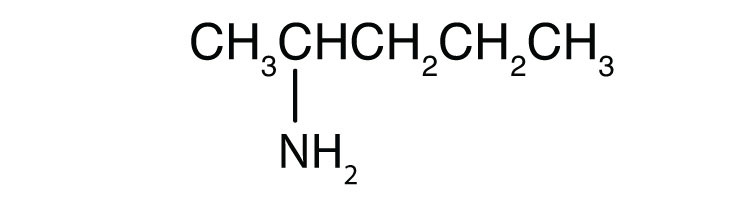
Name each compound.
(CH3CH2)3N
(CH3CH2)2NCH3
Draw the structure for each compound.
dimethylammonium chloride
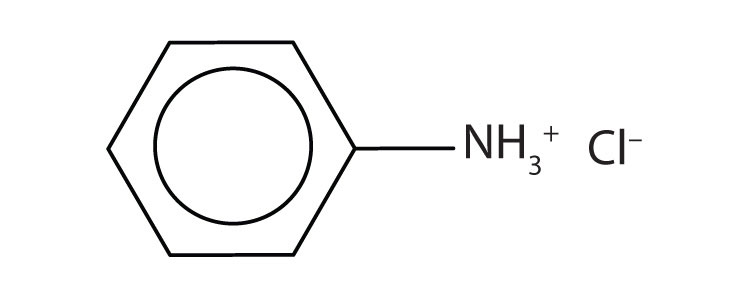
anilinium chloride
Draw the structure for each compound.
ethylmethylammonium chloride
anilinium nitrate
Name each compound.
[CH3CH2NH2CH2CH3]+Br−
[(CH3CH2)3NH]+I−
Name each compound.
[(CH3)3NH]+NO3−
[(CH3CH2)2NH2]+Cl−
Answers
CH3NHCH3; secondary
tertiary

HOCH2CH2NH2; primary
propylamine
isopropylmethylamine
2-aminopentane
[(CH3)2NH2+]Cl--
diethylammonium bromide
triethylammonium iodide
15.12 Physical Properties of Amines
Primary and secondary amines have hydrogen atoms bonded to a nitrogen atom and are therefore capable of hydrogen bonding (part (a) of Figure 15.6 "Hydrogen Bonding"), although not as strongly as alcohol molecules (which have hydrogen atoms bonded to an oxygen atom, which is more electronegative than nitrogen). These amines boil at higher temperatures than alkanes but at lower temperatures than alcohols of comparable molar mass. For example, compare the boiling point of methylamine (CH3NH2; −6°C) with those of ethane (CH3CH3; −89°C) and methanol (CH3OH; 65°C). Tertiary amines have no hydrogen atom bonded to the nitrogen atom and so cannot participate in intermolecular hydrogen bonding. They have boiling points comparable to those of ethers (Table 15.5 "Physical Properties of Some Amines and Comparable Oxygen-Containing Compounds").
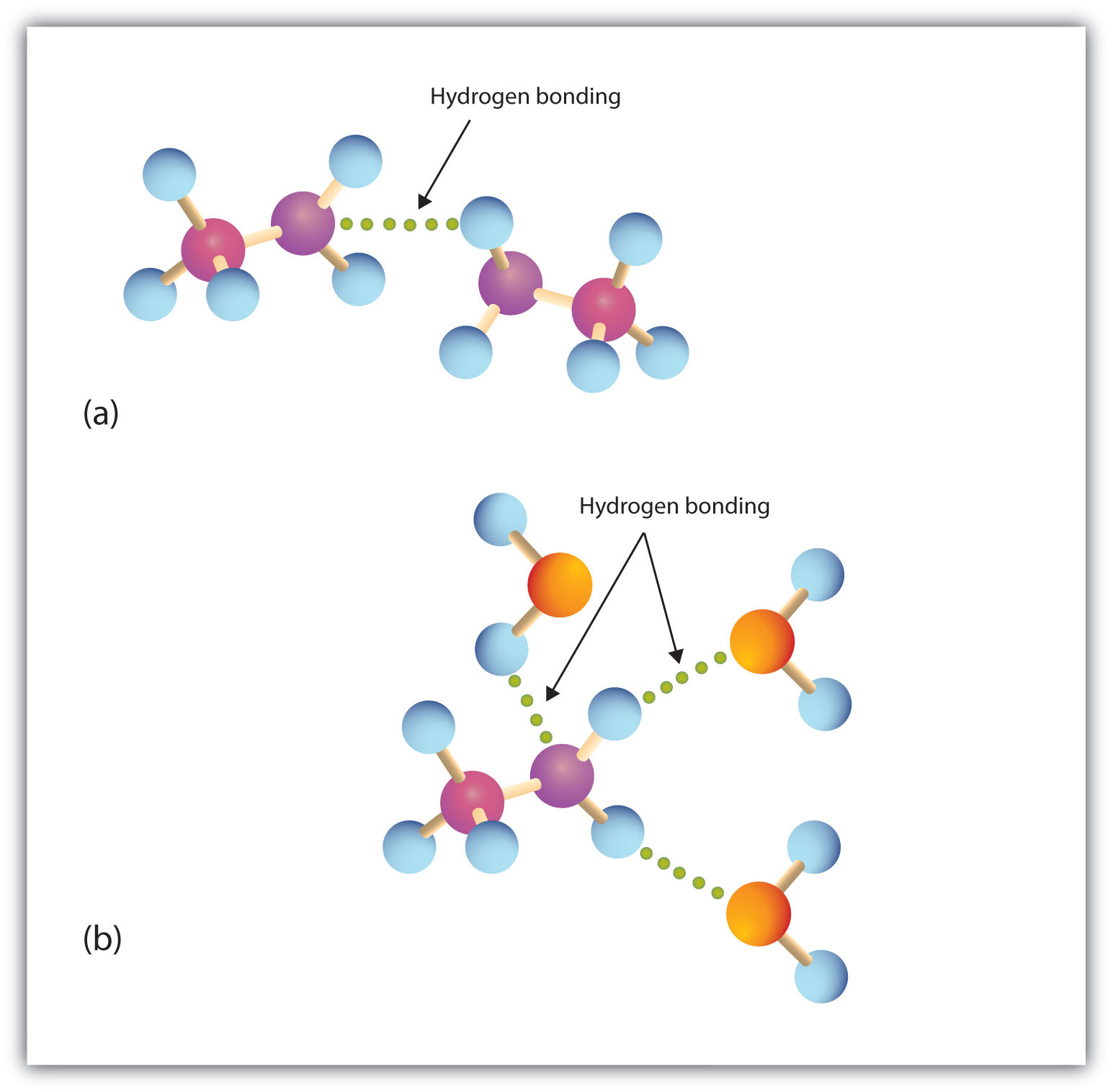
Figure 15.6 Hydrogen Bonding
(a) Amine molecules are associated through hydrogen bonding. (b) An amine molecule can form a hydrogen bond with water molecules.
Table 15.5 Physical Properties of Some Amines and Comparable Oxygen-Containing Compounds
Name | Condensed Structural Formula | Class | Molar Mass | Boiling Point (°C) | Solubility at 25°C (g/100 g Water) |
|---|---|---|---|---|---|
butylamine | CH3CH2CH2CH2NH2 | 1° | 73 | 78 | miscible |
diethylamine | (CH3CH2)2NH | 2° | 73 | 55 | miscible |
butyl alcohol | CH3CH2CH2CH2OH | — | 74 | 118 | 8 |
dipropylamine | (CH3CH2CH2)2NH | 2° | 101 | 111 | 4 |
triethylamine | (CH3CH2)3N | 3° | 101 | 90 | 14 |
dipropyl ether | (CH3CH2CH2)2O | — | 102 | 91 | 0.25 |
All three classes of amines can engage in hydrogen bonding with water (part (b) of Figure 15.6 "Hydrogen Bonding"). Amines of low molar mass are quite soluble in water; the borderline of solubility in water is at five or six carbon atoms.
Concept Review Exercises
Which compound has the higher boiling point, CH3CH2CH2CH2CH2NH2 or CH3CH2CH2CH2CH2CH3? Explain.
Which compound is more soluble in water, CH3CH2CH2CH2CH3 or CH3CH2NHCH2CH3? Explain.
Answers
CH3CH2CH2CH2CH2NH2 because the nitrogen-to-hydrogen (N--H) bonds can engage in hydrogen bonding; CH3CH2CH2CH2CH2CH3 cannot engage in hydrogen bonding
CH3CH2NHCH2CH3 because amines can engage in hydrogen bonding with water; alkanes cannot engage in hydrogen bonding
Exercises
Which compound of each pair has the higher boiling point? Explain.
butylamine or pentane
CH3NH2 or CH3CH2CH2CH2CH2NH2
Which compound of each pair has the higher boiling point? Explain.
butylamine or butyl alcohol
trimethylamine or propylamine
Which compound is more soluble in water---CH3CH2CH3 or CH3CH2NH2? Explain.
Which compound is more soluble in water---CH3CH2CH2NH2 or CH3CH2CH2CH2CH2CH2NH2? Explain.
Answers
butylamine because the N--H bonds can engage in hydrogen bonding; pentane cannot engage in hydrogen bonding
CH3CH2CH2CH2CH2NH2 because it has a greater molar mass than CH3NH2
CH3CH2NH2 because amines can engage in hydrogen bonding with water; alkanes cannot engage in hydrogen bonding
15.13 Amines as Bases
Recall that ammonia (NH3) acts as a base because the nitrogen atom has a lone pair of electrons that can accept a proton. Amines also have a lone electron pair on their nitrogen atoms and can accept a proton from water to form substituted ammonium (NH4+) ions and hydroxide (OH−) ions:
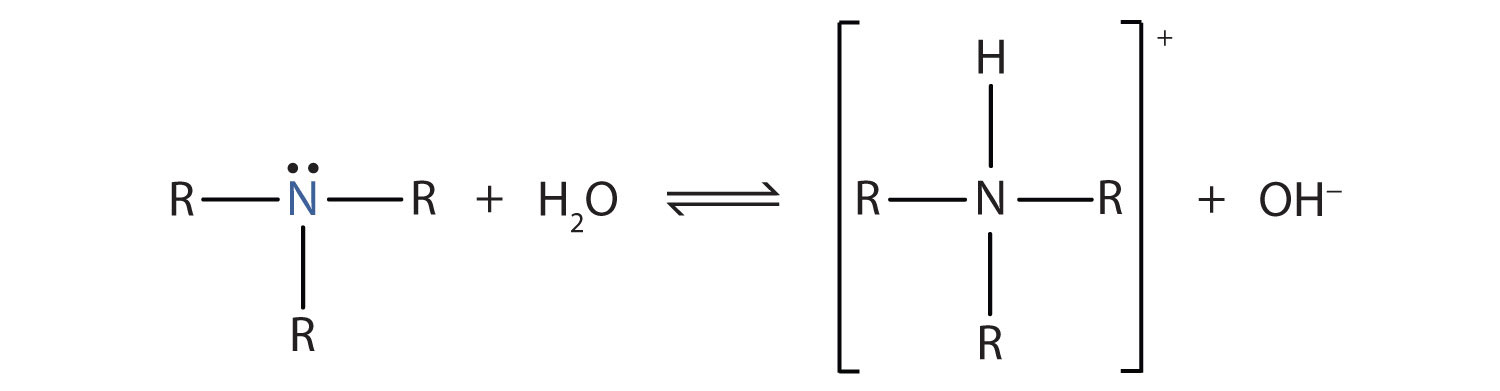
As a specific example, methylamine reacts with water to form the methylammonium ion and the OH− ion.

Nearly all amines, including those that are not very soluble in water, will react with strong acids to form salts soluble in water.

Amine salts are named like other salts: the name of the cation is followed by the name of the anion.
Example 15
What are the formulas of the acid and base that react to form [CH3NH2CH2CH3]+CH3COO−?
Solution
The cation has two groups---methyl and ethyl---attached to the nitrogen atom. It comes from ethylmethylamine (CH3NHCH2CH3). The anion is the acetate ion. It comes from acetic acid (CH3COOH).
Skill-Building Exercise
What are the formulas of the acid and base that react to form (CH3CH2CH2)3NH+I−?
Heterocyclic Amines
Looking back at the various cyclic hydrocarbons introduced in Chapter 12 "Organic Chemistry: Alkanes and Halogenated Hydrocarbons" and Chapter 13 "Unsaturated and Aromatic Hydrocarbons", we see that all the atoms in the rings of these compounds are carbon atoms. In other cyclic compounds, called heterocyclic compounds[13] (Greek heteros, meaning “other”), nitrogen, oxygen, sulfur, or some other atom is incorporated in the ring. Many heterocyclic compounds are important in medicine and biochemistry. Some compose part of the structure of the nucleic acids, which in turn compose the genetic material of cells and direct protein synthesis. (For more information about nucleic acids, see Chapter 19 "Nucleic Acids".)
Many heterocyclic amines occur naturally in plants. Like other amines, these compounds are basic. Such a compound is an alkaloid[14], a name that means “like alkalis.” Many alkaloids are physiologically active, including the familiar drugs caffeine, nicotine, and cocaine.
Concept Review Exercises
Explain the basicity of amines.
Contrast the physical properties of amines with those of alcohols and alkanes.
What is a heterocyclic compound?
Answers
Amines have a lone pair of electrons on the nitrogen atom and can thus act as proton acceptors (bases).
The solubilities of amines are similar to those of alcohols; the boiling points of primary and secondary amines are similar to those of alcohols; the boiling points of tertiary amines, which cannot engage in hydrogen bonding because they do not have a hydrogen atom on the nitrogen atom, are comparable to those of alkanes.
Heterocyclic compounds are ring compounds with atoms other than carbon atoms in the ring.
Exercises
What salt is formed in each reaction? Write its condensed structural formula.
CH3NH2(aq) + HBr(aq) →
CH3NHCH3(aq) + HNO3(aq) →
What salt is formed in each reaction? Draw its structure.


Answer
CH3NH3+Br−(aq)
[CH3NH2CH3]+NO3−(aq)
15.14 Amides: Structures and Names
The amide functional group has a nitrogen atom attached to a carbonyl carbon atom. If the two remaining bonds on the nitrogen atom are attached to hydrogen atoms, the compound is a simple amide. If one or both of the two remaining bonds on the atom are attached to alkyl or aryl groups, the compound is a substituted amide.
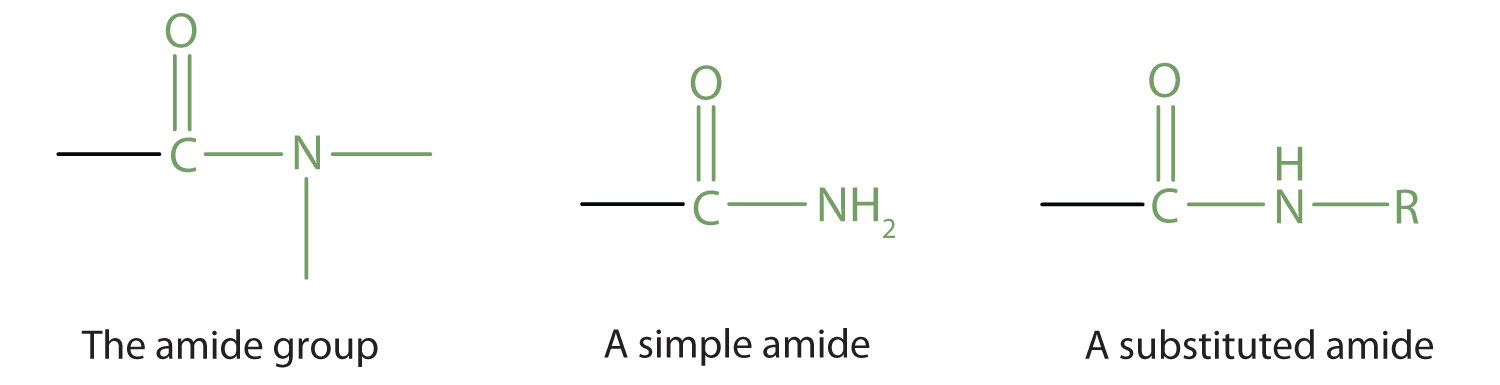
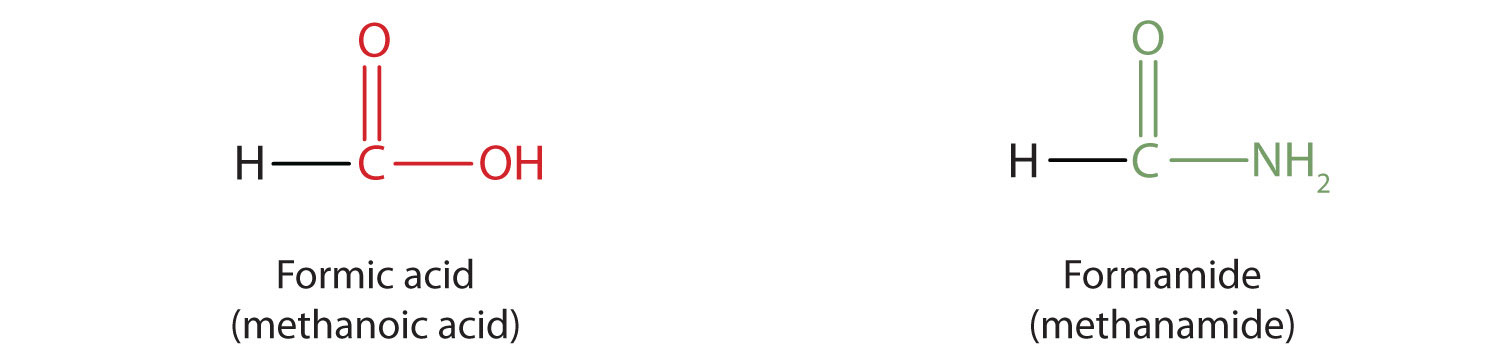
Simple amides are named as derivatives of carboxylic acids. The -ic ending of the common name or the -oic ending of the International Union of Pure and Applied Chemistry (IUPAC) name of the carboxylic acid is replaced with the suffix -amide.
Example 16
Name each compound with the common name, the IUPAC name, or both.


Solution
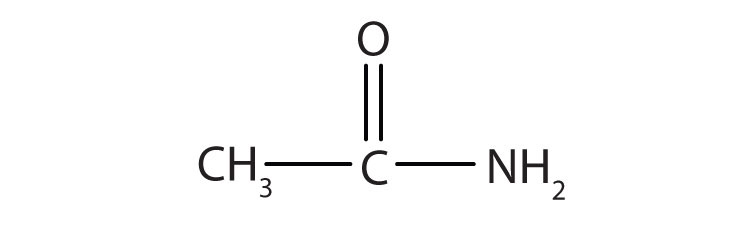
This amide has two carbon atoms and is thus derived from acetic acid. The OH of acetic acid is replaced by an NH2 group. The -ic from acetic (or -oic from ethanoic) is dropped, and -amide is added to give acetamide (or ethanamide in the IUPAC system).
This amide is derived from benzoic acid. The -oic is dropped, and -amide is added to give benzamide.
Skill-Building Exercise
Name each compound with the common name, the IUPAC name, or both.


Concept Review Exercises
Name this compound with the common name and the IUPAC name.

Draw the structural formula for pentanamide.
Answers
β-bromobutyramide (3-bromobutanamide)

Exercises
Draw the structure for each compound.
formamide
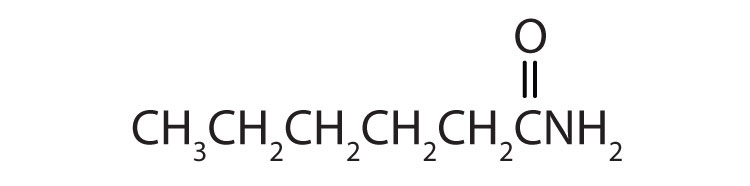
hexanamide
Draw the structure for each compound.
propionamide
butanamide
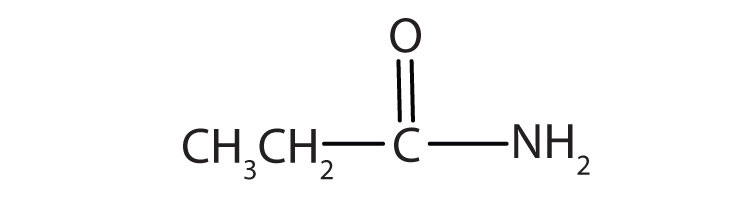
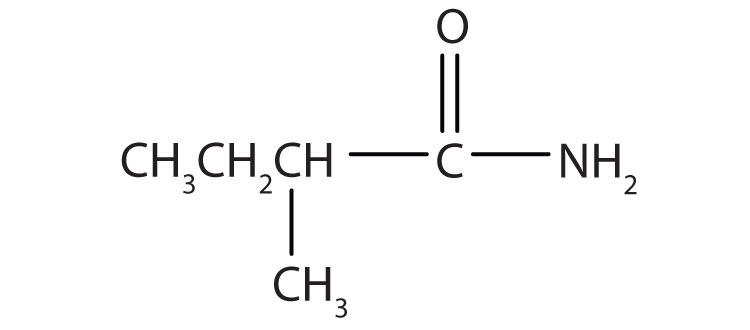
Name each compound with the common name, the IUPAC name, or both.
Name the compound.
Answers
propionamide (propanamide)
α-methylbutyramide (2-methylbutanamide)

15.15 Physical Properties of Amides
With the exception of formamide (HCONH2), which is a liquid, all simple amides are solids (Table 15.6 "Physical Constants of Some Unsubstituted Amides"). The lower members of the series are soluble in water, with borderline solubility occurring in those that have five or six carbon atoms. Like the esters, solutions of amides in water usually are neutral---neither acidic nor basic.
Table 15.6 Physical Constants of Some Unsubstituted Amides
Condensed Structural Formula | Name | Melting Point (°C) | Boiling Point (°C) | Solubility in Water |
|---|---|---|---|---|
HCONH2 | formamide | 2 | 193 | soluble |
CH3CONH2 | acetamide | 82 | 222 | soluble |
CH3CH2CONH2 | propionamide | 81 | 213 | soluble |
CH3CH2CH2CONH2 | butyramide | 115 | 216 | soluble |
C6H5CONH2 | benzamide | 132 | 290 | slightly soluble |
The amides generally have high boiling points and melting points. These characteristics and their solubility in water result from the polar nature of the amide group and hydrogen bonding (Figure 15.7 "Hydrogen Bonding in Amides"). (Similar hydrogen bonding plays a critical role in determining the structure and properties of proteins, deoxyribonucleic acid [DNA], ribonucleic acid [RNA], and other giant molecules so important to life processes. See Chapter 19 "Nucleic Acids".)
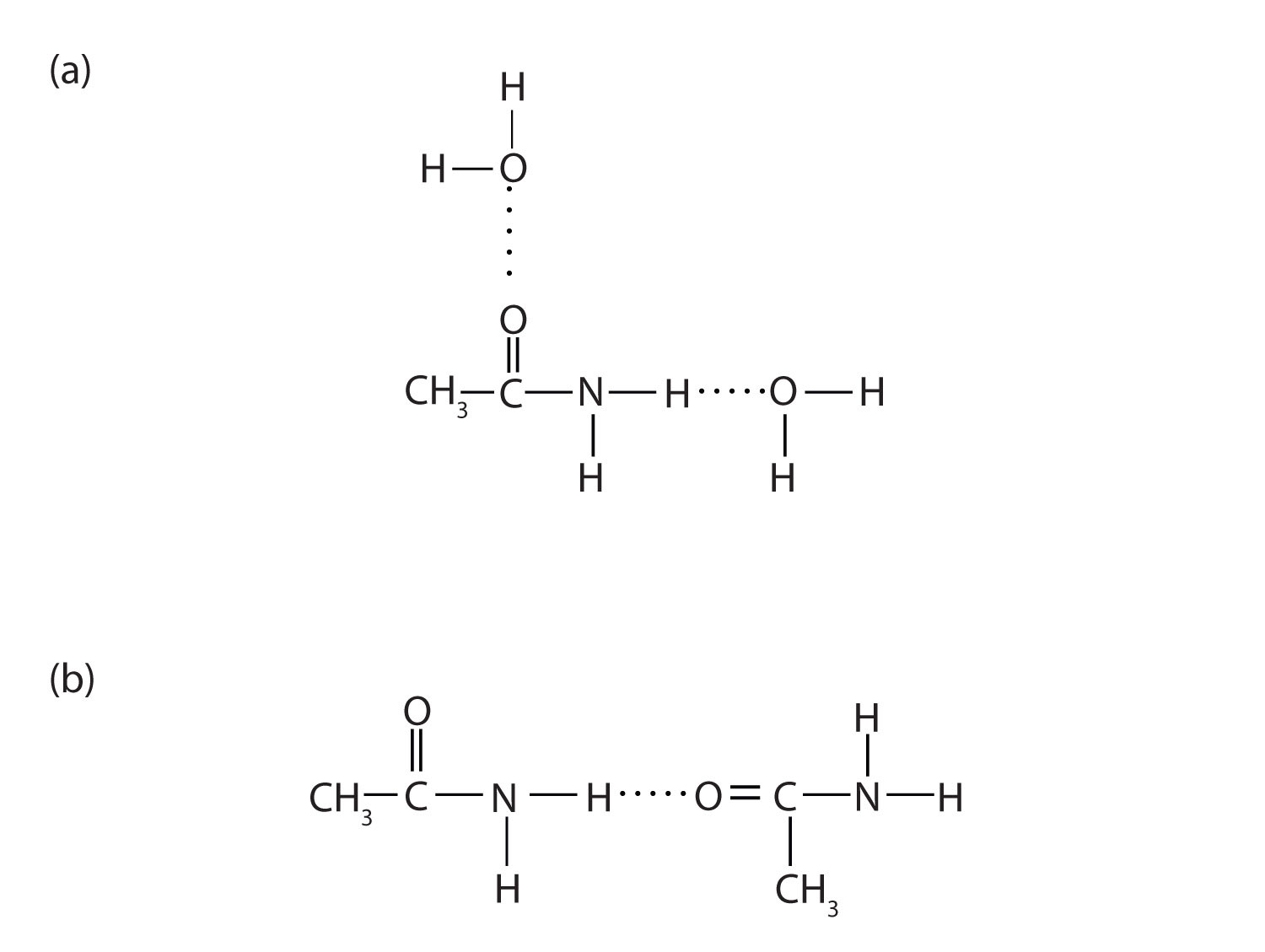
Figure 15.7 Hydrogen Bonding in Amides
Amide molecules can engage in hydrogen bonding with water molecules (a). Those amides with a hydrogen atom on the nitrogen atom can also engage in hydrogen bonding (b). Both hydrogen bonding networks extend in all directions.
Concept Review Exercises
Which compound has the higher boiling point---pentanamide (CH3CH2CH2CH2CONH2) or propyl acetate (CH3COOCH2CH2CH3)? Explain.
Which compound is more soluble in water---propanamide (CH3CH2CONH2) or 1-pentene (CH2=CHCH2CH2CH3)? Explain.
Answers
pentanamide because the nitrogen-to-hydrogen (N--H) and the carbon-to-oxygen double (C=O) bonds can engage in hydrogen bonding; propyl acetate cannot engage in hydrogen bonding
propanamide because the N--H and C=O bonds can engage in hydrogen bonding with water; 1-pentene cannot engage in hydrogen bonding with water
Exercises
Which compound has the higher boiling point---butyramide (CH3CH2CH2CONH2) or ethyl acetate (CH3COOCH2CH3)? Explain.
Which compound has the higher boiling point---butyramide or dimethylacetamide [CH3CON(CH3)2]? Explain.
Which compound is more soluble in water---acetamide (CH3CONH2) or 1-butene (CH2=CHCH2CH3)? Explain.
Which compound is more soluble in water---CH3CONHCH3 or 2-methylbutane [CH3CH(CH3)CH2CH3)]? Explain.
Answers
butyramide because the nitrogen-to-hydrogen (N--H) and the carbon-to-oxygen double (C=O) bonds can engage in hydrogen bonding; ethyl acetate cannot engage in hydrogen bonding
acetamide because the N--H and C=O bonds can engage in hydrogen bonding with water; 1-butene cannot engage in hydrogen bonding with water
15.16 Formation of Amides
The addition of ammonia (NH3) to a carboxylic acid forms an amide, but the reaction is very slow in the laboratory at room temperature. Water molecules are split out, and a bond is formed between the nitrogen atom and the carbonyl carbon atom.

In living cells, amide formation is catalyzed by enzymes. Proteins are polyamides; they are formed by joining amino acids into long chains. In proteins, the amide functional group is called a peptide bond. (For more information about proteins, see Chapter 18 "Amino Acids, Proteins, and Enzymes", Section 18.4 "Proteins".)
Polyamides
Just as the reaction of a diol and a diacid forms a polyester (Section 15.8 "Preparation of Esters"), the reaction of a diacid and a diamine yields a polyamide[15]. The two difunctional monomers often employed are adipic acid and 1,6-hexanediamine. The monomers condense by splitting out water to form a new product, which is still difunctional and thus can react further to yield a polyamide polymer.

Some polyamides are known as nylons. Nylons are among the most widely used synthetic fibers---for example, they are used in ropes, sails, carpets, clothing, tires, brushes, and parachutes. They also can be molded into blocks for use in electrical equipment, gears, bearings, and valves.
Concept Review Exercises
Write the condensed structural formulas and give names of the two compounds from which butanamide (CH3CH2CH2CONH2) is formed.
Write the condensed structural formulas and names of the two compounds from which CH3CH2CH2CH2CH2CONHCH2CH2CH3 is formed.
Answers
CH3CH2CH2COOH (butanoic acid) and NH3 (ammonia)
CH3CH2CH2CH2CH2COOH (hexanoic acid) and CH3CH2CH2NH2 (propylamine)
Exercises
Write the condensed structural formulas and names of the two compounds from which pentanamide (CH3CH2CH2CH2CONH2) is formed.
Write the condensed structural formulas and names of the two compounds from which CH3CONHCH3 is formed.
Answer
CH3CH2CH2CH2COOH (pentanoic acid) and NH3 (ammonia)
15.17 Chemical Properties of Amides: Hydrolysis
Generally, amides resist hydrolysis in plain water, even after prolonged heating. In the presence of added acid or base, however, hydrolysis proceeds at a moderate rate. In living cells, amide hydrolysis is catalyzed by enzymes. Amide hydrolysis is illustrated in the following example:

Example 17
Write the equation for the hydrolysis of each compound.
butyramide
benzamide
Solution
The hydrolysis of a simple amide produces an organic acid and ammonia. Butyramide thus yields butyric acid and ammonia.
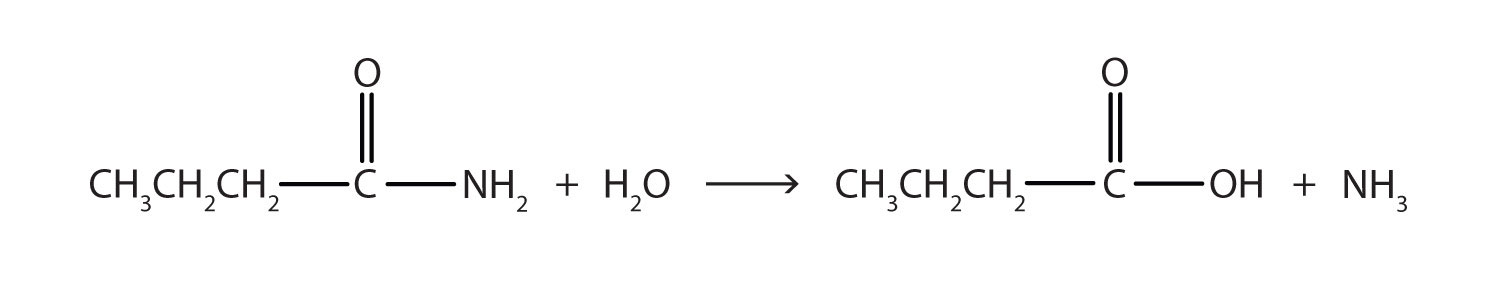
The hydrolysis of an amide produces an organic acid and ammonia. Benzamide thus yields benzoic acid and ammonia.

Skill-Building Exercise
Write the equation for the hydrolysis of each compound.
propionamide (propanamide)
hexanamide
Concept Review Exercises
What are the products of the hydrolysis of an amide?
When the amide CH3CH2CH2CH2CONH2 is hydrolyzed in an NaOH solution, the products are CH3CH2CH2CH2COO−Na+ and NH3. What products are obtained when CH3CH2CH2CH2CONH2 is hydrolyzed in a hydrochloric acid solution?
Answers
a carboxylic acid and ammonia or an amine
CH3CH2CH2CH2COOH and NH4Cl
Exercises
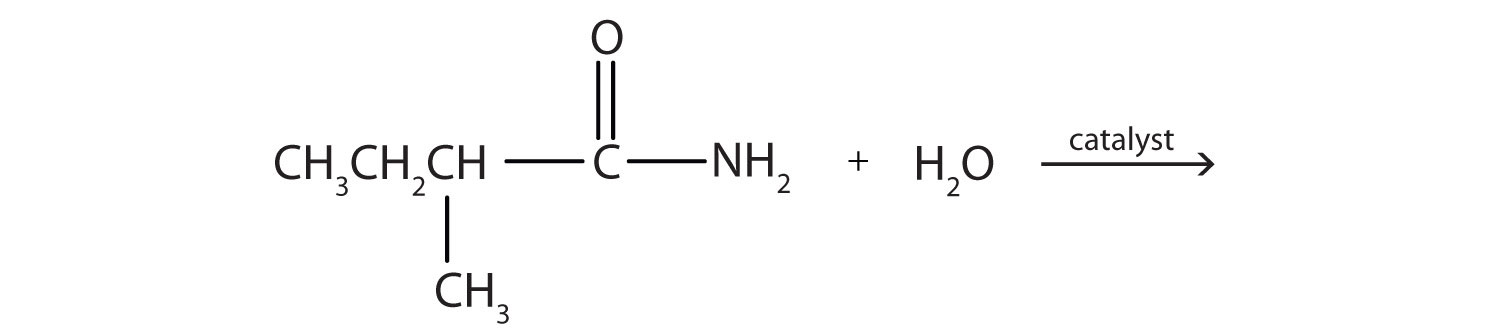
Complete each equation.
Complete each equation.



Answer
CH3COOH + NH3

15.18 End-of-Chapter Material
Additional Exercises
Of the families of organic compounds discussed in this chapter, which are known for their typically unpleasant odors? Which for their characteristically pleasant aromas?
What is esterification of a carboxylic acid? How does it differ from neutralization?
Like alcohols, phenols form esters with carboxylic acids. The hydrocarbon group from phenol is called phenyl. Draw the structure of phenyl acetate.
Describe the hydrogen bonding in carboxylic acids, both acid-acid and acid-water. How does this influence their physical properties?
Which compound is more soluble in water---benzoic acid or sodium benzoate? Explain.
Dicarboxylic acids have two carboxyl groups and are named with the ending -dioic acid. Give the equation for the reaction of 1,5-pentanedioic acid (HOOCCH2CH2CH2COOH; common name, glutaric acid) with each of the following:
1 mol of NaOH
2 mol of NaOH
Without consulting tables, arrange the following compounds in order of increasing boiling point: butyl alcohol, methyl acetate, pentane, and propionic acid.
From which alcohol might each acid be prepared via oxidation with acidic dichromate?
CH3CH2COOH
HCOOH
HOOCH2COOH
(CH3)2CHCH2COOH
The distinctive aroma and flavor of oranges are due in part to octyl acetate, an ester formed from 1-octanol (octyl alcohol) and acetic acid. Write the condensed structural formula for octyl acetate.
A lactone is a cyclic ester. What product is formed in the following reaction?

A lactam is a cyclic amide. What product is formed in the following reaction?

Draw the structures for the eight isomeric amines that have the molecular formula C4H11N. Give each a common name and classify it as primary, secondary, or tertiary.
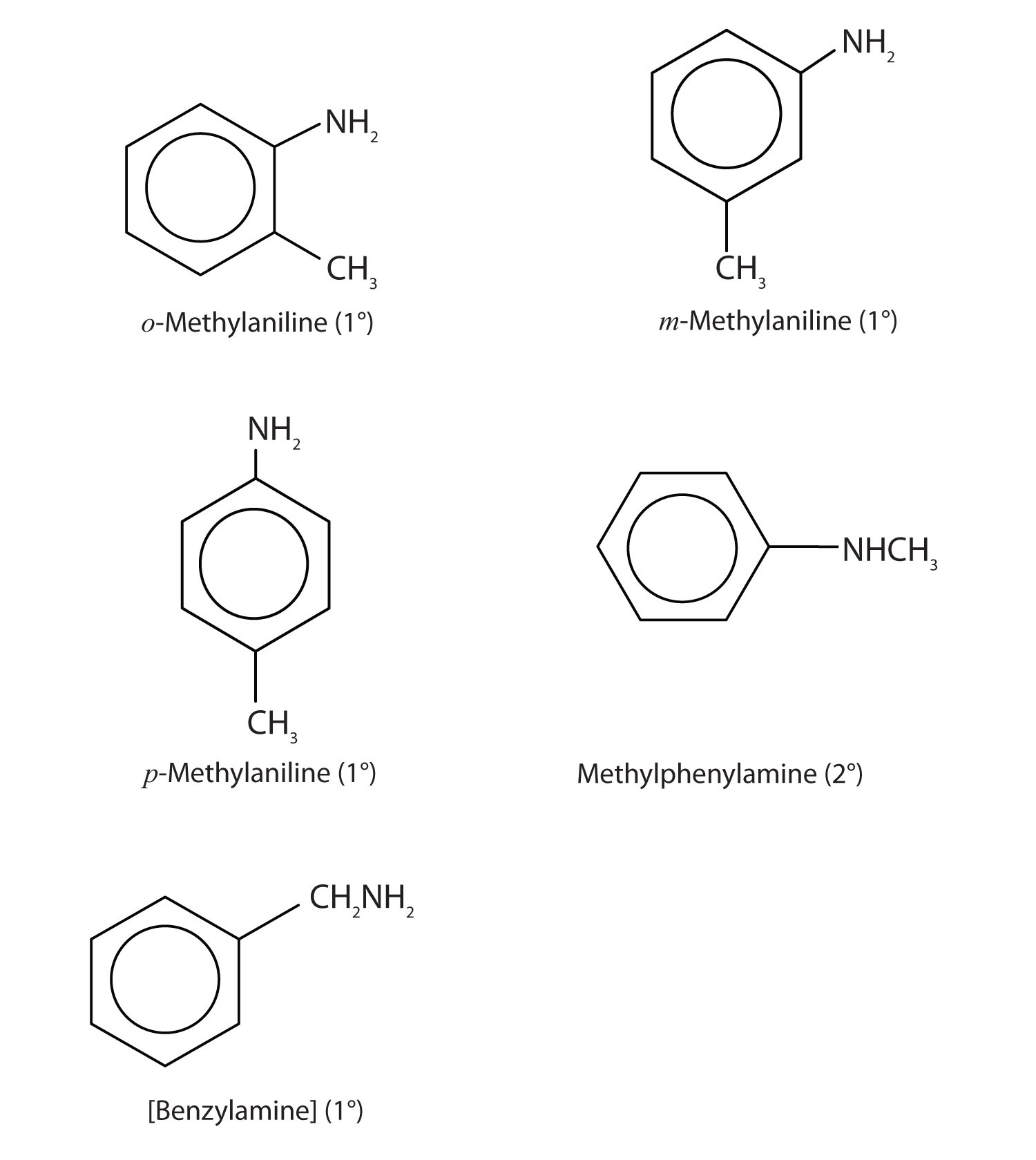
Draw the structures for the five isomeric amines that have the molecular formula C7H9N and contain a benzene ring. Classify each compound as primary, secondary, or tertiary.
Cocaine is usually used in the form of the salt cocaine hydrochloride and sniffed up the nose. Some prefer to ingest their cocaine by smoking it (mixed with tobacco, for example). Before smoking, the cocaine hydrochloride must be converted back to the free base (that is, to the molecular form). Explain the choice of dosage form for each route of administration.
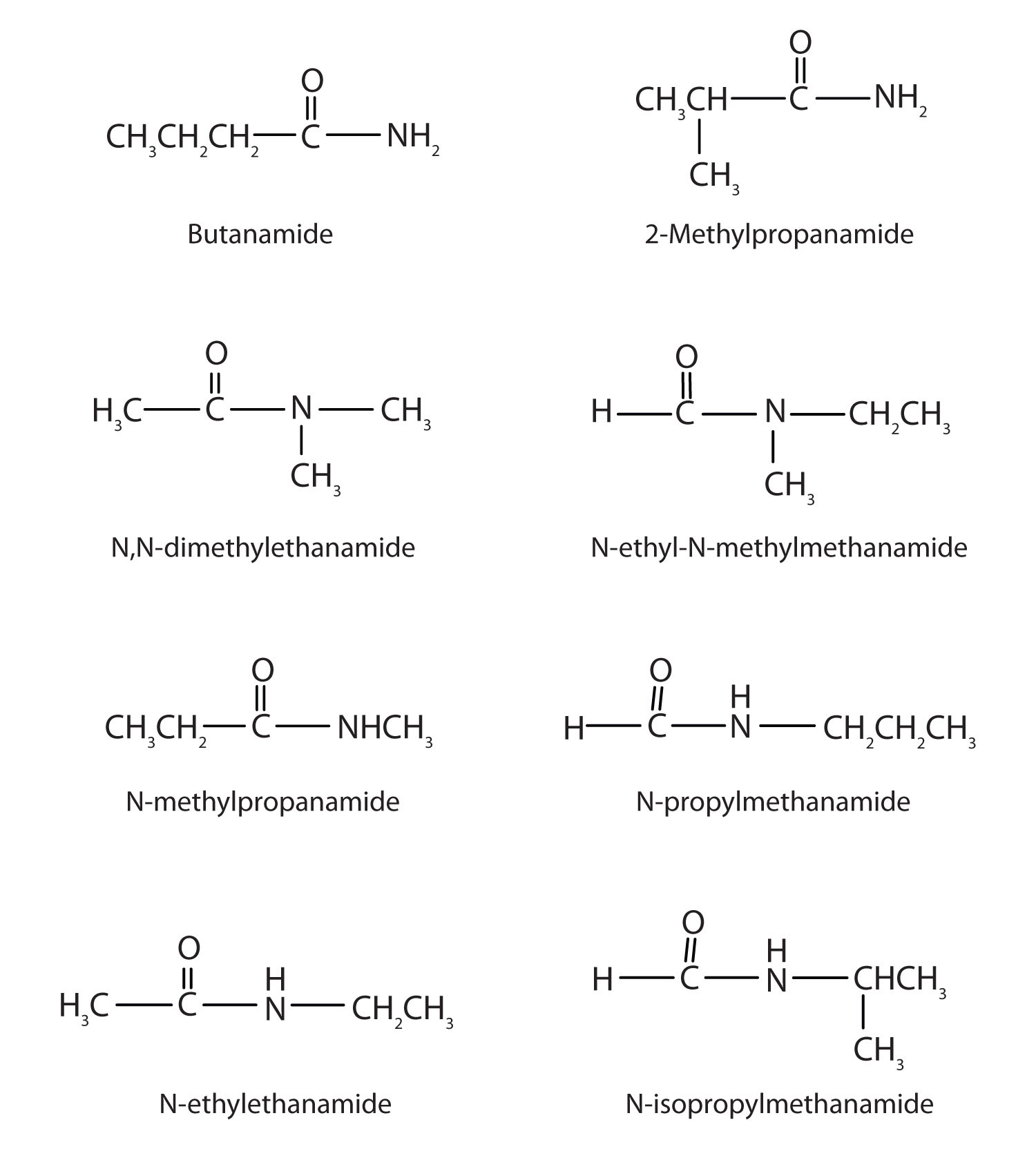
Draw the structures of all the isomeric amides that have the molecular formula C4H9NO.
An ester with the molecular formula C6H12O2 was hydrolyzed in aqueous acid to yield an acid Y and an alcohol Z. Oxidation of the alcohol with potassium dichromate (K2Cr2O7) gave the identical acid Y. What is the condensed structural formula of the ester?
The neutralization of 125 mL of a 0.400 M NaOH solution requires 5.10 g of a monocarboxylic acid. Draw all the possible structures for the acid.
If 3.00 g of acetic acid reacts with excess methanol, how many grams of methyl acetate are formed?
How many milliliters of a 0.100 M barium hydroxide solution are required to neutralize 0.500 g of dichloroacetic acid?
Answers
unpleasant: carboxylic acids; pleasant: esters

sodium benzoate because it is ionic and forms ion-dipole forces with water; benzoic acid can engage in hydrogen bonding only with water
pentane < methyl acetate < butyl alcohol < propionic acid
CH3COOCH2CH2CH2CH2CH2CH2CH2CH3
H3N+CH2CH2COOH
20.0 mL
An organic compound that has a carboxyl group.
A functional group that contains a carbon--oxygen bond and an OH group also attached to the same carbon atom.
An organic compound derived from a carboxylic acid and an alcohol in which the OH of the acid is replaced by an OR group.
An organic compound derived from ammonia by the replacement of one, two, or three of the hydrogen atoms by alkyl or aryl groups.
An organic compound with a carbonyl group joined to a nitrogen atom from ammonia or an amine.
The formation of an ester from a carboxylic acid and an alcohol.
The reaction of a substance with water.
The hydrolysis of fats and oils in the presence of a base to make soap.
A compound that has only one alkyl or aryl group on the nitrogen atom.
A compound that has two alkyl or aryl groups on the nitrogen atom.
A compound that has three alkyl or aryl groups on the nitrogen atom.
An NH2 unit.
A cyclic compound in which one or more atoms in the ring are an element other than a carbon atom.
A nitrogen-containing organic compound obtained from plants that has physiological properties.
A condensation polymer in which the monomer units are joined by an amide linkage.