Ethanol and resveratrol, a phenol, are representatives of two of the families of oxygen-containing compounds that we consider in this chapter. Two other classes, aldehydes and ketones, are formed by the oxidation of alcohols. Ethers, another class, are made by the dehydration of alcohols.
14.1 Organic Compounds with Functional Groups
In Chapter 12 "Organic Chemistry: Alkanes and Halogenated Hydrocarbons" and Chapter 13 "Unsaturated and Aromatic Hydrocarbons", we considered several kinds of hydrocarbons. Now we examine some of the many organic compounds that contain functional groups. We first introduced the idea of the functional group[1], a specific structural arrangement of atoms or bonds that imparts a characteristic chemical reactivity to the molecule, in Chapter 4 "Covalent Bonding and Simple Molecular Compounds", Section 4.6 "Introduction to Organic Chemistry". If you understand the behavior of a particular functional group, you will know a great deal about the general properties of that class of compounds. In this chapter and Chapter 15 "Organic Acids and Bases and Some of Their Derivatives", we make a brief yet systematic study of some of the organic compound families. Each family is based on a common, simple functional group that contains an oxygen atom or a nitrogen atom. Some common functional groups are listed in Table 14.1 "Selected Organic Functional Groups".
Table 14.1 Selected Organic Functional Groups
Name of Family | General Formula | Functional Group | Suffix* |
|---|---|---|---|
alkane | RH | none | -ane |
alkene | R2C=CR2 | 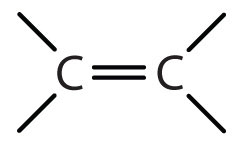 | -ene |
alkyne | RC≡CR | --C≡C-- | -yne |
alcohol | ROH | --OH | -ol |
thiol | RSH | --SH | -thiol |
ether | ROR | --O-- | ether |
aldehyde | 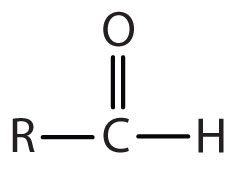 | 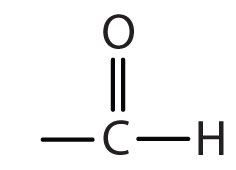 | -al |
ketone | 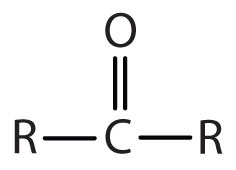 | 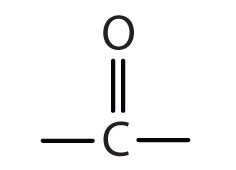 | -one |
carboxylic acid | 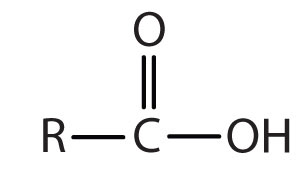 | 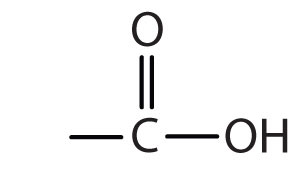 | -oic acid |
*Ethers do not have a suffix in their common name; all ethers end with the word ether. | *Ethers do not have a suffix in their common name; all ethers end with the word ether. | *Ethers do not have a suffix in their common name; all ethers end with the word ether. | *Ethers do not have a suffix in their common name; all ethers end with the word ether. |
Concept Review Exercises
What is the functional group of an alkene? An alkyne?
Does CH3CH2CH2CH2CH2CH2CH2CH2CH2CH2CH3 have a functional group? Explain.
Answers
carbon-to-carbon double bond; carbon-to-carbon triple bond
No; it has nothing but carbon and hydrogen atoms and all single bonds.
Exercises
What is the functional group of 1-butanol (CH3CH2CH2CH2OH)?
What is the functional group of butyl bromide, CH3CH2CH2CH2Br?
Answer
OH
14.2 Alcohols: Nomenclature and Classification
As noted in Chapter 4 "Covalent Bonding and Simple Molecular Compounds", an alcohol[2] is an organic compound with a hydroxyl (OH) functional group on an aliphatic carbon atom. Because OH is the functional group of all alcohols, we often represent alcohols by the general formula ROH, where R is an alkyl group. (For more information about alkyl groups, see Chapter 12 "Organic Chemistry: Alkanes and Halogenated Hydrocarbons", Section 12.5 "IUPAC Nomenclature". Table 12.4 "Common Alkyl Groups" presents some common alkyl groups.)
Alcohols are common in nature. Most people are familiar with ethyl alcohol (ethanol), the active ingredient in alcoholic beverages, but this compound is only one of a family of organic compounds known as alcohols. The family also includes such familiar substances as cholesterol and the carbohydrates.
As we noted in Chapter 4 "Covalent Bonding and Simple Molecular Compounds", Section 4.6 "Introduction to Organic Chemistry", methanol (CH3OH) and ethanol (CH3CH2OH) are the first two members of the homologous series of alcohols.
Nomenclature of Alcohols
Alcohols with one to four carbon atoms are frequently called by common names, in which the name of the alkyl group is followed by the word alcohol:
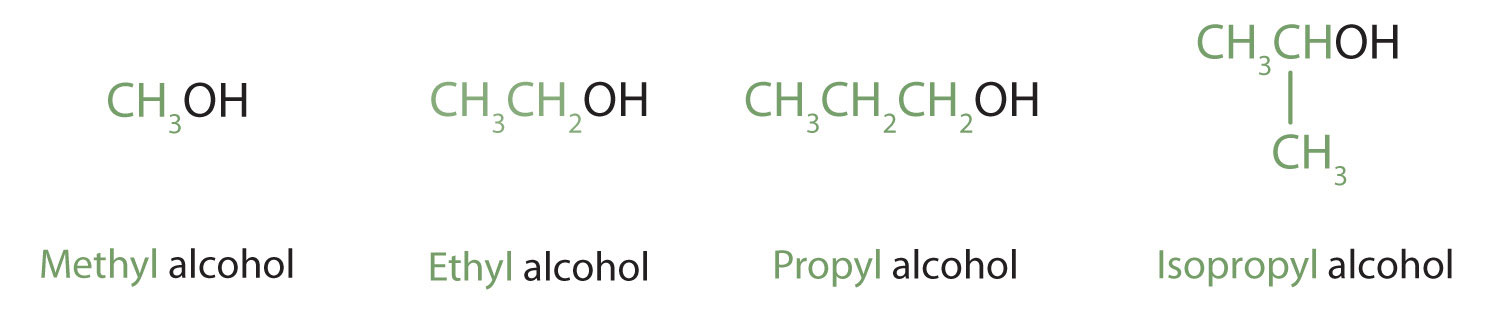
According to the International Union of Pure and Applied Chemistry (IUPAC), alcohols are named by changing the ending of the parent alkane name (Chapter 12 "Organic Chemistry: Alkanes and Halogenated Hydrocarbons", Section 12.5 "IUPAC Nomenclature") to -ol. Here are some basic IUPAC rules for naming alcohols:
The longest continuous chain (LCC) of carbon atoms containing the OH group is taken as the parent compound---an alkane with the same number of carbon atoms. The chain is numbered from the end nearest the OH group.
The number that indicates the position of the OH group is prefixed to the name of the parent hydrocarbon, and the -e ending of the parent alkane is replaced by the suffix -ol. (In cyclic alcohols, the carbon atom bearing the OH group is designated C1, but the 1 is not used in the name.) Substituents are named and numbered as in alkanes.
If more than one OH group appears in the same molecule (polyhydroxy alcohols), suffixes such as -diol and -triol are used. In these cases, the -e ending of the parent alkane is retained.
Figure 14.1 "IUPAC Rules for Alcohols" shows some examples of the application of these rules.
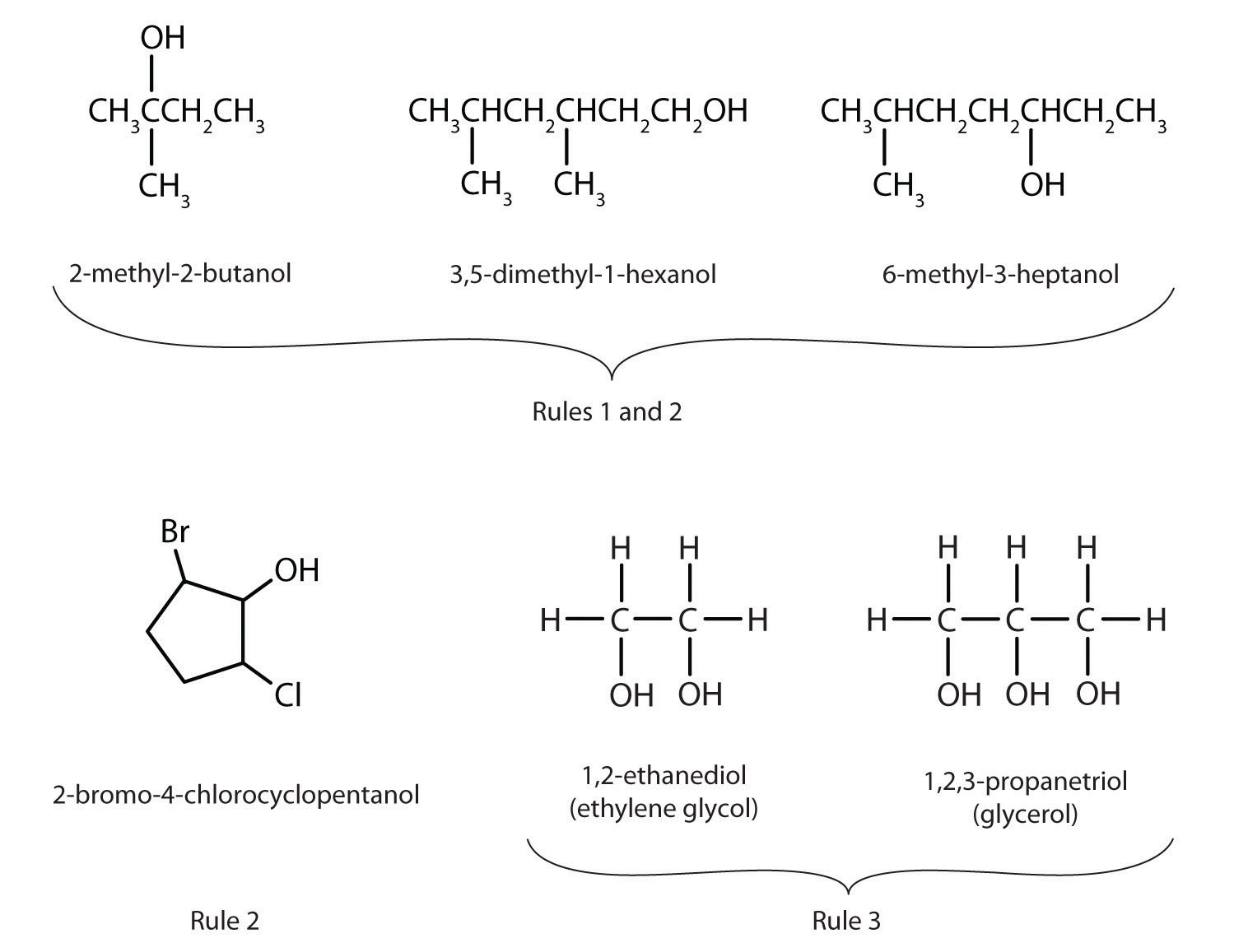
Figure 14.1 IUPAC Rules for Alcohols
The names and structures of some alcohols demonstrate the use of IUPAC rules.
Example 1
Give the IUPAC name for each compound.

HOCH2CH2CH2CH2CH2OH
Solution
Ten carbon atoms in the LCC make the compound a derivative of decane (rule 1), and the OH on the third carbon atom makes it a 3-decanol (rule 2).

The carbon atoms are numbered from the end closest to the OH group. That fixes the two methyl (CH3) groups at the sixth and eighth positions. The name is 6,8-dimethyl-3-decanol (not 3,5-dimethyl-8-decanol).
Five carbon atoms in the LCC make the compound a derivative of pentane. Two OH groups on the first and fifth carbon atoms make the compound a diol and give the name 1,5-pentanediol (rule 3).

Skill-Building Exercise
Give the IUPAC name for each compound.


Example 2
Draw the structure for each compound.
2-hexanol
3-methyl-2-pentanol
Solution
The ending -ol indicates an alcohol (the OH functional group), and the hex- stem tells us that there are six carbon atoms in the LCC. We start by drawing a chain of six carbon atoms: --C--C--C--C--C--C--.
The 2 indicates that the OH group is attached to the second carbon atom.

Finally, we add enough hydrogen atoms to give each carbon atom four bonds.

The ending -ol indicates an OH functional group, and the pent- stem tells us that there are five carbon atoms in the LCC. We start by drawing a chain of five carbon atoms:
--C--C--C--C--C--
The numbers indicate that there is a methyl (CH3) group on the third carbon atom and an OH group on the second carbon atom.

Skill-Building Exercise
Draw the structure for each compound.
3-heptanol
2-methyl-3-hexanol
Classification of Alcohols
Some of the properties of alcohols depend on the number of carbon atoms attached to the specific carbon atom that is attached to the OH group. Alcohols can be grouped into three classes on this basis.
A primary (1°) alcohol[3] is one in which the carbon atom (in red) with the OH group is attached to one other carbon atom (in blue). Its general formula is RCH2OH.

A secondary (2°) alcohol[4] is one in which the carbon atom (in red) with the OH group is attached to two other carbon atoms (in blue). Its general formula is R2CHOH.

A tertiary (3°) alcohol[5] is one in which the carbon atom (in red) with the OH group is attached to three other carbon atoms (in blue). Its general formula is R3COH.

Table 14.2 "Classification and Nomenclature of Some Alcohols" names and classifies some of the simpler alcohols. Some of the common names reflect a compound’s classification as secondary (sec-) or tertiary (tert-). These designations are not used in the IUPAC nomenclature system for alcohols. Note that there are four butyl alcohols in the table, corresponding to the four butyl groups: the butyl group (CH3CH2CH2CH2) introduced in Chapter 12 "Organic Chemistry: Alkanes and Halogenated Hydrocarbons", Section 12.5 "IUPAC Nomenclature", and three others:
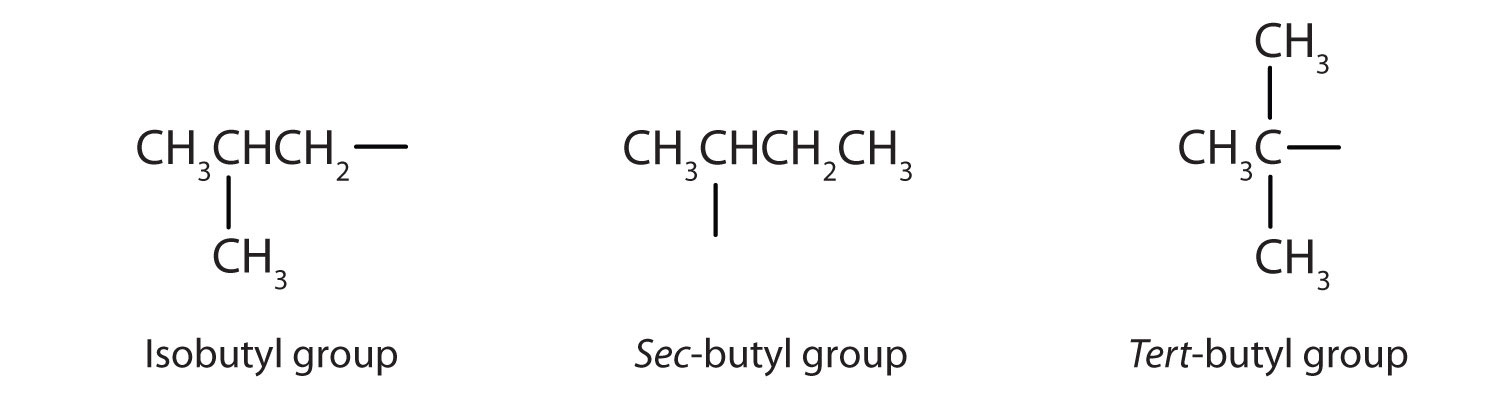
Table 14.2 Classification and Nomenclature of Some Alcohols
Condensed Structural Formula | Class of Alcohol | Common Name | IUPAC Name |
|---|---|---|---|
CH3OH | — | methyl alcohol | methanol |
CH3CH2OH | primary | ethyl alcohol | ethanol |
CH3CH2CH2OH | primary | propyl alcohol | 1-propanol |
(CH3)2CHOH | secondary | isopropyl alcohol | 2-propanol |
CH3CH2CH2CH2OH | primary | butyl alcohol | 1-butanol |
CH3CH2CHOHCH3 | secondary | sec-butyl alcohol | 2-butanol |
(CH3)2(CH3)2CHCH2OH | primary | isobutyl alcohol | 2-methyl-1-propanol |
(CH3)3COH | tertiary | tert-butyl alcohol | 2-methyl-2-propanol |
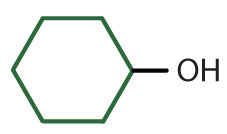 | secondary | cyclohexyl alcohol | cyclohexanol |
Concept Review Exercises
Is isobutyl alcohol primary, secondary, or tertiary? Explain.

What is the LCC in 2-ethyl-1-hexanol? What is taken as the LCC in naming the compound? Explain.
Answers
primary; the carbon atom bearing the OH group is attached to only one other carbon atom
7 carbon atoms; the 6-atom chain includes the carbon atom bearing the OH group
Exercises
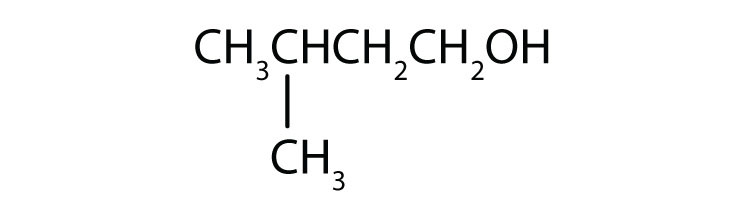
Name each alcohol and classify it as primary, secondary, or tertiary.
CH3CH2CH2CH2CH2CH2OH
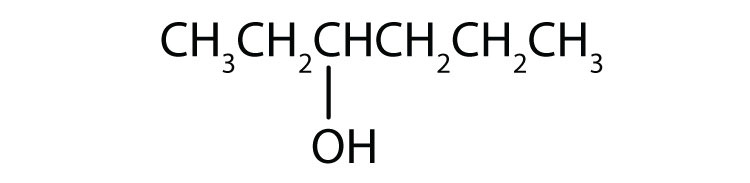
Name each alcohol and classify it as primary, secondary, or tertiary.
Draw the structure for each alcohol.
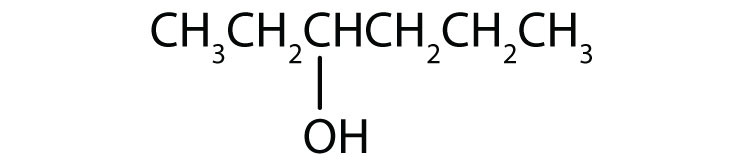
3-hexanol
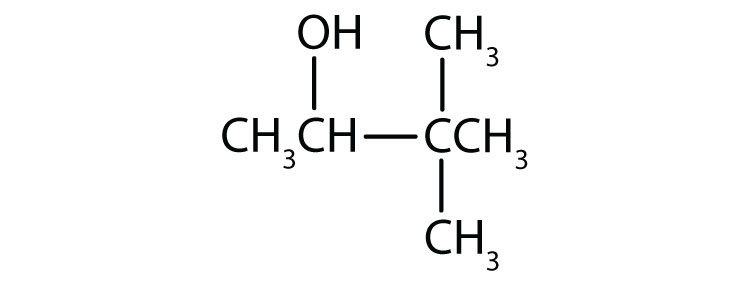
3,3-dimethyl-2-butanol
cyclobutanol
Draw the structure for each alcohol.
cyclopentanol
4-methyl-2-hexanol
4,5-dimethyl-3-heptanol

Answers
1-hexanol; primary
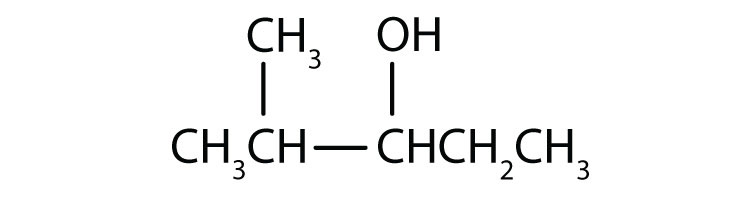
3-hexanol; secondary
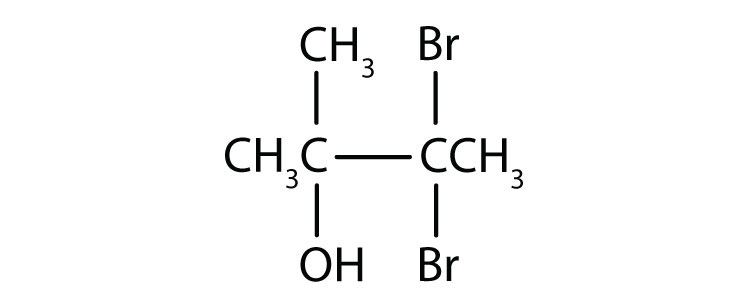
3,3-dibromo-2-methyl-2-butanol; tertiary

14.3 Physical Properties of Alcohols
Alcohols can be considered derivatives of water (H2O; also written as HOH).

Like the H--O--H bond in water, the R--O--H bond is bent, and alcohol molecules are polar. This relationship is particularly apparent in small molecules and reflected in the physical and chemical properties of alcohols with low molar mass.
Replacing a hydrogen atom from an alkane with an OH group allows the molecules to associate through hydrogen bonding (Figure 14.2 "Intermolecular Hydrogen Bonding in Methanol"). Recall from Chapter 8 "Solids, Liquids, and Gases" that physical properties are determined to a large extent by the type of intermolecular forces. Table 14.3 "Comparison of Boiling Points and Molar Masses" lists the molar masses and the boiling points of some common compounds. The table shows that substances with similar molar masses can have quite different boiling points. Alkanes are nonpolar and are thus associated only through relatively weak dispersion forces. Alkanes with one to four carbon atoms are gases at room temperature. In contrast, even methanol (with one carbon atom) is a liquid at room temperature. Hydrogen bonding greatly increases the boiling points of alcohols compared to hydrocarbons of comparable molar mass. The boiling point is a rough measure of the amount of energy necessary to separate a liquid molecule from its nearest neighbors. If the molecules interact through hydrogen bonding, a relatively large quantity of energy must be supplied to break those intermolecular attractions. Only then can the molecule escape from the liquid into the gaseous state.
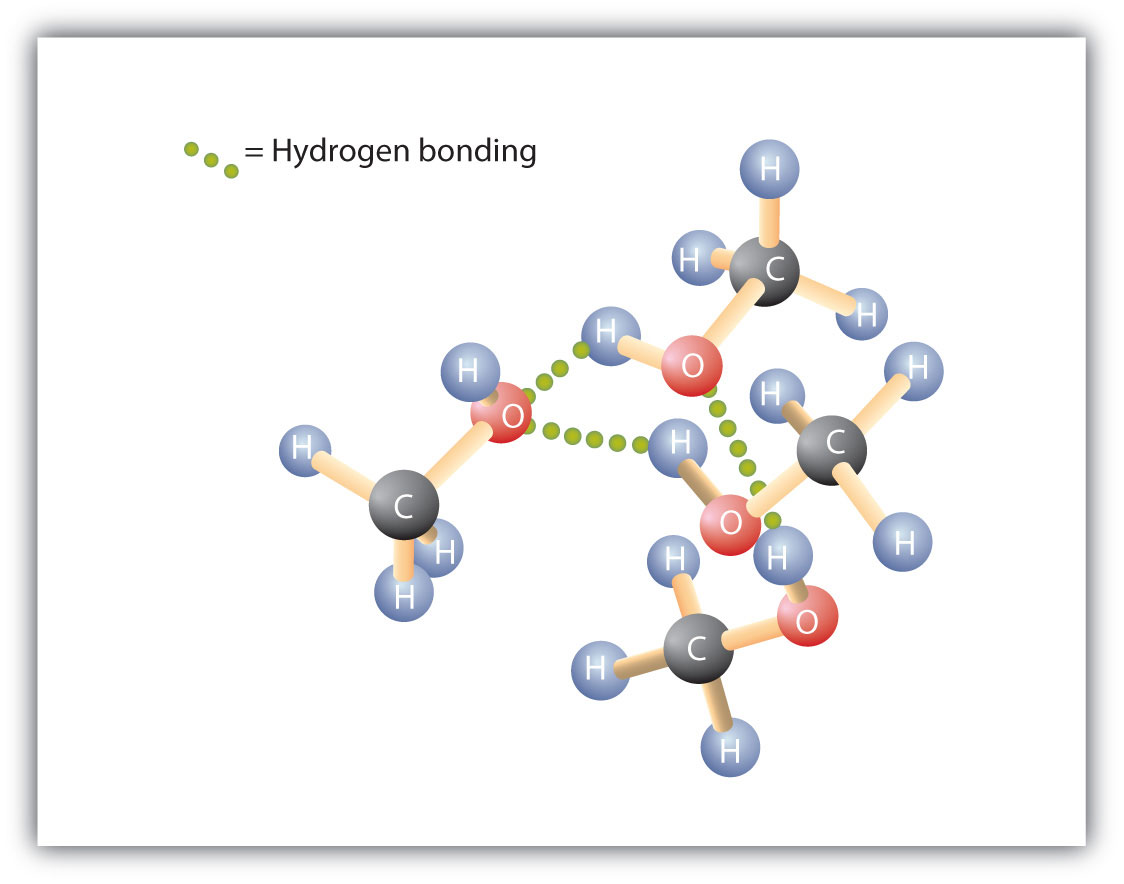
Figure 14.2 Intermolecular Hydrogen Bonding in Methanol
The OH groups of alcohol molecules make hydrogen bonding possible.
Table 14.3 Comparison of Boiling Points and Molar Masses
Formula | Name | Molar Mass | Boiling Point (°C) |
|---|---|---|---|
CH4 | methane | 16 | --164 |
HOH | water | 18 | 100 |
C2H6 | ethane | 30 | --89 |
CH3OH | methanol | 32 | 65 |
C3H8 | propane | 44 | --42 |
CH3CH2OH | ethanol | 46 | 78 |
C4H10 | butane | 58 | --1 |
CH3CH2CH2OH | 1-propanol | 60 | 97 |
Alcohols can also engage in hydrogen bonding with water molecules (Figure 14.3 "Hydrogen Bonding between Methanol Molecules and Water Molecules"). Thus, whereas the hydrocarbons are insoluble in water, alcohols with one to three carbon atoms are completely soluble. As the length of the chain increases, however, the solubility of alcohols in water decreases; the molecules become more like hydrocarbons and less like water. The alcohol 1-decanol (CH3CH2CH2CH2CH2CH2CH2CH2CH2CH2OH) is essentially insoluble in water. We frequently find that the borderline of solubility in a family of organic compounds occurs at four or five carbon atoms.
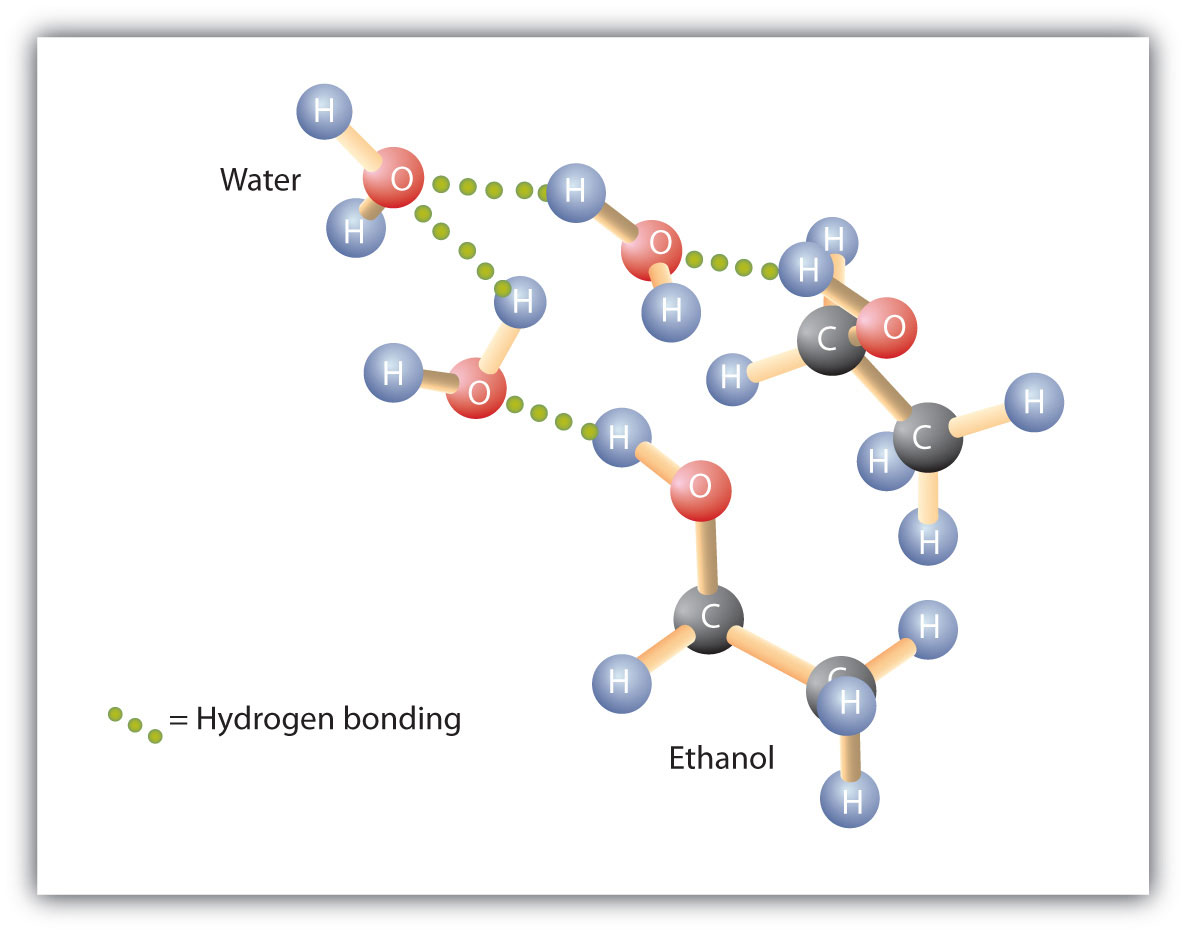
Figure 14.3 Hydrogen Bonding between Methanol Molecules and Water Molecules
Hydrogen bonding between the OH of methanol and water molecules accounts for the solubility of methanol in water.
Concept Review Exercises
Why is ethanol more soluble in water than 1-hexanol?
Why does 1-butanol have a lower boiling point than 1-hexanol?
Answers
Ethanol has an OH group and only 2 carbon atoms; 1-hexanol has one OH group for 6 carbon atoms and is thus more like a (nonpolar) hydrocarbon than ethanol is.
The molar mass of 1-hexanol is greater than that of 1-butanol.
Exercises
Answer the following exercises without consulting tables in the text.
Arrange these alcohols in order of increasing boiling point: ethanol, methanol, and 1-propanol.
Which has the higher boiling point---butane or 1-propanol?
Arrange these alcohols in order of increasing solubility in water: 1-butanol, methanol, and 1-octanol.
Arrange these compounds in order of increasing solubility in water: 1-butanol, ethanol, and pentane.
Answers
methanol < ethanol < 1-propanol
1-octanol < 1-butanol < methanol
14.4 Reactions That Form Alcohols
Methanol is prepared by combining hydrogen gas and carbon monoxide at high temperatures and pressures in the presence of a catalyst composed of zinc oxide (ZnO) and chromium oxide (Cr2O3):
Methanol is an important solvent and is used as an automotive fuel, either as the pure liquid---as in some racing cars---or as an additive in gasoline.
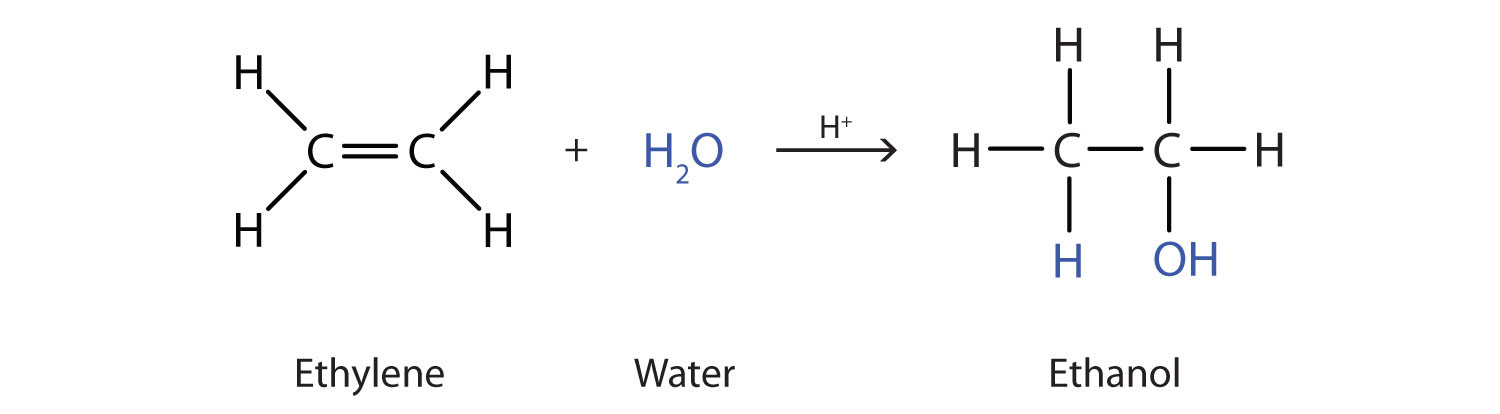
Many simple alcohols are made by the hydration of alkenes. (For more information about the hydration of alkenes, see Chapter 13 "Unsaturated and Aromatic Hydrocarbons", Section 13.4 "Chemical Properties of Alkenes".) Ethanol is made by the hydration of ethylene in the presence of a catalyst such as sulfuric acid (H2SO4).
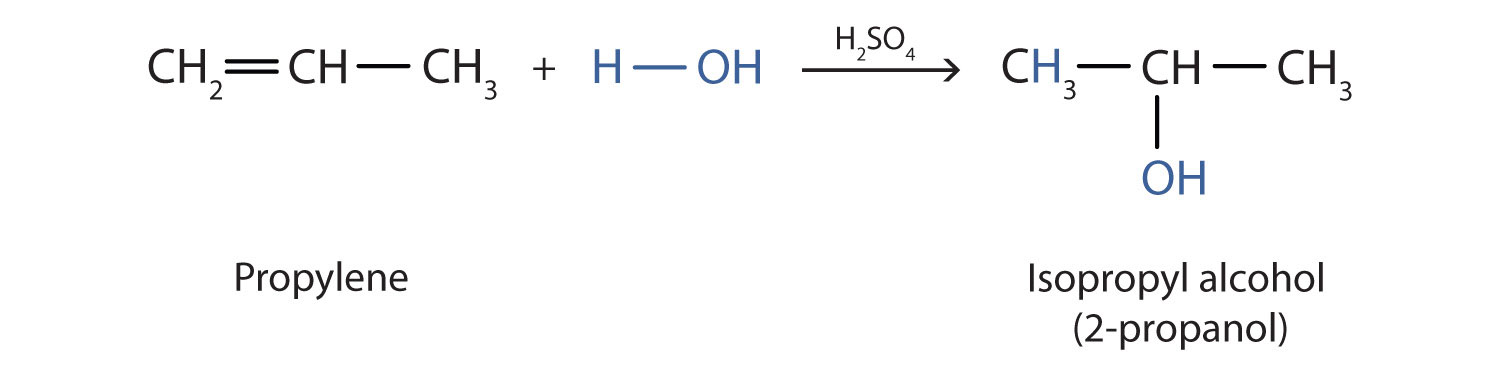
In a similar manner, isopropyl alcohol is produced by the addition of water to propene (propylene).
Example 3
Write the equation for the reaction of 2-butene with water to form 2-butanol. Indicate that sulfuric acid is used as a catalyst.
Solution
First write the condensed structural formula of 2-butene and indicate that it reacts with water. Then write the condensed structural formula of 2-butanol after the reaction arrow to indicate that it is the product. Finally, write the formula for the catalyst above the arrow.

Skill-Building Exercise
Write the equation for the reaction of cyclopentene with water to form cyclopentanol. Indicate that phosphoric acid (H3PO4) is used as a catalyst.
In addition to its preparation from ethylene, ethanol is made by the fermentation of sugars or starch from various sources (potatoes, corn, wheat, rice, etc.). Fermentation is catalyzed by enzymes found in yeast and proceeds by an elaborate multistep mechanism. We can represent the overall process as follows:

Ethanol is oxidized in the liver to acetaldehyde:

The acetaldehyde is in turn oxidized to acetic acid (HC2H3O2), a normal constituent of cells, which is then oxidized to carbon dioxide and water. Even so, ethanol is potentially toxic to humans. The rapid ingestion of 1 pt (about 500 mL) of pure ethanol would kill most people, and acute ethanol poisoning kills several hundred people each year---often those engaged in some sort of drinking contest. Ethanol freely crosses into the brain, where it depresses the respiratory control center, resulting in failure of the respiratory muscles in the lungs and hence suffocation. Ethanol is believed to act on nerve cell membranes, causing a diminution in speech, thought, cognition, and judgment.
Rubbing alcohol is usually a 70% aqueous solution of isopropyl alcohol. It has a high vapor pressure, and its rapid evaporation from the skin produces a cooling effect. It is toxic when ingested but, compared to methanol, is less readily absorbed through the skin.
Concept Review Exercises
Why is methanol more toxic than ethanol?
How does rubbing alcohol cool a feverish patient?
Answers
Methanol is oxidized to formaldehyde, which destroys tissue; ethanol is oxidized to acetaldehyde and then acetic acid, a normal metabolite.
Evaporation removes heat.
Exercises
From what alkene is ethanol made? Draw its condensed structural formula.
Can methanol be made from an alkene? Explain.
Answer
ethylene; CH2=CH2
14.5 Reactions of Alcohols
Chemical reactions in alcohols occur mainly at the functional group, but some involve hydrogen atoms attached to the OH-bearing carbon atom or to an adjacent carbon atom. Of the three major kinds of alcohol reactions, which are summarized in Figure 14.4 "Reactions of Alcohols", two---dehydration and oxidation---are considered here. The third reaction type---esterification---is covered in Chapter 15 "Organic Acids and Bases and Some of Their Derivatives", Section 15.8 "Preparation of Esters".
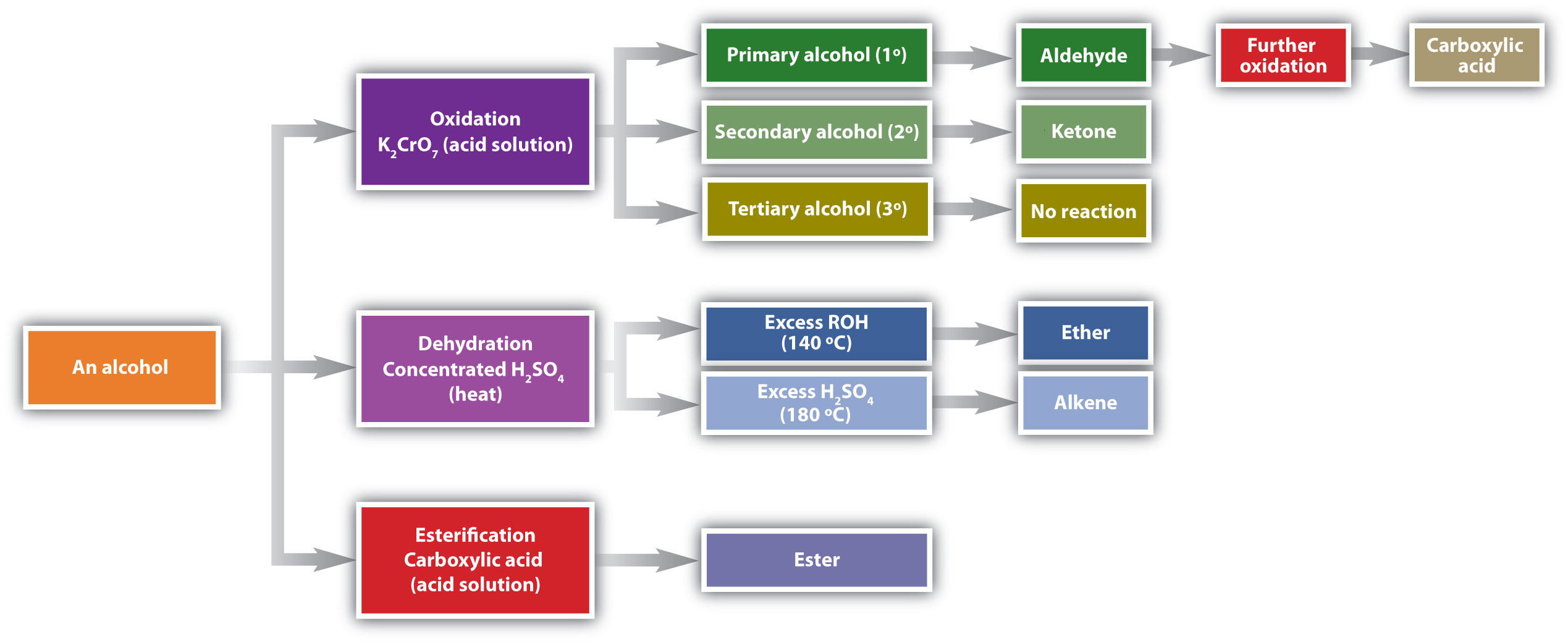
Figure 14.4 Reactions of Alcohols
Oxidation and dehydration of alcohols are considered here.
Dehydration
As noted in Figure 14.4 "Reactions of Alcohols", an alcohol undergoes dehydration in the presence of a catalyst to form an alkene and water. The reaction removes the OH group from the alcohol carbon atom and a hydrogen atom from an adjacent carbon atom in the same molecule:
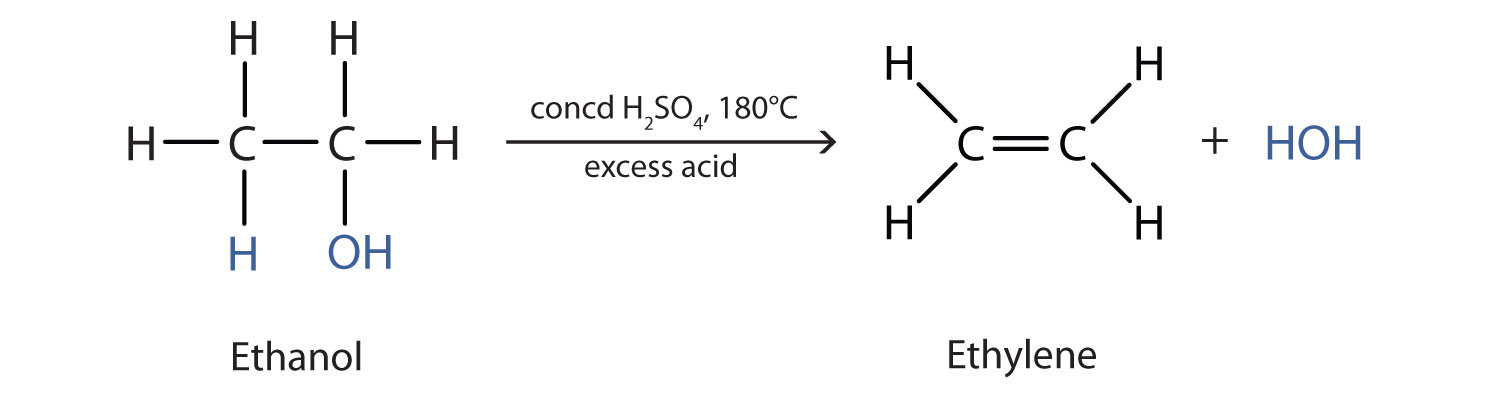
Under the proper conditions, it is possible for the dehydration to occur between two alcohol molecules. The entire OH group of one molecule and only the hydrogen atom of the OH group of the second molecule are removed. The two ethyl groups attached to an oxygen atom form an ether molecule.

(Ethers are discussed in Section 14.4 "Reactions That Form Alcohols".) Thus, depending on conditions, one can prepare either alkenes or ethers by the dehydration of alcohols.
Oxidation
Primary and secondary alcohols are readily oxidized. We saw earlier how methanol and ethanol are oxidized by liver enzymes to form aldehydes. Because a variety of oxidizing agents can bring about oxidation, we can indicate an oxidizing agent without specifying a particular one by writing an equation with the symbol [O] above the arrow. For example, we write the oxidation of ethanol---a primary alcohol---to form acetaldehyde---an aldehyde---as follows:

We shall see (in Section 14.9 "Aldehydes and Ketones: Structure and Names") that aldehydes are even more easily oxidized than alcohols and yield carboxylic acids.
Secondary alcohols are oxidized to ketones. The oxidation of isopropyl alcohol by potassium dichromate (K2Cr2O7) gives acetone, the simplest ketone:
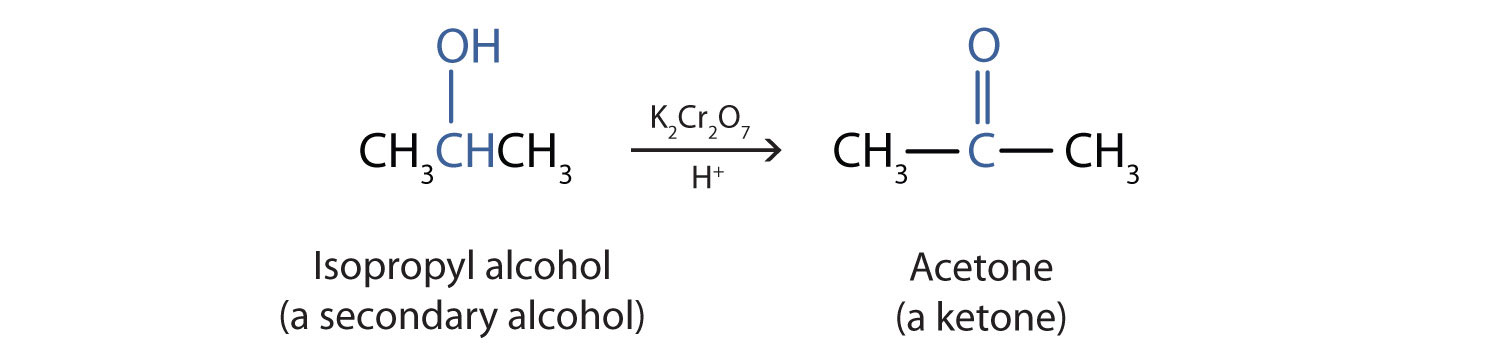
Unlike aldehydes, ketones are relatively resistant to further oxidation (Section 14.9 "Aldehydes and Ketones: Structure and Names"), so no special precautions are required to isolate them as they form.
Note that in oxidation of both primary (RCH2OH) and secondary (R2CHOH) alcohols, two hydrogen atoms are removed from the alcohol molecule, one from the OH group and the other from the carbon atom that bears the OH group.
Alcohol oxidation is important in living organisms. Enzyme-controlled oxidation reactions provide the energy cells need to do useful work. One step in the metabolism of carbohydrates involves the oxidation of the secondary alcohol group in isocitric acid to a ketone group:
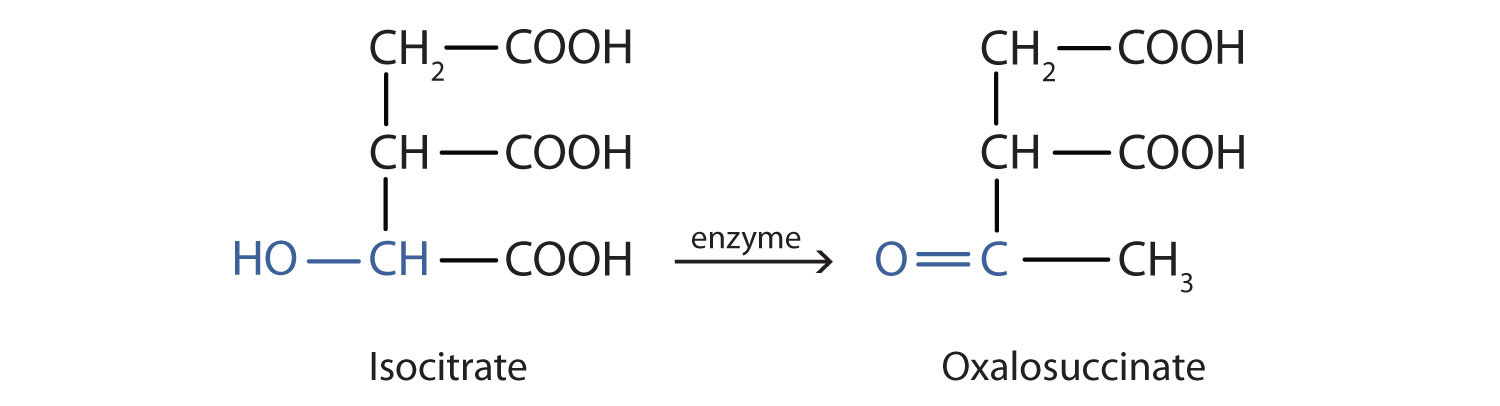
Note that the overall type of reaction is the same as that in the conversion of isopropyl alcohol to acetone. (For more information on metabolic reactions, see Chapter 20 "Energy Metabolism".)
Tertiary alcohols (R3COH) are resistant to oxidation because the carbon atom that carries the OH group does not have a hydrogen atom attached but is instead bonded to other carbon atoms. The oxidation reactions we have described involve the formation of a carbon-to-oxygen double bond. Thus, the carbon atom bearing the OH group must be able to release one of its attached atoms to form the double bond. The carbon-to-hydrogen bonding is easily broken under oxidative conditions, but carbon-to-carbon bonds are not. Therefore tertiary alcohols are not easily oxidized.
Example 4
Write an equation for the oxidation of each alcohol. Use [O] above the arrow to indicate an oxidizing agent. If no reaction occurs, write “no reaction” after the arrow.
CH3CH2CH2CH2CH2OH


Solution
The first step is to recognize the class of each alcohol as primary, secondary, or tertiary.
This alcohol has the OH group on a carbon atom that is attached to only one other carbon atom, so it is a primary alcohol. Oxidation forms first an aldehyde and further oxidation forms a carboxylic acid.
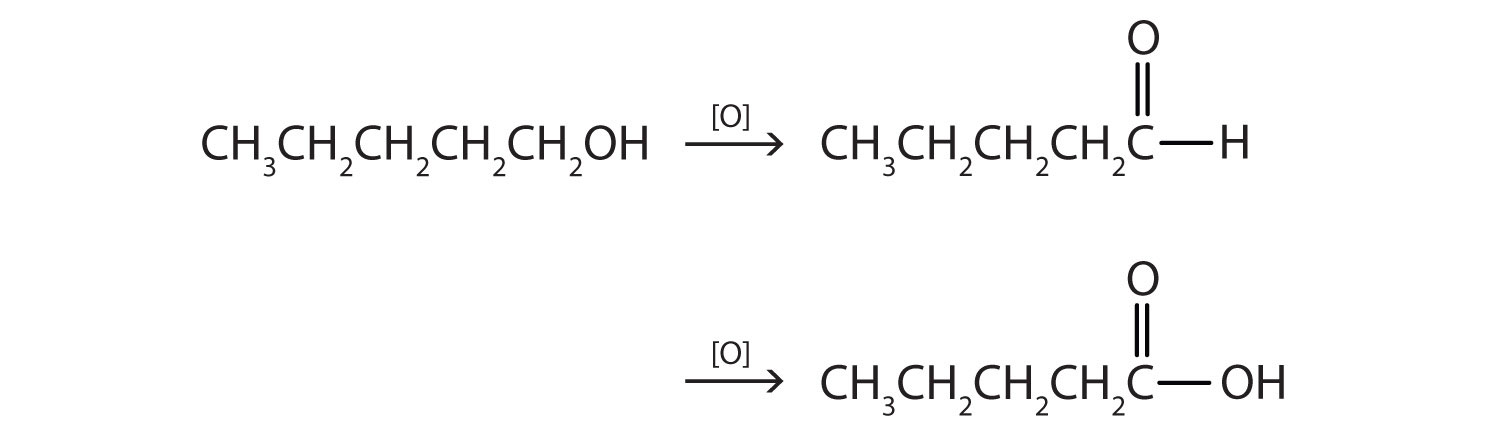
This alcohol has the OH group on a carbon atom that is attached to three other carbon atoms, so it is a tertiary alcohol. No reaction occurs.

This alcohol has the OH group on a carbon atom that is attached to two other carbon atoms, so it is a secondary alcohol; oxidation gives a ketone.

Skill-Building Exercise
Write an equation for the oxidation of each alcohol. Use [O] above the arrow to indicate an oxidizing agent. If no reaction occurs, write “no reaction” after the arrow.



Concept Review Exercises
In a reaction, compound W with the molecular formula C4H10O is converted to compound X with the formula C4H8O. Is W oxidized, reduced, dehydrated, or none of these? Explain.
In a reaction, 2 mol of compound Y with the molecular formula C4H10O is converted to 1 mol of compound Z with the formula C8H18O. Is Y oxidized, reduced, or neither? Explain.
Answers
oxidized; H is removed
neither; water is removed
Exercises
Name the three major types of chemical reactions of alcohols.
Why do tertiary alcohols not undergo oxidation? Can a tertiary alcohol undergo dehydration?
Draw the structure of the product for each reaction.
Draw the structure of the product for each reaction.
Write an equation for the dehydration of 2-propanol to yield each compound type.
an alkene
an ether
Draw the structure of the alkene formed by the dehydration of cyclohexanol.




Answers
dehydration, oxidation, and esterification


14.6 Glycols and Glycerol
Alcohols with two OH groups on adjacent carbon atoms are commonly known as glycols[6]. The most important of these is 1,2-ethanediol (the common name is ethylene glycol), a sweet, colorless, somewhat viscous liquid.

Another common glycol, 1,2-propanediol, is commonly called propylene glycol. Its physical properties are quite similar to those of ethylene glycol.

Commonly called glycerol or glycerin, 1,2,3-propanetriol is the most important trihydroxy alcohol. Like the two glycols, it is a sweet, syrupy liquid. Glycerol is a product of the hydrolysis of fats and oils. (For more information about fats and oils, see Chapter 17 "Lipids", Section 17.2 "Fats and Oils".)

Ethylene glycol is the main ingredient in many antifreeze mixtures for automobile radiators. The two OH groups lead to extensive intermolecular hydrogen bonding. This results in a high boiling point---198°C; thus ethylene glycol does not boil away when it is used as an antifreeze. It is also completely miscible with water. A solution of 60% ethylene glycol in water freezes at −49°C (−56°F) and thus protects an automobile radiator down to that temperature. Ethylene glycol is also used in the manufacture of polyester fiber and magnetic film used in tapes for recorders and computers.
Concept Review Exercises
In the oxidation of propylene glycol to pyruvic acid, what functional groups in the reactant are involved? What new functional groups appear in the product?
Oxalate ion is formed by the oxidation of ethylene glycol. In what kind of reaction is the oxalate ion involved?
Answers
two OH groups; a ketone group and a carboxylic acid group
precipitation
Exercises
What is a glycol?
Why is ethylene glycol so much more toxic to humans than propylene glycol?
Draw the structure for each compound.
1,5-pentanediol
propylene glycol
Draw the structure for each compound.
1,3-hexanediol
glycerol
Answers
an alcohol with two OH groups on adjacent carbon atoms
HOCH2CH2CH2CH2CH2OH

14.7 Phenols
Compounds in which an OH group is attached directly to an aromatic ring are designated ArOH and called phenols[7]. Phenols differ from alcohols in that they are slightly acidic in water. They react with aqueous sodium hydroxide (NaOH) to form salts.
ArOH(aq) + NaOH(aq) → ArONa(aq) + H2O
The parent compound, C6H5OH, is itself called phenol. (An old name, emphasizing its slight acidity, was carbolic acid.) Phenol is a white crystalline compound that has a distinctive (“hospital smell”) odor.

Concept Review Exercises
How do phenols differ from alcohols in terms of structure and properties?
How do phenols differ in properties from aromatic hydrocarbons?
Answers
Phenols have an OH group attached directly to an aromatic ring. Phenols are weakly acidic.
Phenols have an OH group and are somewhat soluble in water.
Exercises
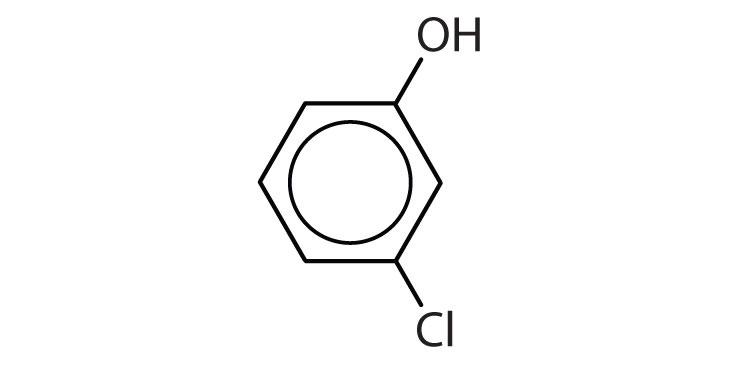
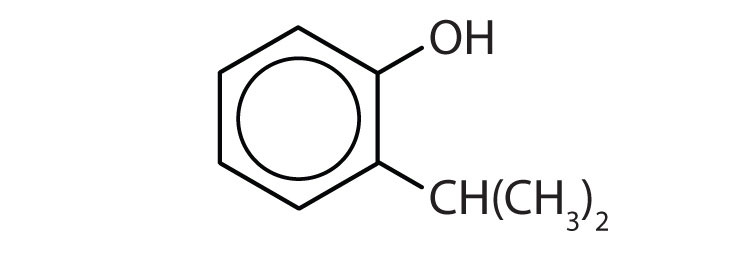
Name each compound.
Name each compound.
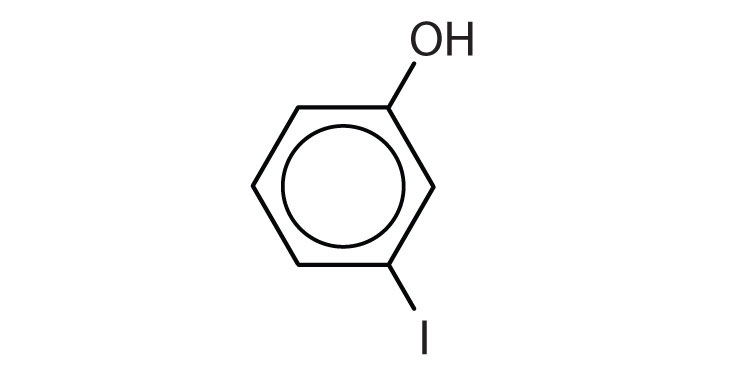
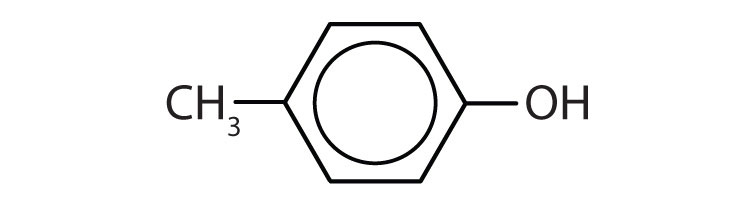
Draw the structure for each compound.
m-iodophenol
p-methylphenol (p-cresol)
Draw the structure for each compound.
2,4,6-trinitrophenol (picric acid)
3,5-diethylphenol
Answers
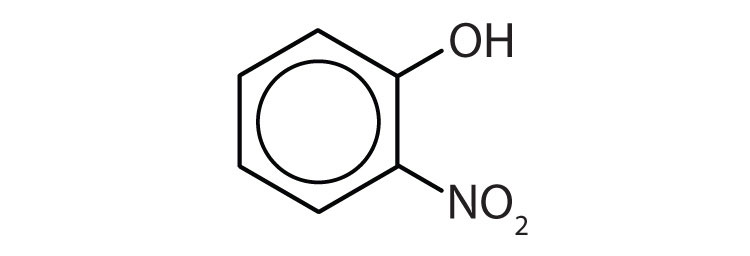
o-nitrophenol
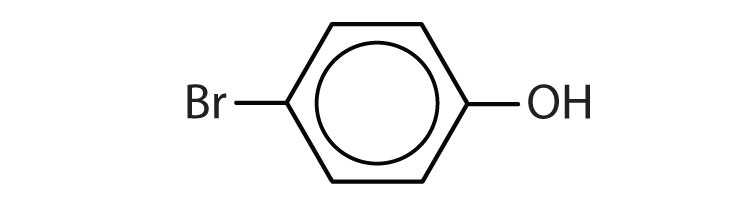
p-bromophenol
14.8 Ethers
With the general formula ROR′, an ether[8] may be considered a derivative of water in which both hydrogen atoms are replaced by alkyl or aryl groups. It may also be considered a derivative of an alcohol (ROH) in which the hydrogen atom of the OH group has been replaced by a second alkyl or aryl group:
Simple ethers have simple common names, formed from the names of the groups attached to the oxygen atom, followed by the generic name ether. For example, CH3--O--CH2CH2CH3 is methyl propyl ether. If both groups are the same, the group name should be preceded by the prefix di-, as in dimethyl ether (CH3--O--CH3) and diethyl ether CH3CH2--O--CH2CH3.
Ether molecules have no hydrogen atom on the oxygen atom (that is, no OH group). Therefore there is no intermolecular hydrogen bonding between ether molecules, and ethers therefore have quite low boiling points for a given molar mass. Indeed, ethers have boiling points about the same as those of alkanes of comparable molar mass and much lower than those of the corresponding alcohols (Table 14.4 "Comparison of Boiling Points of Alkanes, Alcohols, and Ethers").
Table 14.4 Comparison of Boiling Points of Alkanes, Alcohols, and Ethers
Condensed Structural Formula | Name | Molar Mass | Boiling Point (°C) | Intermolecular Hydrogen Bonding in Pure Liquid? |
|---|---|---|---|---|
CH3CH2CH3 | propane | 44 | --42 | no |
CH3OCH3 | dimethyl ether | 46 | --25 | no |
CH3CH2OH | ethyl alcohol | 46 | 78 | yes |
CH3CH2CH2CH2CH3 | pentane | 72 | 36 | no |
CH3CH2OCH2CH3 | diethyl ether | 74 | 35 | no |
CH3CH2CH2CH2OH | butyl alcohol | 74 | 117 | yes |
Ether molecules do have an oxygen atom, however, and engage in hydrogen bonding with water molecules. Consequently, an ether has about the same solubility in water as the alcohol that is isomeric with it. For example, dimethyl ether and ethanol (both having the molecular formula C2H6O) are completely soluble in water, whereas diethyl ether and 1-butanol (both C4H10O) are barely soluble in water (8 g/100 mL of water).
Example 5
What is the common name for each ether?
CH3CH2CH2OCH2CH2CH3

Solution
The carbon groups on either side of the oxygen atom are propyl (CH3CH2CH2) groups, so the compound is dipropyl ether.
The three-carbon group is attached by the middle carbon atom, so it is an isopropyl group. The one-carbon group is a methyl group. The compound is isopropyl methyl ether.
Skill-Building Exercise
What is the common name for each ether?
CH3CH2CH2CH2OCH2CH2CH2CH3

Concept Review Exercises
Why does diethyl ether (CH3CH2OCH2CH3) have a much lower boiling point than 1-butanol (CH3CH2CH2CH2OH)?
Which is more soluble in water---ethyl methyl ether (CH3CH2OCH3) or 1-butanol (CH3CH2CH2CH2OH)? Explain.
Answers
Diethyl ether has no intermolecular hydrogen bonding because there is no OH group; 1-butanol has an OH and engages in intermolecular hydrogen bonding.
Ethyl methyl ether (three carbon atoms, one oxygen atom) is more soluble in water than 1-butanol (four carbon atoms, one oxygen atom), even though both can engage in hydrogen bonding with water.
Exercises
How can ethanol give two different products when heated with sulfuric acid? Name these products.
Which of these ethers is isomeric with ethanol---CH3CH2OCH2CH3, CH3OCH2CH3, or CH3OCH3?
Name each compound.
CH3OCH2CH2CH3

Name each compound.
CH3CH2CH2CH2OCH3
CH3CH2OCH2CH2CH3
Draw the structure for each compound.
methyl ethyl ether
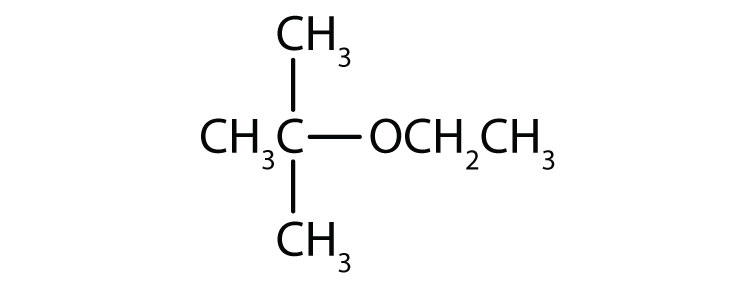
tert-butyl ethyl ether
Draw the structure for each compound.
diisopropyl ether
cyclopropyl propyl ether
Answers
Intramolecular (both the H and the OH come from the same molecule) dehydration gives ethylene; intermolecular (the H comes from one molecule and the OH comes from another molecule) dehydration gives diethyl ether.
methyl propyl ether
ethyl isopropyl ether
CH3OCH2CH3
14.9 Aldehydes and Ketones: Structure and Names
The next functional group we consider, the carbonyl group[9], has a carbon-to-oxygen double bond.

Carbonyl groups define two related families of organic compounds: the aldehydes and the ketones.
In a ketone[10], two carbon groups are attached to the carbonyl carbon atom. The following general formulas, in which R represents an alkyl group and Ar stands for an aryl group, represent ketones.

In an aldehyde[11], at least one of the attached groups must be a hydrogen atom. The following compounds are aldehydes:

In condensed formulas, we use CHO to identify an aldehyde rather than COH, which might be confused with an alcohol. This follows the general rule that in condensed structural formulas H comes after the atom it is attached to (usually C, N, or O).

The carbon-to-oxygen double bond is not shown but understood to be present.
Because they contain the same functional group, aldehydes and ketones share many common properties, but they still differ enough to warrant their classification into two families.
Naming Aldehydes and Ketones
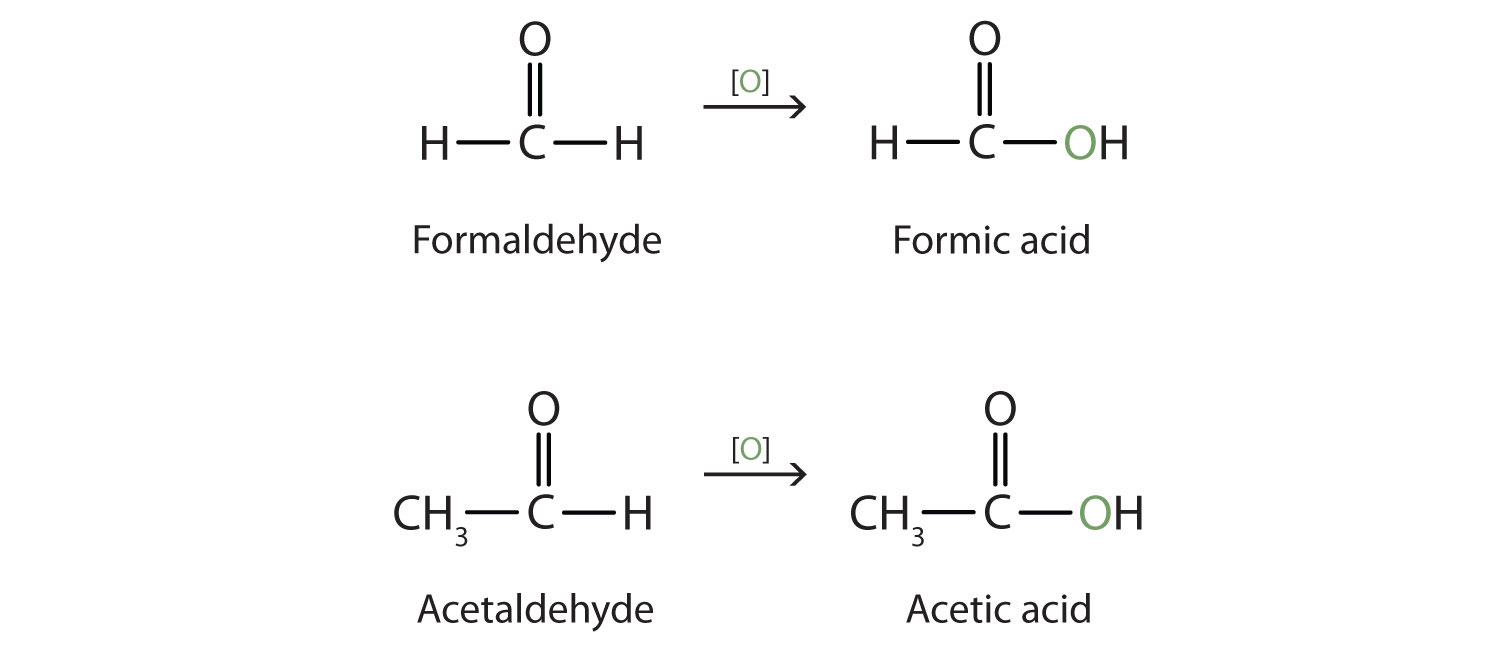
Both common and International Union of Pure and Applied Chemistry (IUPAC) names are frequently used for aldehydes and ketones, with common names predominating for the lower homologs. The common names of aldehydes are taken from the names of the acids into which the aldehydes can be converted by oxidation. (For more information about carboxylic acids, see Chapter 15 "Organic Acids and Bases and Some of Their Derivatives", Section 15.2 "Carboxylic Acids: Structures and Names" through Section 15.4 "Physical Properties of Carboxylic Acids".)
Because the carbonyl group in a ketone must be attached to two carbon groups, the simplest ketone has three carbon atoms. It is widely known as acetone, a unique name unrelated to other common names for ketones.

Generally, the common names of ketones consist of the names of the groups attached to the carbonyl group, followed by the word ketone. (Note the similarity to the naming of ethers.) Another name for acetone, then, is dimethyl ketone. The ketone with four carbon atoms is ethyl methyl ketone.

Example 6
Classify each compound as an aldehyde or a ketone. Give the common name for each ketone.



Solution
This compound has the carbonyl group on an end carbon atom, so it is an aldehyde.
This compound has the carbonyl group on an interior carbon atom, so it is a ketone. Both alkyl groups are propyl groups. The name is therefore dipropyl ketone.
This compound has the carbonyl group between two alkyl groups, so it is a ketone. One alkyl group has three carbon atoms and is attached by the middle carbon atom; it is an isopropyl group. A group with one carbon atom is a methyl group. The name is therefore isopropyl methyl ketone.
Skill-Building Exercise
Classify each compound as an aldehyde or a ketone. Give the common name for each ketone.



Here are some simple IUPAC rules for naming aldehydes and ketones:
The stem names of aldehydes and ketones are derived from those of the parent alkanes, defined by the longest continuous chain (LCC) of carbon atoms that contains the functional group.
For an aldehyde, drop the -e from the alkane name and add the ending -al. Methanal is the IUPAC name for formaldehyde, and ethanal is the name for acetaldehyde.
For a ketone, drop the -e from the alkane name and add the ending -one. Propanone is the IUPAC name for acetone, and butanone is the name for ethyl methyl ketone.
To indicate the position of a substituent on an aldehyde, the carbonyl carbon atom is always considered to be C1; it is unnecessary to designate this group by number.
To indicate the position of a substituent on a ketone, number the chain in the manner that gives the carbonyl carbon atom the lowest possible number. In cyclic ketones, it is understood that the carbonyl carbon atom is C1.
Example 7
Give the IUPAC name for each compound.



Solution
There are five carbon atoms in the LCC. The methyl group (CH3) is a substituent on the second carbon atom of the chain; the aldehyde carbon atom is always C1. The name is derived from pentane. Dropping the -e and adding the ending -al gives pentanal. The methyl group on the second carbon atom makes the name 2-methylpentanal.
There are five carbon atoms in the LCC. The carbonyl carbon atom is C3, and there are methyl groups on C2 and C4. The IUPAC name is 2,4-dimethyl-3-pentanone.
There are six carbon atoms in the ring. The compound is cyclohexanone. No number is needed to indicate the position of the carbonyl group because all six carbon atoms are equivalent.
Skill-Building Exercise
Give the IUPAC name for each compound.



Example 8
Draw the structure for each compound.
7-chlorooctanal
4-methyl-3-hexanone
Solution
The octan- part of the name tells us that the LCC has eight carbon atoms. There is a chlorine (Cl) atom on the seventh carbon atom; numbering from the carbonyl group and counting the carbonyl carbon atom as C1, we place the Cl atom on the seventh carbon atom.

The hexan- part of the name tells us that the LCC has six carbon atoms. The 3 means that the carbonyl carbon atom is C3 in this chain, and the 4 tells us that there is a methyl (CH3) group at C4:

Skill-Building Exercise
Draw the structure for each compound.
5-bromo-3-iodoheptanal
5-bromo-4-ethyl-2-heptanone
Concept Review Exercises
Give the structure and IUPAC name for the compound that has the common name m-bromobenzaldehyde (see Figure 14.6 "Some Interesting Aldehydes" for the structure of benzaldehyde).
Give the IUPAC name for glyceraldehyde, (HOCH2CHOHCHO). (Hint: as a substituent, the OH group is named hydroxy.)
Answers

3-bromobenzaldehyde
2,3-dihydroxypropanal
Exercises
Name each compound.
Name each compound.

CH3CH2CH2CH2CH2CHO


Draw the structure for each compound.
butyraldehyde
2-hexanone
p-nitrobenzaldehyde
Draw the structure for each compound.
5-ethyloctanal
2-chloropropanal
2-hydroxy-3-pentanone




Answers
propanal or propionaldehyde
butanal or butyraldehyde
3-pentanone or diethyl ketone
benzaldehyde
CH3CH2CH2CHO


14.10 Properties of Aldehydes and Ketones
The carbon-to-oxygen double bond is quite polar, more polar than a carbon-to-oxygen single bond. The electronegative oxygen atom has a much greater attraction for the bonding electron pairs than does the carbon atom. The carbon atom has a partial positive charge, and the oxygen atom has a partial negative charge:

In aldehydes and ketones, this charge separation leads to dipole-dipole interactions that are great enough to significantly affect the boiling points. Table 14.5 "Boiling Points of Compounds Having Similar Molar Masses but Different Types of Intermolecular Forces" shows that the polar single bonds in ethers have little such effect, whereas hydrogen bonding between alcohol molecules is even stronger.
Table 14.5 Boiling Points of Compounds Having Similar Molar Masses but Different Types of Intermolecular Forces
Compound | Family | Molar Mass | Type of Intermolecular Forces | Boiling Point (°C) |
|---|---|---|---|---|
CH3CH2CH2CH3 | alkane | 58 | dispersion only | --1 |
CH3OCH2CH3 | ether | 60 | weak dipole | 6 |
CH3CH2CHO | aldehyde | 58 | strong dipole | 49 |
CH3CH2CH2OH | alcohol | 60 | hydrogen bonding | 97 |
Formaldehyde is a gas at room temperature. Acetaldehyde boils at 20°C; in an open vessel, it boils away in a warm room. Most other common aldehydes are liquids at room temperature.
The oxygen atom of the carbonyl group engages in hydrogen bonding with a water molecule.

The solubility of aldehydes is therefore about the same as that of alcohols and ethers. Formaldehyde, acetaldehyde, and acetone are soluble in water. As the carbon chain increases in length, solubility in water decreases. The borderline of solubility occurs at about four carbon atoms per oxygen atom. All aldehydes and ketones are soluble in organic solvents and, in general, are less dense than water.
Oxidation of Aldehydes and Ketones
Aldehydes and ketones are much alike in many of their reactions, owing to the presence of the carbonyl functional group in both. They differ greatly, however, in one most important type of reaction: oxidation. Aldehydes are readily oxidized to carboxylic acids, whereas ketones resist oxidation.
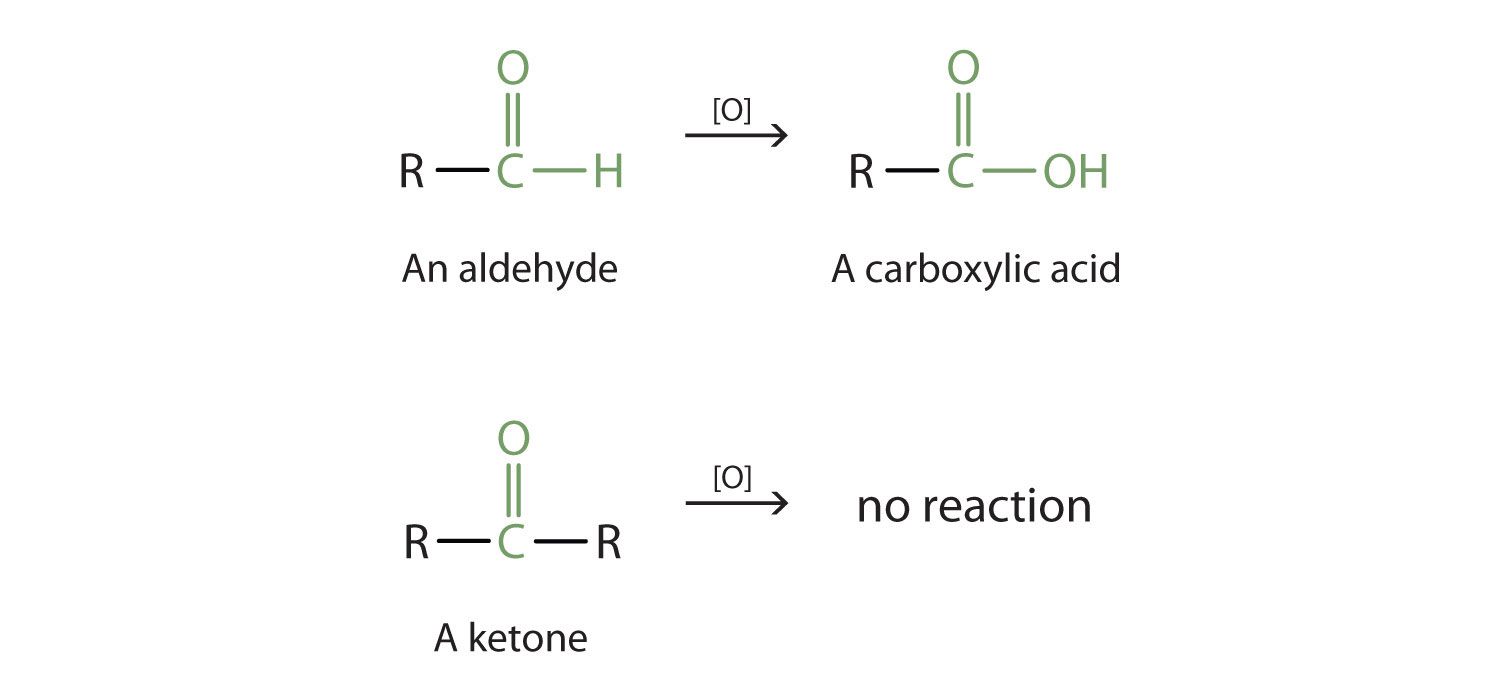
The aldehydes are, in fact, among the most easily oxidized of organic compounds. They are oxidized by oxygen (O2) in air to carboxylic acids.
2RCHO + O2 → 2RCOOH
The ease of oxidation helps chemists identify aldehydes. A sufficiently mild oxidizing agent can distinguish aldehydes not only from ketones but also from alcohols. Tollens’ reagent, for example, is an alkaline solution of silver (Ag+) ion complexed with ammonia (NH3), which keeps the Ag+ ion in solution.
H3N---Ag+---NH3
When Tollens’ reagent oxidizes an aldehyde, the Ag+ ion is reduced to free silver (Ag).
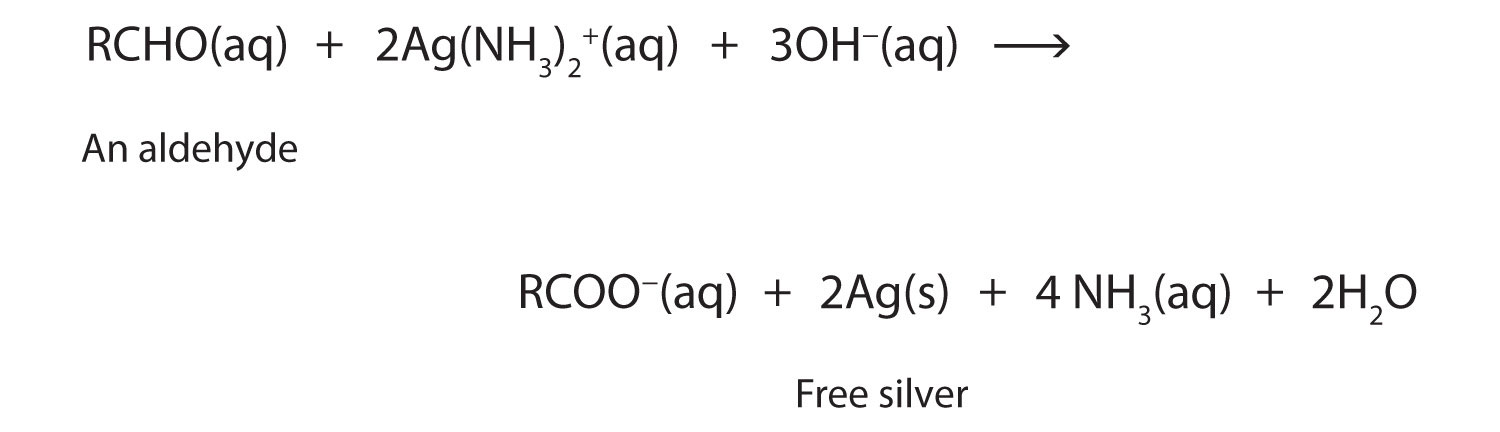
Deposited on a clean glass surface, the silver produces a mirror (Figure 14.5 "Aldehyde Reactions"). Ordinary ketones do not react with Tollens’ reagent.
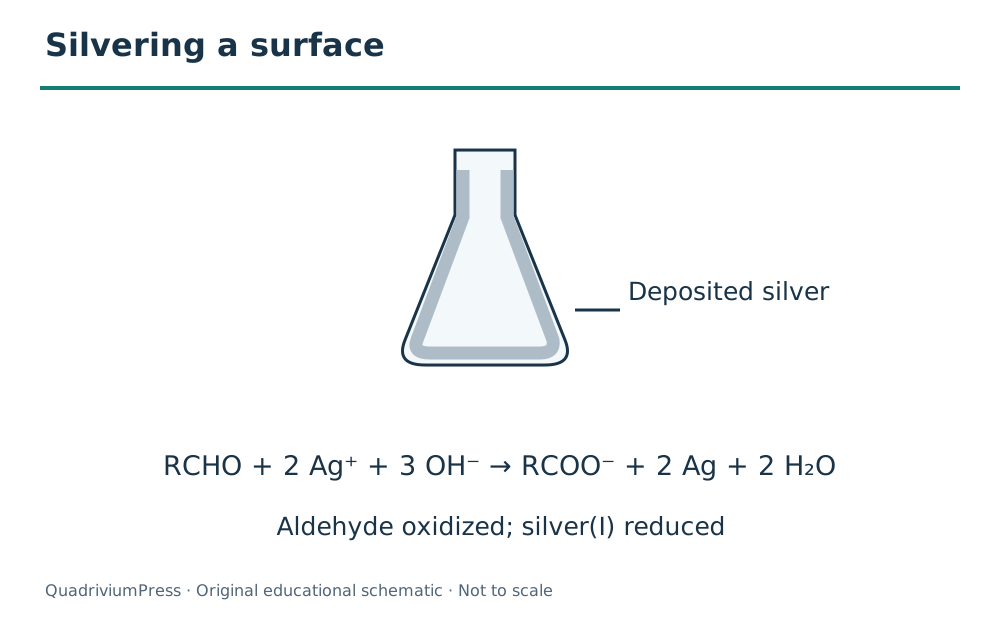
Figure 14.5 Aldehyde Reactions
An aldehyde reduces silver(I) to metallic silver while being oxidized to a carboxylate under basic conditions. Silver deposited on glass creates a reflective coating.
Credit: QuadriviumPress; CC BY-NC-SA 3.0. Source.
Although ketones resist oxidation by ordinary laboratory oxidizing agents, they undergo combustion, as do aldehydes.
Some Common Carbonyl Compounds
Formaldehyde has an irritating odor. Because of its reactivity, it is difficult to handle in the gaseous state. For many uses, it is therefore dissolved in water and sold as a 37% to 40% aqueous solution called formalin. Formaldehyde denatures proteins, rendering them insoluble in water and resistant to bacterial decay. (For more information about proteins, see Chapter 18 "Amino Acids, Proteins, and Enzymes", Section 18.4 "Proteins".) For this reason, formalin is used in embalming solutions and in preserving biological specimens.
Aldehydes are the active components in many other familiar substances. Large quantities of formaldehyde are used to make phenol-formaldehyde resins for gluing the wood sheets in plywood and as adhesives in other building materials. Sometimes the formaldehyde escapes from the materials and causes health problems in some people. While some people seem unaffected, others experience coughing, wheezing, eye irritation, and other symptoms.
Acetaldehyde is an extremely volatile, colorless liquid. It is a starting material for the preparation of many other organic compounds. Acetaldehyde is formed as a metabolite in the fermentation of sugars and in the detoxification of alcohol in the liver. Aldehydes are the active components of many other familiar materials (Figure 14.6 "Some Interesting Aldehydes").
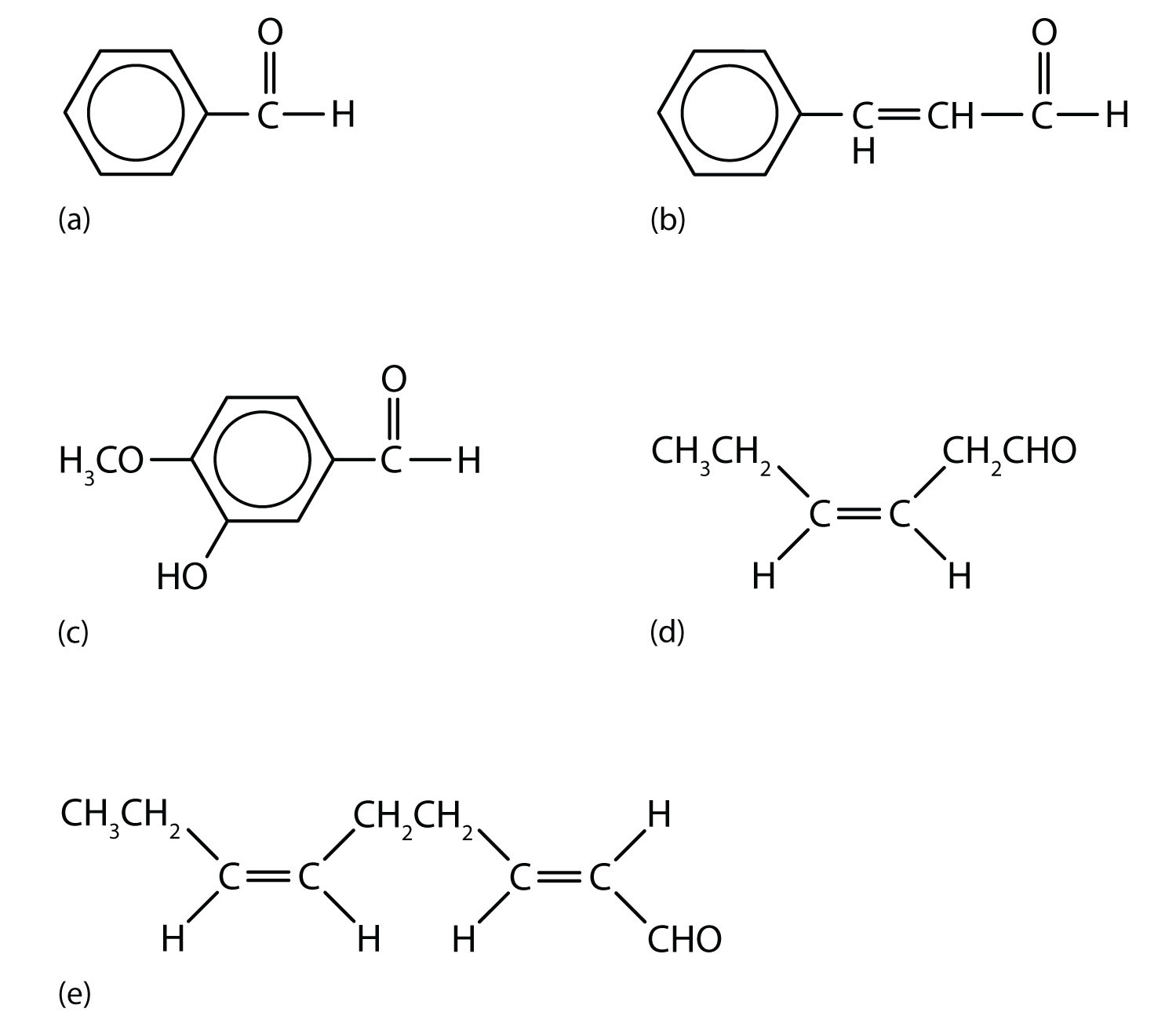
Figure 14.6 Some Interesting Aldehydes
(a) Benzaldehyde is an oil found in almonds; (b) cinnamaldehyde is oil of cinnamon; (c) vanillin gives vanilla its flavor; (d) cis-3-hexenal provides an herbal odor; and (e) trans-2-cis-6-nonadienal gives a cucumber odor.
Acetone is the simplest and most important ketone. Because it is miscible with water as well as with most organic solvents, its chief use is as an industrial solvent (for example, for paints and lacquers). It is also the chief ingredient in some brands of nail polish remover.
Concept Review Exercises
What feature of their structure makes aldehydes easier to oxidize than ketones?
How does the carbon-to-oxygen bond of aldehydes and ketones differ from the carbon-to-carbon bond of alkenes?
Answers
the H on the carbonyl carbon atom
The carbon-to-oxygen double bond is polar; the carbon-to-carbon double bond is nonpolar.
Exercises
Which compound in each pair has the higher boiling point?
acetone or 2-propanol
dimethyl ether or acetaldehyde
Which compound in each pair has the higher boiling point?
butanal or 1-butanol
acetone or isobutane
Draw the structure of the alcohol that could be oxidized to each compound.
cyclohexanone
2-methyl-1-propanal
Draw the structure of the alcohol that could be oxidized to each compound.
2-pentanone
o-methylbenzaldehyde
Acetaldehyde is treated with each substance.
Ag+(aq)---What inorganic product, if any, is formed?
K2Cr2O7 in an acid solution---What organic product, if any, is formed?
Acetone is treated with each substance.
Ag+(aq) ---What inorganic product, if any, is formed?
K2Cr2O7 in an acid solution---What organic product, if any, is formed?
Answers
2-propanol
acetaldehyde
silver metal (Ag)
acetic acid (CH3COOH)


14.11 Organic Sulfur Compounds
Because sulfur is in the same group (6A) of the periodic table as oxygen, the two elements have some similar properties. We might expect sulfur to form organic compounds related to those of oxygen, and indeed it does.
Thiols[12] (also called mercaptans), which are sulfur analogs of alcohols, have the general formula RSH. Methanethiol (also called methyl mercaptan) has the formula CH3SH. Ethanethiol (ethyl mercaptan) is the most common odorant for liquid propane (LP) gas.
The mild oxidation of thiols gives compounds called disulfides.
As we note in Chapter 18 "Amino Acids, Proteins, and Enzymes", Section 18.4 "Proteins", the amino acids cysteine [HSCH2CH(NH2)COOH] and methionine [CH3SCH2CH2CH(NH2)COOH] contain sulfur atoms, as do all proteins that contain these amino acids. Disulfide linkages (--S--S--) between protein chains are extremely important in protein structure.
Thioethers, which are sulfur analogs of ethers, have the general formula RSR′. An example is dimethylsulfide (CH3SCH3), which is responsible for the sometimes unpleasant odor of cooking cabbage and related vegetables. Note that methionine has a thioether functional group.
Concept Review Exercises
What is the functional group of a thiol? Write the condensed structural formula for ethanethiol (ethyl mercaptan).
What is the functional group of a disulfide? Write the condensed structural formula for dipropyl disulfide.
Answers
SH; CH3CH2SH
--S--S--; CH3CH2CH2SSCH2CH2CH3
Exercises
A common natural gas odorant is tert-butyl mercaptan. What is its condensed structural formula?
Write the equation for the oxidation of ethanethiol to diethyl disulfide.
Answer
(CH3)3CSH
14.12 End-of-Chapter Material
Additional Exercises
Describe two ways that ethanol can be prepared. Which method is used to produce alcoholic beverages?
Give the structure of the alkene from which isopropyl alcohol is made by reaction with water in an acidic solution.
Ethanol is used as a solvent for some drugs that are not soluble in water. Why is methanol not used in medicines?
Give the structure of the alkene that is made from tert-butyl alcohol [(CH3)3COH] by reaction with water in an acidic solution.
Classify each conversion as oxidation, dehydration, or hydration (only the organic starting material and product are shown):
CH3OH → HCHO
CH3CHOHCH3 → CH3CH=CH2
CH2=CHCH2CH3 → CH3CHOHCH2CH3
Classify each conversion as oxidation, dehydration, or hydration (only the organic starting material and product are shown):
CH3CHOHCH3 → CH3COCH3
HOOCCH=CHCOOH → HOOCCH2CHOHCOOH
2 CH3OH → CH3OCH3
Why is methanol so much more toxic to humans than ethanol?
Each of the four isomeric butyl alcohols is treated with potassium dichromate (K2Cr2O7) in acid. Give the product (if any) expected from each reaction.
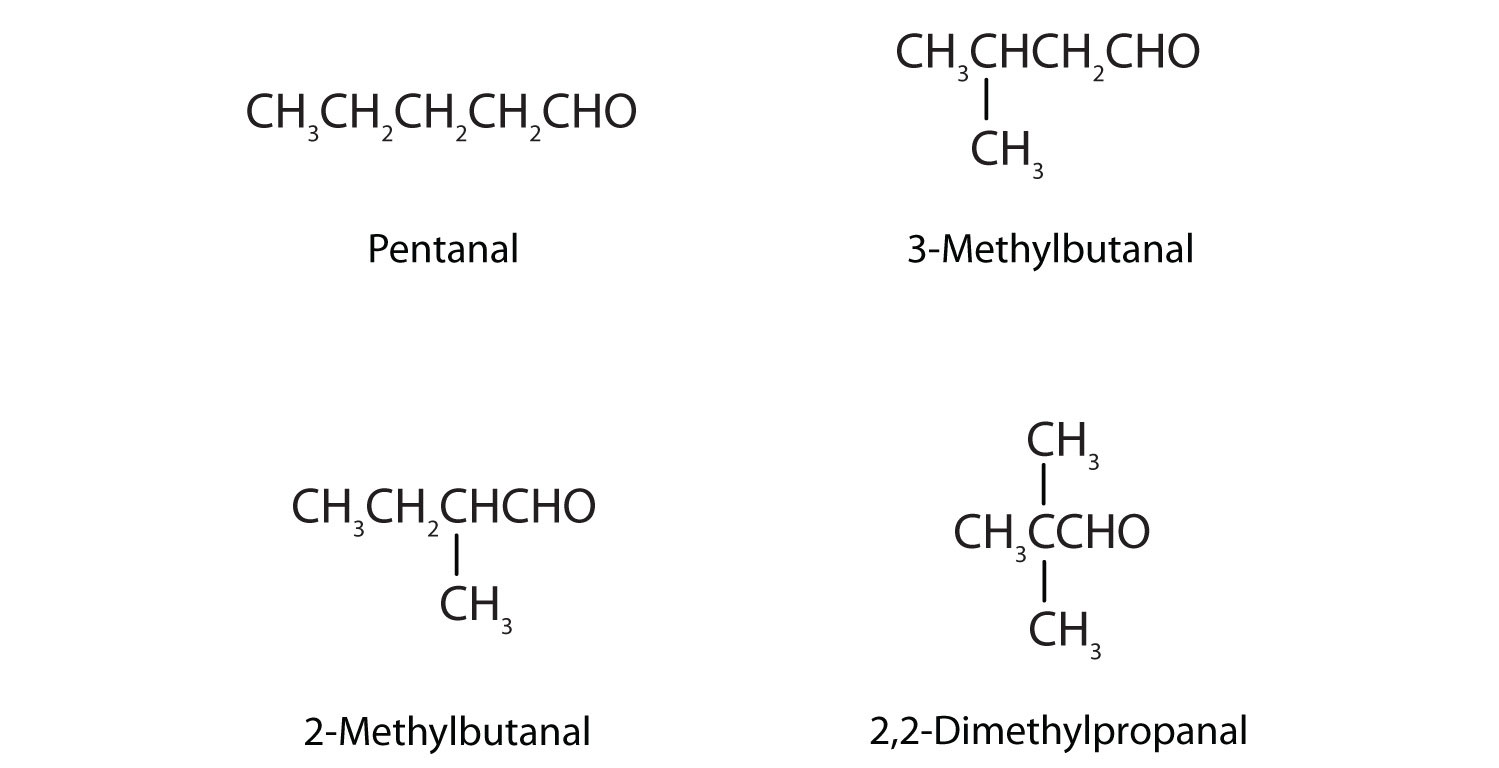
Draw the structures and give IUPAC names for the four isomeric aldehydes having the formula C5H10O.
Write an equation for the reaction of phenol with aqueous NaOH.
Write an equation for the ionization of phenol in water.
Draw the structures and give the common and IUPAC names for the three isomeric ketones having the formula C5H10O.
As we shall see in Chapter 16 "Carbohydrates", 2,3-dihydroxypropanal and 1,3-dihydroxyacetone are important carbohydrates. Draw their structures.
Glutaraldehyde (pentanedial) is a germicide that is replacing formaldehyde as a sterilizing agent. It is less irritating to the eyes, the nose, and skin. Write the condensed structural formula of glutaraldehyde.
Why does the oxidation of isopropyl alcohol give a ketone, whereas the oxidation of isobutyl alcohol gives an aldehyde?
Identify each compound as an alcohol, a phenol, or an ether. Classify any alcohols as primary (1°), secondary (2°), or tertiary (3°).
CH3CH2CH2OH



Identify each compound as an alcohol, a phenol, or an ether. Classify any alcohols as primary, secondary, or tertiary.
CH3CH2OCH2CH3



Tell whether each compound forms an acidic, a basic, or a neutral solution in water.
When water is added to ethylene in the presence of an acid catalyst, only one product---ethanol---is possible. However, when water is added to propylene, two products are possible---1-propanol and 2-propanol---but only 2-propanol is formed. In 1870, the Russian chemist Vladimir V. Markovnikov proposed a rule to predict the products of such reactions: Considering water to be HOH, the hydrogen atom of water goes on the carbon atom (of the two involved in the double bond) that has the most hydrogen atoms already bonded to it. The OH group goes on the carbon atom with fewer hydrogen atoms. Use Markovnikov’s rule to predict the product of the addition of water to each compound.
2-methylpropene
1-butene
2-methyl-1-pentene
2-methyl-2-pentene
Ethyl alcohol, like rubbing alcohol (isopropyl alcohol), is often used for sponge baths. What property of alcohols makes them useful for this purpose?
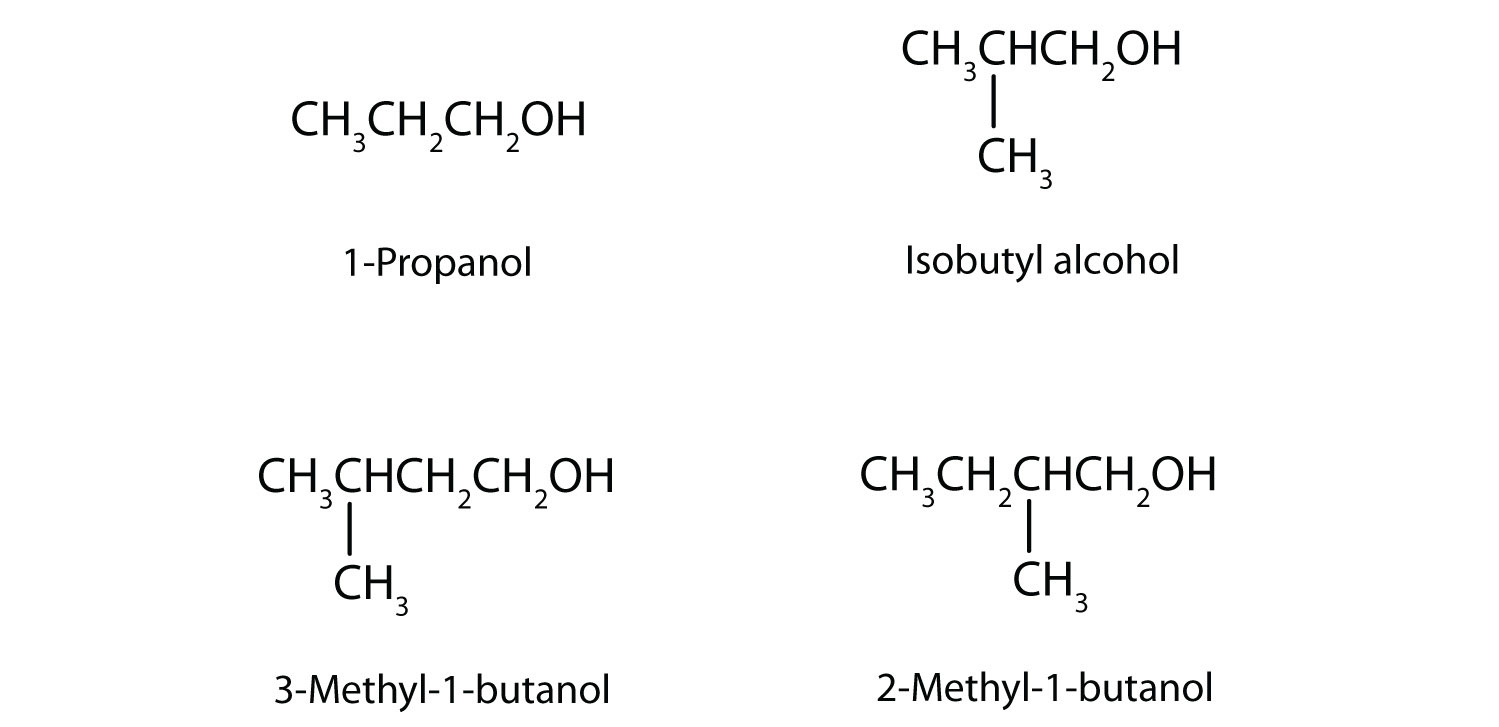
In addition to ethanol, the fermentation of grain produces other organic compounds collectively called fusel oils (FO). The four principal FO components are 1-propanol, isobutyl alcohol, 3-methyl-1-butanol, and 2-methyl-1-butanol. Draw a structure for each. (FO is quite toxic and accounts in part for hangovers.)
Draw and name the isomeric ethers that have the formula C5H12O.
Menthol is an ingredient in mentholated cough drops and nasal sprays. It produces a cooling, refreshing sensation when rubbed on the skin and so is used in shaving lotions and cosmetics. Thymol, the aromatic equivalent of menthol, is the flavoring constituent of thyme.
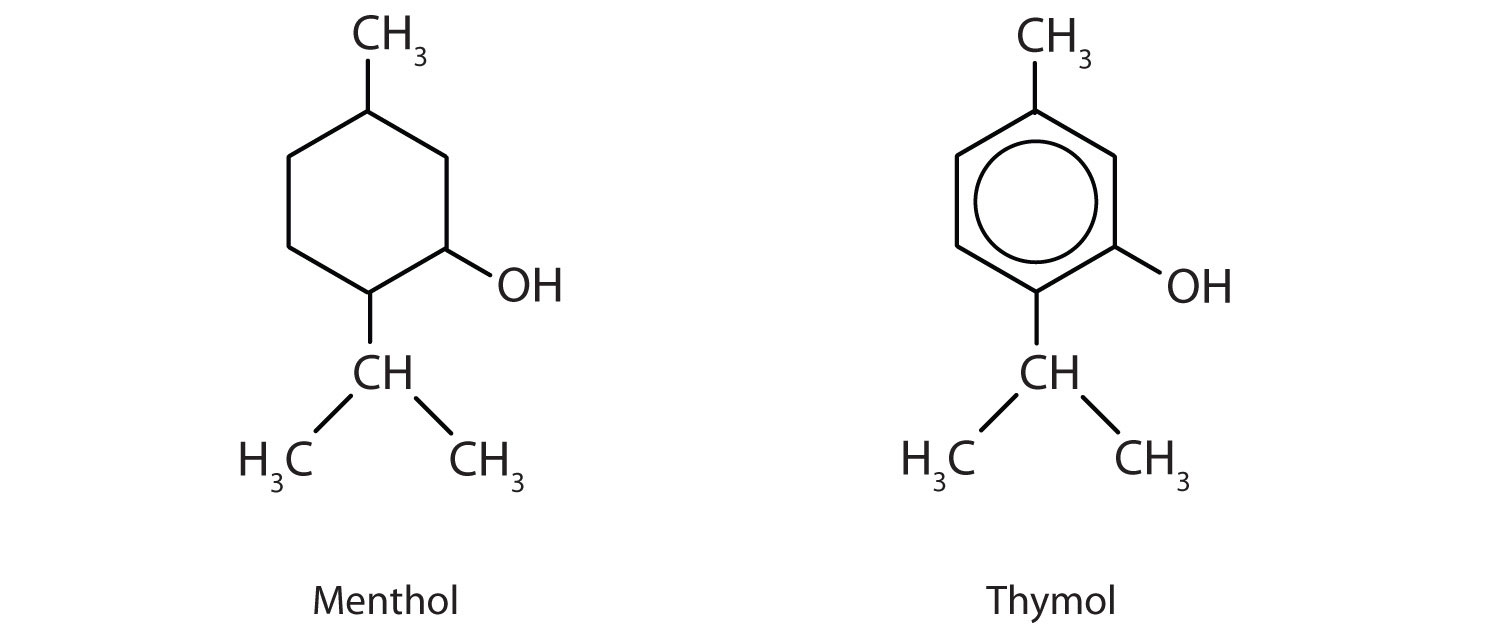
To what class of compounds does each belong?
Give an alternate name for thymol.
Write the equation for the production of ethanol by the addition of water to ethylene. How much ethanol can be made from 14.0 kg of ethylene?
Methanol is not particularly toxic to rats. If methanol were newly discovered and tested for toxicity in laboratory animals, what would you conclude about its safety for human consumption?
The amino acid cysteine has the formula HSCH2CH(NH2)COOH. What is the sulfur-containing functional group in the cysteine molecule?
The amino acid methionine has the formula CH3SCH2CH2CH(NH2)COOH. What functional groups are in methionine?
Tetrahydrocannabinol is the principal active ingredient in marijuana. What functional groups are present in this molecule?
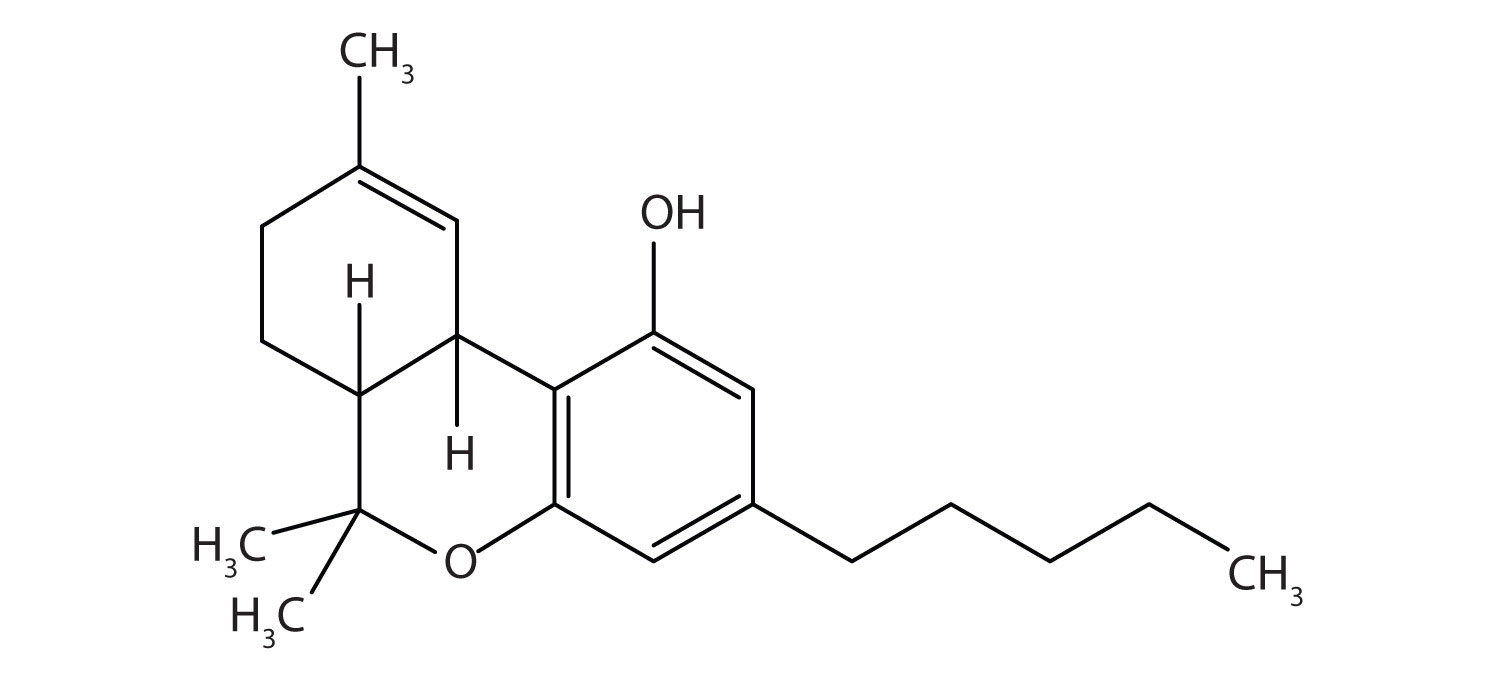



Answers
addition of water to ethylene; fermentation (for beverages)
Methanol is too toxic.
oxidation
dehydration
hydration
Methanol is oxidized in the body to toxic formaldehyde; ethanol is oxidized to the less toxic acetaldehyde.
C6H5OH + H2O → C6H5O− + H3O+

Isopropyl alcohol is a secondary alcohol, whereas isobutyl alcohol is a primary alcohol.
ether
tertiary alcohol
phenol
secondary alcohol
tert-butyl alcohol
2-butanol
2-methyl-2-pentanol
2-methyl-2-pentanol
menthol: alcohol; thymol: phenol
2-isopropyl-5-methylphenol
It might be ruled safe until tested on humans.
sulfide, amino, and carboxylic acid
A structural arrangement of atoms and/or bonds that imparts a wide range of important properties to organic compounds.
An organic compound with an OH functional group on an aliphatic carbon atom.
A compound with an OH group on a carbon atom that is attached to only one other carbon atom.
A compound with an OH group on a carbon atom that is attached to two other carbon atoms.
A compound with an OH group on a carbon atom that is attached to three other carbon atoms.
An alcohol with two OH functional groups.
An aromatic compound with an OH group attached directly to a benzene ring.
An organic compound that has an oxygen atom between two hydrocarbon groups.
A compound with a carbon-to-oxygen double bond.
An organic compound whose molecules have a carbonyl functional group between two hydrocarbon groups.
An organic compound with a carbonyl functional group that has a hydrogen atom attached and either a hydrocarbon group or a second hydrogen atom.
A compound with an SH functional group.