Radioactive isotopes have a variety of applications. Generally, however, they are useful because either we can detect their radioactivity or we can use the energy they release.
Radioactive isotopes are effective tracers because their radioactivity is easy to detect. A tracer (A substance that can be used to follow the pathway of that substance through a structure.) is a substance that can be used to follow the pathway of that substance through some structure. For instance, leaks in underground water pipes can be discovered by running some tritium-containing water through the pipes and then using a Geiger counter to locate any radioactive tritium subsequently present in the ground around the pipes. (Recall that tritium is a radioactive isotope of hydrogen.)
Tracers can also be used to follow the steps of a complex chemical reaction. After incorporating radioactive atoms into reactant molecules, scientists can track where the atoms go by following their radioactivity. One excellent example of this is the use of carbon-14 to determine the steps involved in photosynthesis in plants. We know these steps because researchers followed the progress of carbon-14 throughout the process.
Radioactive Dating
Radioactive isotopes are useful for establishing the ages of various objects. The half-life of radioactive isotopes is unaffected by any environmental factors, so the isotope acts like an internal clock. For example, if a rock is analyzed and is found to contain a certain amount of uranium-235 and a certain amount of its daughter isotope, we can conclude that a certain fraction of the original uranium-235 has radioactively decayed. If half of the uranium has decayed, then the rock has an age of one half-life of uranium-235, or about 7.0 × 10⁸ y. Many analyses like this, using a wide variety of isotopes, have indicated that age of the earth itself is over 4 × 10⁹ y. In another interesting example of radioactive dating, hydrogen-3 dating has been used to verify the stated vintages of some old fine wines.
One isotope, carbon-14, is particularly useful in determining the age of once-living artifacts. A tiny amount of carbon-14 is produced naturally in the upper reaches of the atmosphere, and living things incorporate some of it into their tissues, building up to a constant, albeit very low, level. Once a living thing dies, it no longer acquires carbon-14; as time passes the carbon-14 that was in the tissues decays. (The half-life of carbon-14 is 5,730 y.) If a once-living artifact is discovered and analyzed many years after its death and the remaining carbon-14 is compared to the known constant level, an approximate age of the artifact can be determined. Using such methods, scientists determined that the age of the Shroud of Turin (Figure 15.3 "Shroud of Turin"; purported by some to be the burial cloth of Jesus Christ and composed of flax fibers, a type of plant) is about 600–700 y, not 2,000 y as claimed by some. Scientists were also able to use radiocarbon dating to show that the age of a mummified body found in the ice of the Alps was 5,300 y.
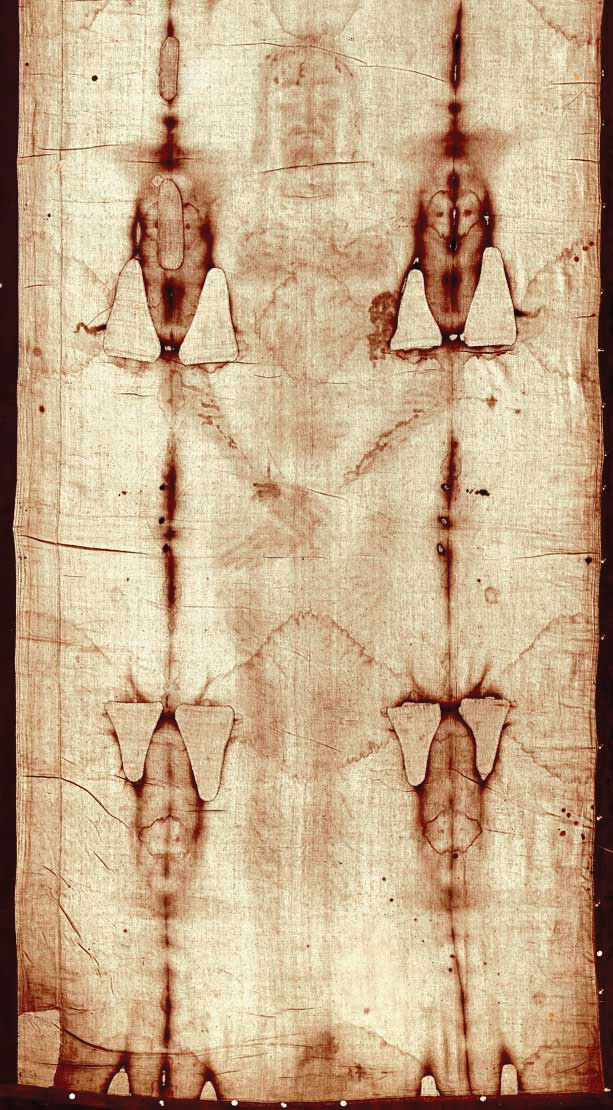
Figure 1:Shroud of Turin. In 1989, several groups of scientists used carbon-14 dating to demonstrate that the Shroud of Turin was only 600–700 y. Many people still cling to a different notion, despite the scientific evidence.
Irradiation of Food
The radiation emitted by some radioactive substances can be used to kill microorganisms on a variety of foodstuffs, extending the shelf life of these products. Produce such as tomatoes, mushrooms, sprouts, and berries are irradiated with the emissions from cobalt-60 or cesium-137. This exposure kills a lot of the bacteria that cause spoilage, so the produce stays fresh longer. Eggs and some meat, such as beef, pork, and poultry, can also be irradiated. Contrary to the belief of some people, irradiation of food does not make the food itself radioactive.
Medical Applications
Radioactive isotopes have numerous medical applications—diagnosing and treating illness and diseases. One example of a diagnostic application is using radioactive iodine-131 to test for thyroid activity (Figure 15.4 "Medical Diagnostics"). The thyroid gland in the neck is one of the few places in the body with a significant concentration of iodine. To evaluate thyroid activity, a measured dose of 131I is administered to a patient, and the next day a scanner is used to measure the amount of radioactivity in the thyroid gland. The amount of radioactive iodine that collects there is directly related to the activity of the thyroid, allowing trained physicians to diagnose both hyperthyroidism and hypothyroidism. Iodine-131 has a half-life of only 8 d, so the potential for damage due to exposure is minimal. Technetium-99 can also be used to test thyroid function. Bones, the heart, the brain, the liver, the lungs, and many other organs can be imaged in similar ways by using the appropriate radioactive isotope.
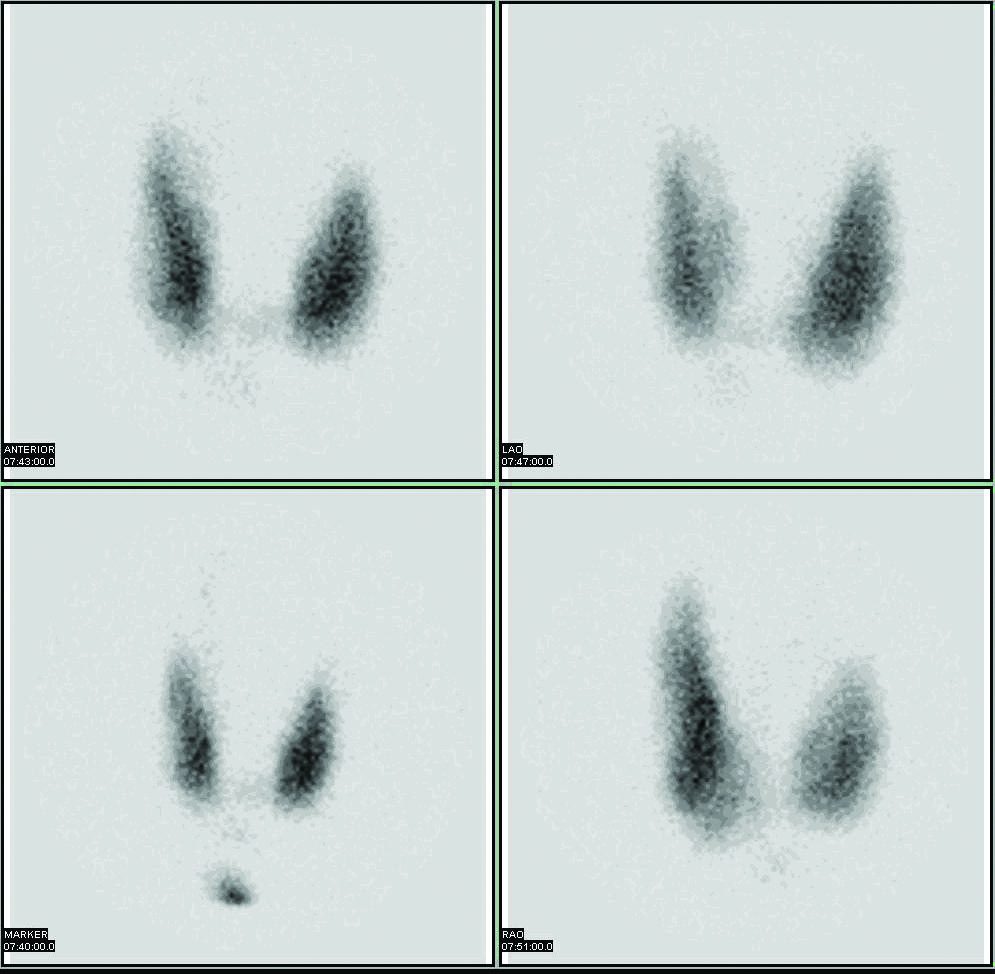
Figure 2:Medical Diagnostics. Radioactive iodine can be used to image the thyroid gland for diagnostic purposes.
Very little radioactive material is needed in these diagnostic techniques because the radiation emitted is so easy to detect. However, therapeutic applications usually require much larger doses because their purpose is to preferentially kill diseased tissues. For example, if a thyroid tumor were detected, a much larger infusion (thousands of rem, as opposed to a diagnostic dose of less than 40 rem) of iodine-131 could help destroy the tumor cells. Similarly, radioactive strontium is used to not only detect but also ease the pain of bone cancers. Table 15.5 "Some Radioactive Isotopes with Medical Applications" lists several radioactive isotopes and their medical uses.
Table 1:Some Radioactive Isotopes with Medical Applications
| Isotope | Use |
|---|---|
| 32P | cancer detection and treatment, especially in eyes and skin |
| 59Fe | anemia diagnosis |
| 60Co | gamma ray irradiation of tumors |
| 99mTc* | brain, thyroid, liver, bone marrow, lung, heart, and intestinal scanning; blood volume determination |
| 131I | diagnosis and treatment of thyroid function |
| 133Xe | lung imaging |
| 198Au | liver disease diagnosis |
*The “m” means that it is a metastable form of this isotope of technetium.
In addition to the direct application of radioactive isotopes to diseased tissue, the gamma ray emissions of some isotopes can be directed toward the tissue to be destroyed. Cobalt-60 is a useful isotope for this kind of procedure.
Exercises
Solution to Exercise 1 #
A tracer is a radioactive isotope that can be detected far from its original source to trace the path of certain chemicals. Hydrogen-3 can be used to trace the path of water underground.
Solution to Exercise 3 #
If the initial amount of a radioactive isotope is known, then by measuring the amount of the isotope remaining, a person can calculate how old that object is since it took up the isotope.
Solution to Exercise 5 #
11,500 y
Solution to Exercise 7 #
increased shelf life (answers will vary)
Solution to Exercise 9 #
The thyroid gland absorbs most of the iodine, allowing it to be imaged for diagnostic purposes or preferentially irradiated for treatment purposes.
Solution to Exercise 11 #
gamma rays