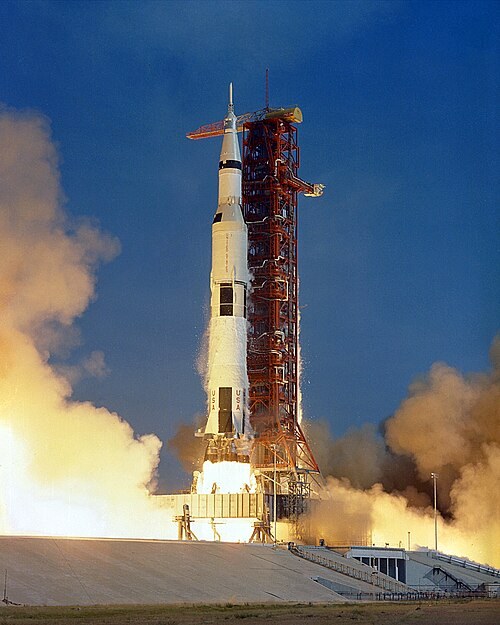
Energy for Spaceflight. A Saturn V launches Apollo 11. Rocket engines transform chemical energy into heat and the kinetic energy of exhaust gases.
Credits: Apollo 11 Launch - GPN-2000-000630 — NASA, Public domain. Images resized for the web.
Energy is a very important quantity in science and the world around us. Although most of our energy ultimately comes from the sun, much of the energy we use on a daily basis is rooted in chemical reactions. The gasoline in your car, the electricity in your house, the food in your diet—all provide substances for chemical reactions to provide energy (gasoline, food) or are produced from chemical reactions (electricity, about 50% of which is generated by burning coal). As such, it is only natural that the study of chemistry involves energy.