The Arrhenius definition of acid and base is limited to aqueous (that is, water) solutions. Although this is useful because water is a common solvent, it is limited to the relationship between the H+ ion and the OH− ion. What would be useful is a more general definition that would be more applicable to other chemical reactions and, importantly, independent of H2O.
In 1923, Danish chemist Johannes Brønsted and English chemist Thomas Lowry independently proposed new definitions for acids and bases, ones that focus on proton transfer. A Brønsted-Lowry acid (Any species that can donate a proton to another molecule.) is any species that can donate a proton (H+) to another molecule. A Brønsted-Lowry base (Any species that can accept a proton from another molecule.) is any species that can accept a proton from another molecule. In short, a Brønsted-Lowry acid is a proton donor (PD), while a Brønsted-Lowry base is a proton acceptor (PA).
It is easy to see that the Brønsted-Lowry definition covers the Arrhenius definition of acids and bases. Consider the prototypical Arrhenius acid-base reaction:
The acid species and base species are marked. The proton, however, is (by definition) a proton donor (labeled PD), while the OH− ion is acting as the proton acceptor (labeled PA):
The proton donor is a Brønsted-Lowry acid, and the proton acceptor is the Brønsted-Lowry base:
Thus H+ is an acid by both definitions, and OH− is a base by both definitions.
Ammonia (NH3) is a base even though it does not contain OH− ions in its formula. Instead, it generates OH− ions as the product of a proton-transfer reaction with H2O molecules; NH3 acts like a Brønsted-Lowry base, and H2O acts like a Brønsted-Lowry acid:

Figure 1:12.2 Brønsted-Lowry Acids and Bases
A reaction with water is called hydrolysis (A reaction with water.); we say that NH3 hydrolyzes to make NH4+ ions and OH− ions.
Even the dissolving of an Arrhenius acid in water can be considered a Brønsted-Lowry acid-base reaction. Consider the process of dissolving HCl(g) in water to make an aqueous solution of hydrochloric acid. The process can be written as follows:
HCl(g) is the proton donor and therefore a Brønsted-Lowry acid, while H2O is the proton acceptor and a Brønsted-Lowry base. These two examples show that H2O can act as both a proton donor and a proton acceptor, depending on what other substance is in the chemical reaction. A substance that can act as a proton donor or a proton acceptor is called amphiprotic (A substance that can act as a proton donor or a proton acceptor.). Water is probably the most common amphiprotic substance we will encounter, but other substances are also amphiprotic.
Solution to Exercise 1 #
The C6H5OH molecule is losing an H+; it is the proton donor and the Brønsted-Lowry acid. The NH2− ion (called the amide ion) is accepting the H+ ion to become NH3, so it is the Brønsted-Lowry base.
Solution to Exercise 2 #
Brønsted-Lowry acid: Al(H2O)63+; Brønsted-Lowry base: H2O
In the reaction between NH3 and H2O,

Figure 2:12.2 Brønsted-Lowry Acids and Bases
the chemical reaction does not go to completion; rather, the reverse process occurs as well, and eventually the two processes cancel out any additional change. At this point, we say the chemical reaction is at equilibrium. Both processes still occur, but any net change by one process is countered by the same net change by the other process; it is a dynamic, rather than a static, equilibrium. Because both reactions are occurring, it makes sense to use a double arrow instead of a single arrow:

Figure 3:12.2 Brønsted-Lowry Acids and Bases
What do you notice about the reverse reaction? The NH4+ ion is donating a proton to the OH− ion, which is accepting it. This means that the NH4+ ion is acting as the proton donor, or Brønsted-Lowry acid, while OH− ion, the proton acceptor, is acting as a Brønsted-Lowry base. The reverse reaction is also a Brønsted-Lowry acid base reaction:
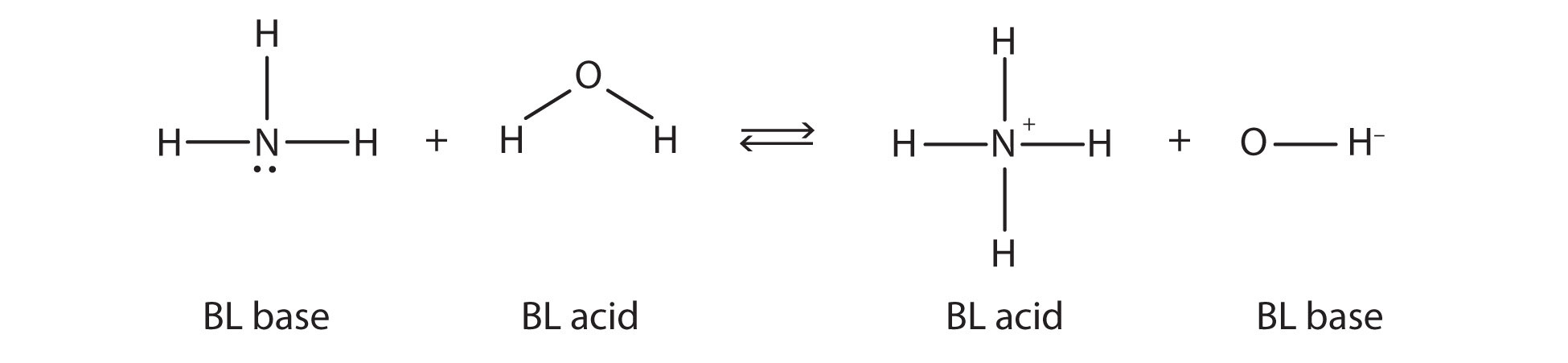
Figure 4:12.2 Brønsted-Lowry Acids and Bases
This means that both reactions are acid-base reactions by the Brønsted-Lowry definition. If you consider the species in this chemical reaction, two sets of similar species exist on both sides. Within each set, the two species differ by a proton in their formulas, and one member of the set is a Brønsted-Lowry acid, while the other member is a Brønsted-Lowry base. These sets are marked here:
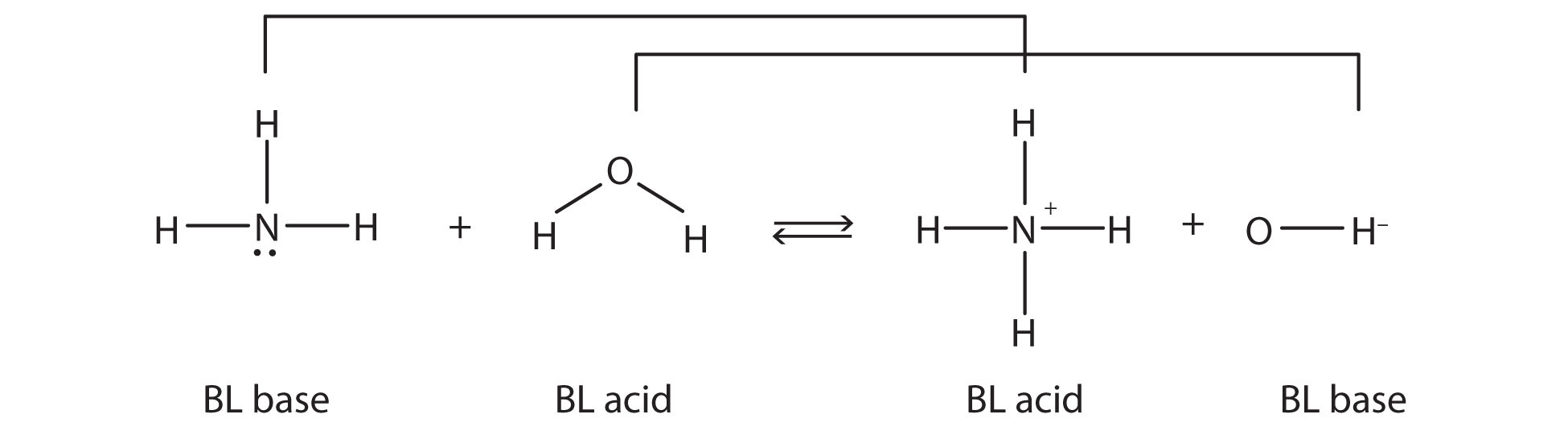
Figure 5:12.2 Brønsted-Lowry Acids and Bases
The two sets—NH3/NH4+ and H2O/OH−—are called conjugate acid-base pairs (Two species whose formulas differ by only a hydrogen ion.). We say that NH4+ is the conjugate acid of NH3, OH− is the conjugate base of H2O, and so forth. Every Brønsted-Lowry acid-base reaction can be labeled with two conjugate acid-base pairs.
Solution to Exercise 3 #
One pair is H2O and OH−, where H2O has one more H+ and is the conjugate acid, while OH− has one less H+ and is the conjugate base. The other pair consists of (CH3)3N and (CH3)3NH+, where (CH3)3NH+ is the conjugate acid (it has an additional proton) and (CH3)3N is the conjugate base.
Solution to Exercise 4 #
H2O (acid) and OH− (base); NH2− (base) and NH3 (acid)
Exercises
Solution to Exercise 5 #
A Brønsted-Lowry acid is a proton donor. It does not necessarily increase the H+ concentration in water.
Solution to Exercise 7 #
HBr + H2O → H3O+ + Br−; PD: HBr; PA: H2O
Solution to Exercise 9 #
C5H5N + H2O → C5H5NH+ + OH−; PD: H2O; PA: C5H5N
Solution to Exercise 11 #
BL acid: H3PO4; BL base: OH−
Solution to Exercise 13 #
C2H3O2− and C5H5NH+
Solution to Exercise 15 #
H3O+; NH4+
Solution to Exercise 17 #
SO42−; OH−
Solution to Exercise 19 #
HSO4− and SO42−; PO43− and HPO42−
Solution to Exercise 21 #
NH3 and NH2−; C6H5O− and C6H5OH