For single-replacement and double-replacement reactions, many of the reactions included ionic compounds: compounds between metals and nonmetals or compounds that contained recognizable polyatomic ions. Now we take a closer look at reactions that include ionic compounds.
One important aspect about ionic compounds that differs from molecular compounds has to do with dissolving in a liquid, such as water. When molecular compounds, such as sugar, dissolve in water, the individual molecules drift apart from each other. When ionic compounds dissolve, the ions physically separate from each other. We can use a chemical equation to represent this process—for example, with NaCl:
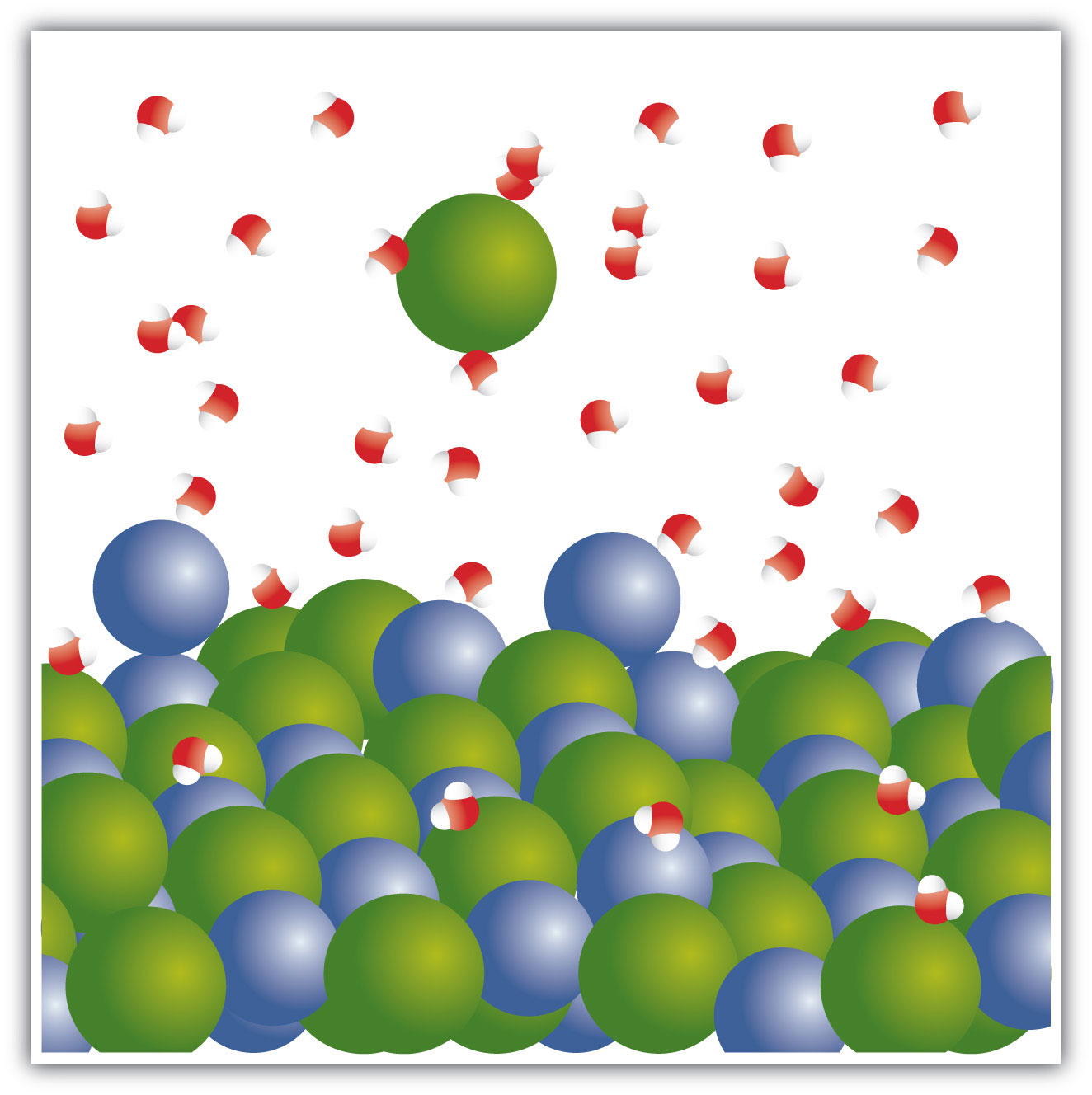
When NaCl dissolves in water, the ions separate and go their own way in solution; the ions are now written with their respective charges, and the (aq) phase label emphasizes that they are dissolved (Figure 4.3 "Ionic Solutions"). This process is called dissociation (The process of an ionic compound separating into ions when it dissolves.); we say that the ions dissociate.
Figure 1:Ionic Solutions. When an ionic compound dissociates in water, water molecules surround each ion and separate it from the rest of the solid. Each ion goes its own way in solution.
All ionic compounds that dissolve behave this way. (This behavior was first suggested by the Swedish chemist Svante August Arrhenius [1859–1927] as part of his PhD dissertation in 1884. Interestingly, his PhD examination team had a hard time believing that ionic compounds would behave like this, so they gave Arrhenius a barely passing grade. Later, this work was cited when Arrhenius was awarded the Nobel Prize in Chemistry.) Keep in mind that when the ions separate, all the ions separate. Thus, when CaCl2 dissolves, the one Ca2+ ion and the two Cl− ions separate from each other:
That is, the two chloride ions go off on their own. They do not remain as Cl2 (that would be elemental chlorine; these are chloride ions); they do not stick together to make Cl2− or Cl22−. They become dissociated ions in their own right. Polyatomic ions also retain their overall identity when they are dissolved.
When chemicals in solution react, the proper way of writing the chemical formulas of the dissolved ionic compounds is in terms of the dissociated ions, not the complete ionic formula. A complete ionic equation (A chemical equation in which the dissolved ionic compounds are written as separated ions.) is a chemical equation in which the dissolved ionic compounds are written as separated ions. Solubility rules are very useful in determining which ionic compounds are dissolved and which are not. For example, when NaCl(aq) reacts with AgNO3(aq) in a double-replacement reaction to precipitate AgCl(s) and form NaNO3(aq), the complete ionic equation includes NaCl, AgNO3, and NaNO3 written as separated ions:
You may notice that in a complete ionic equation, some ions do not change their chemical form; they stay exactly the same on the reactant and product sides of the equation. For example, in
the Ag+(aq) and Cl−(aq) ions become AgCl(s), but the Na+(aq) ions and the NO3−(aq) ions stay as Na+(aq) ions and NO3−(aq) ions. These two ions are examples of spectator ions (An ion that does nothing in the overall course of a chemical reaction.), ions that do nothing in the overall course of a chemical reaction. They are present, but they do not participate in the overall chemistry. It is common to cancel spectator ions (something also done with algebraic quantities) on the opposite sides of a chemical equation:
What remains when the spectator ions are removed is called the net ionic equation (A chemical equation with the spectator ions removed.), which represents the actual chemical change occurring between the ionic compounds:
It is important to reiterate that the spectator ions are still present in solution, but they don’t experience any net chemical change, so they are not written in a net ionic equation.
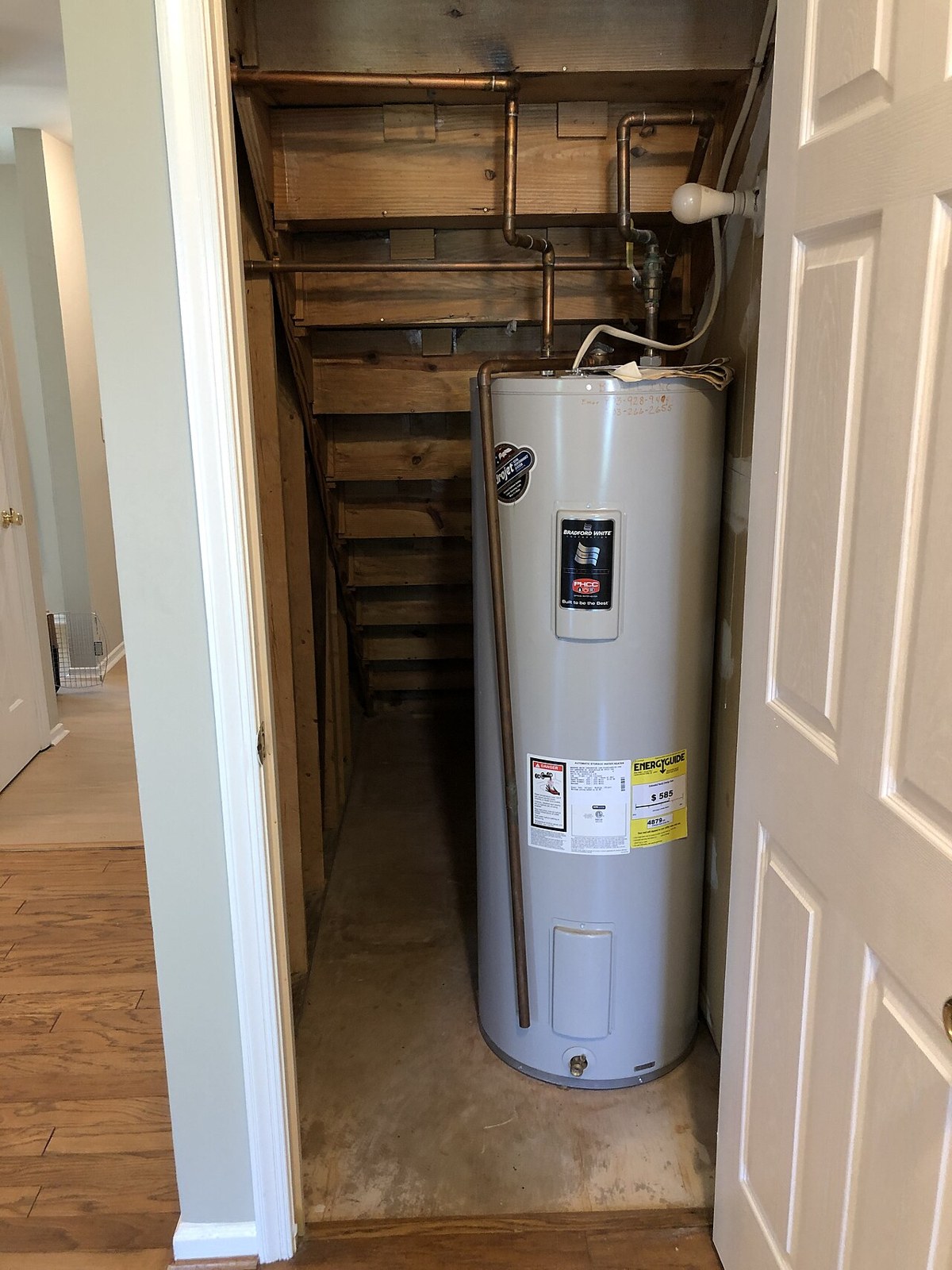
Mineral Deposits in Water Heaters. A domestic storage water heater. Dissolved mineral compounds can form scale on heated surfaces, affecting the operation of the heater.
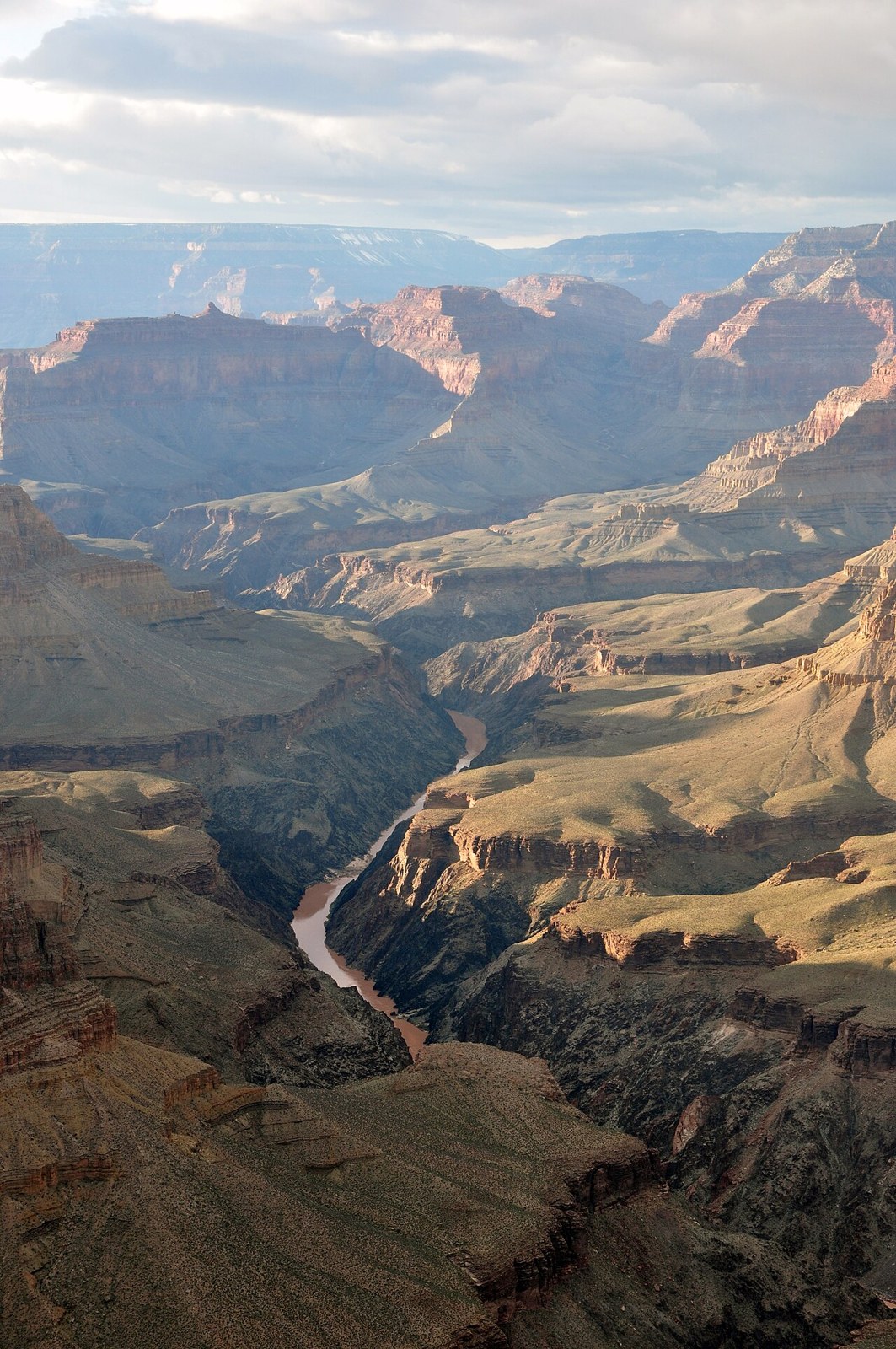
Water and Rock. The Colorado River flows through the Grand Canyon. Dissolution is one of the processes through which water interacts with rock; mechanical erosion also plays a major role in shaping a canyon.