Quantities have two parts: the number and the unit. The number tells “how many.” It is important to be able to express numbers properly so that the quantities can be communicated properly.
Standard notation (A straightforward expression of a number.) is the straightforward expression of a number. Numbers such as 17, 101.5, and 0.00446 are expressed in standard notation. For relatively small numbers, standard notation is fine. However, for very large numbers, such as 306,000,000, or for very small numbers, such as 0.000000419, standard notation can be cumbersome because of the number of zeros needed to place nonzero numbers in the proper position.
Scientific notation (An expression of a number using powers of 10.) is an expression of a number using powers of 10. Powers of 10 are used to express numbers that have many zeros:
| 100 | = 1 |
|---|---|
| 101 | = 10 |
| 102 | = 100 = 10 × 10 |
| 103 | = 1,000 = 10 × 10 × 10 |
| 104 | = 10,000 = 10 × 10 × 10 × 10 |
and so forth. The raised number to the right of the 10 indicating the number of factors of 10 in the original number is the exponent (The raised number to the right of a 10 indicating the number of factors of 10 in the original number.). (Scientific notation is sometimes called exponential notation.) The exponent’s value is equal to the number of zeros in the number expressed in standard notation.
Small numbers can also be expressed in scientific notation but with negative exponents:
| 10−1 | = 0.1 = 1/10 |
|---|---|
| 10−2 | = 0.01 = 1/100 |
| 10−3 | = 0.001 = 1/1,000 |
| 10−4 | = 0.0001 = 1/10,000 |
and so forth. Again, the value of the exponent is equal to the number of zeros in the denominator of the associated fraction. A negative exponent implies a decimal number less than one.
A number is expressed in scientific notation by writing the first nonzero digit, then a decimal point, and then the rest of the digits. The part of a number in scientific notation that is multiplied by a power of 10 is called the coefficient (The part of a number in scientific notation that is multiplied by a power of 10.). Then determine the power of 10 needed to make that number into the original number and multiply the written number by the proper power of 10. For example, to write 79,345 in scientific notation,
Thus, the number in scientific notation is 7.9345 × 10⁴. For small numbers, the same process is used, but the exponent for the power of 10 is negative:
Typically, the extra zero digits at the end or the beginning of a number are not included. (See Figure 2.1 "Using Scientific Notation".)
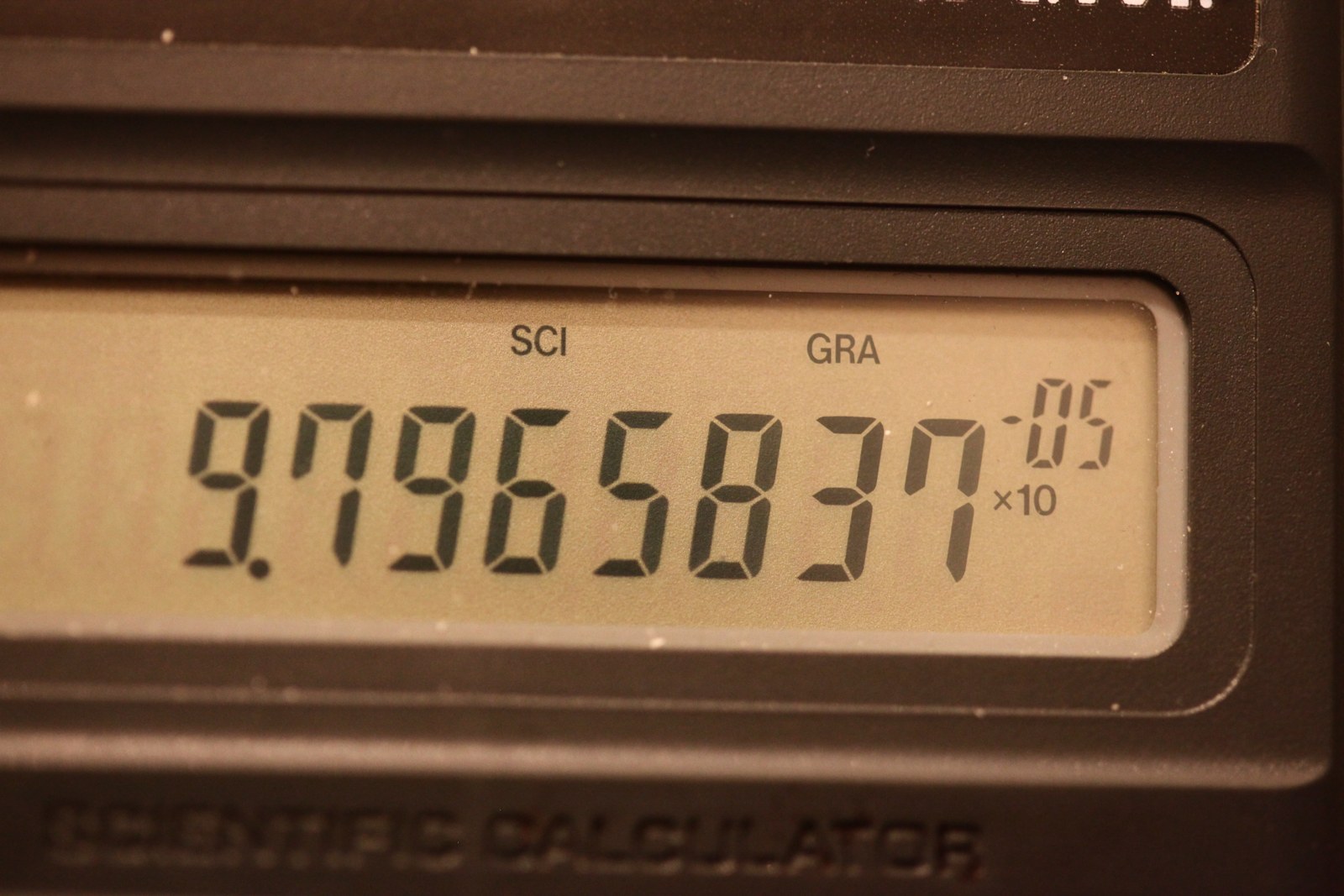
Figure 2.1:Using Scientific Notation. A calculator displays a number as a coefficient multiplied by a power of ten. This notation avoids writing a long string of zeros.
Credits: Scientific notation in calculator display 16 — Thirunavukkarasye-Raveendran, CC BY 4.0. Images resized for the web.
Solution to Exercise 1 #
The number 306,000 is 3.06 times 100,000, or 3.06 times 105. In scientific notation, the number is 3.06 × 10⁵.
The number 0.00884 is 8.84 times 1/1,000, which is 8.84 times 10−3. In scientific notation, the number is 8.84 × 10⁻³.
The number 2,760,000 is 2.76 times 1,000,000, which is the same as 2.76 times 106. In scientific notation, the number is written as 2.76 × 10⁶. Note that we omit the zeros at the end of the original number.
The number 0.000000559 is 5.59 times 1/10,000,000, which is 5.59 times 10−7. In scientific notation, the number is written as 5.59 × 10⁻⁷.
Solution to Exercise 2 #
2.307 × 10⁴
9.706 × 10⁻⁴
Another way to determine the power of 10 in scientific notation is to count the number of places you need to move the decimal point to get a numerical value between 1 and 10. The number of places equals the power of 10. This number is positive if you move the decimal point to the left and negative if you move the decimal point to the right:
Many quantities in chemistry are expressed in scientific notation. When performing calculations, you may have to enter a number in scientific notation into a calculator. Be sure you know how to correctly enter a number in scientific notation into your calculator. Different models of calculators require different actions for properly entering scientific notation. If in doubt, consult your instructor immediately. (See Figure 2.2 "Scientific Notation on a Calculator".)
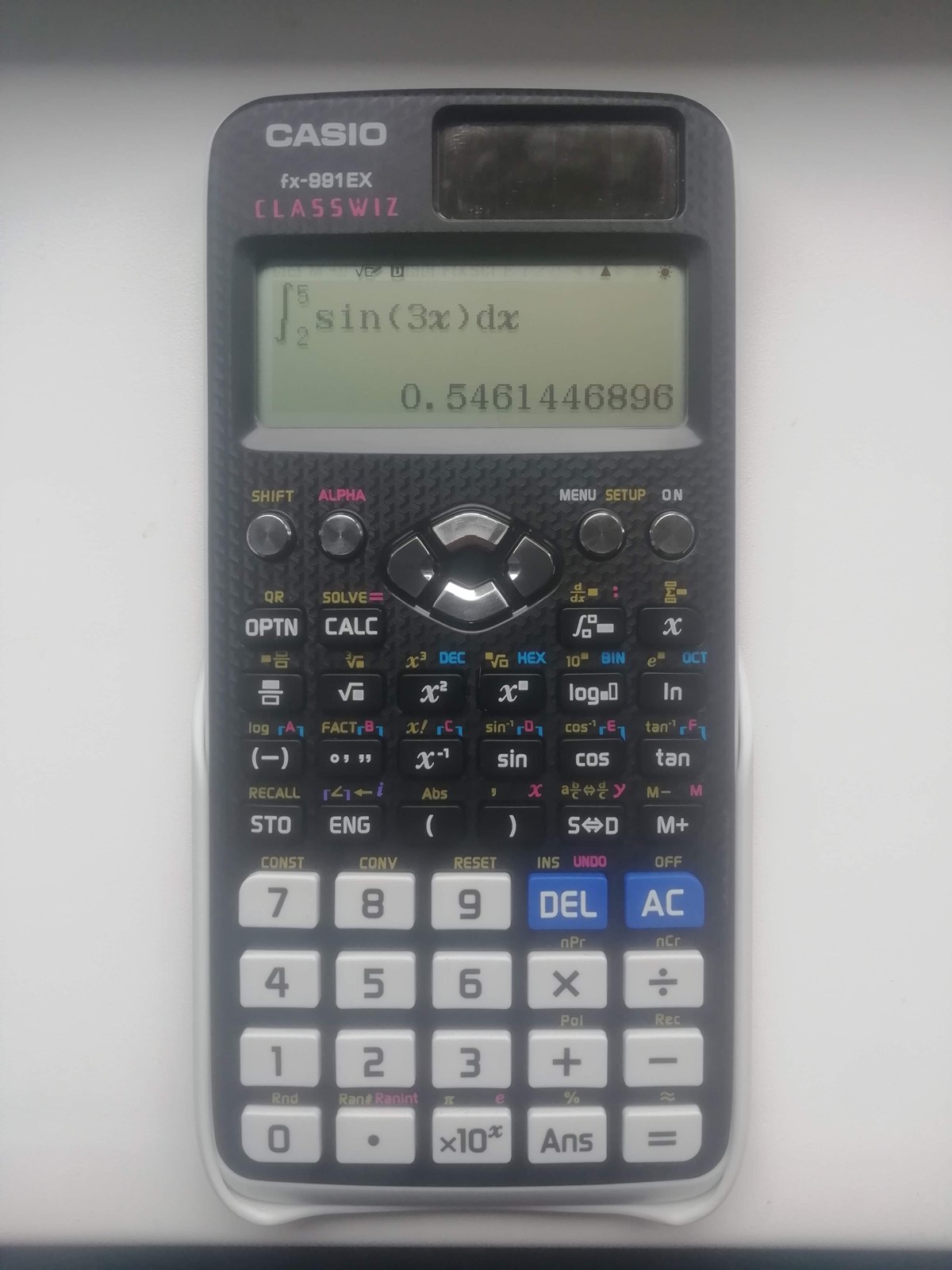
Figure 2.2:Scientific Notation on a Calculator. Scientific calculators provide keys for entering powers of ten. The key sequence varies by model; consult the instructions for the calculator you use.
Credits: Casio fx-991EX Scientific Calculator — David Wheatley, CC0. Images resized for the web.
Exercises
Solution to Exercise 3 #
a. 5.69 × 101 b. 5.631 × 10⁵ c. 8.04 × 10⁻² d. 6.67 × 10⁻⁶
Solution to Exercise 5 #
a. 6.56 × 10⁻³ b. 6.56 × 10⁴ c. 4.567 × 10⁶ d. 5.507 × 10⁻⁶
Solution to Exercise 7 #
a. 138,100 b. 0.000000522 c. 99,980
Solution to Exercise 9 #
a. 8.09 b. 0.00003088 c. −423.9
Solution to Exercise 11 #
a. 7.244 × 10⁴ b. 9.943 × 10⁻² c. 5.88399 × 10⁷
Solution to Exercise 13 #
a. 3.451 × 10⁴ b. 2.34 × 10⁻⁴ c. 1.8 × 101
Solution to Exercise 15 #
a. 1.2345678 × 10⁵ b. 9.849 × 10⁴ c. 4.45 × 10⁻⁷
Solution to Exercise 17 #
a. 3.3744 × 10¹¹ b. 3.3407 × 10⁻¹¹ c. 3.665 × 10⁻⁶
Solution to Exercise 19 #
a. 6.7346 × 100 b. 1.6691 × 10⁻¹⁴