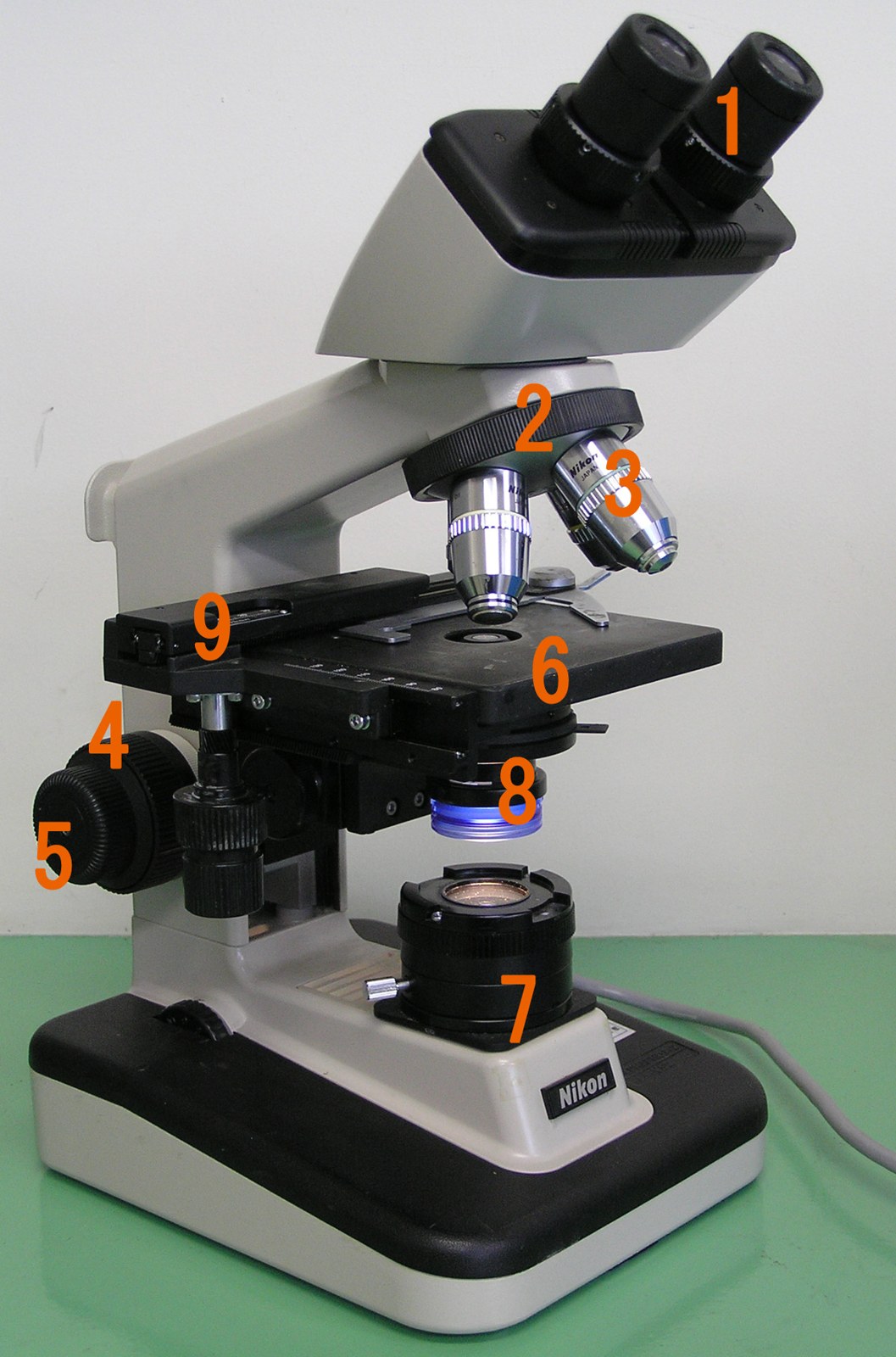
(a)An optical microscope with numbered components.
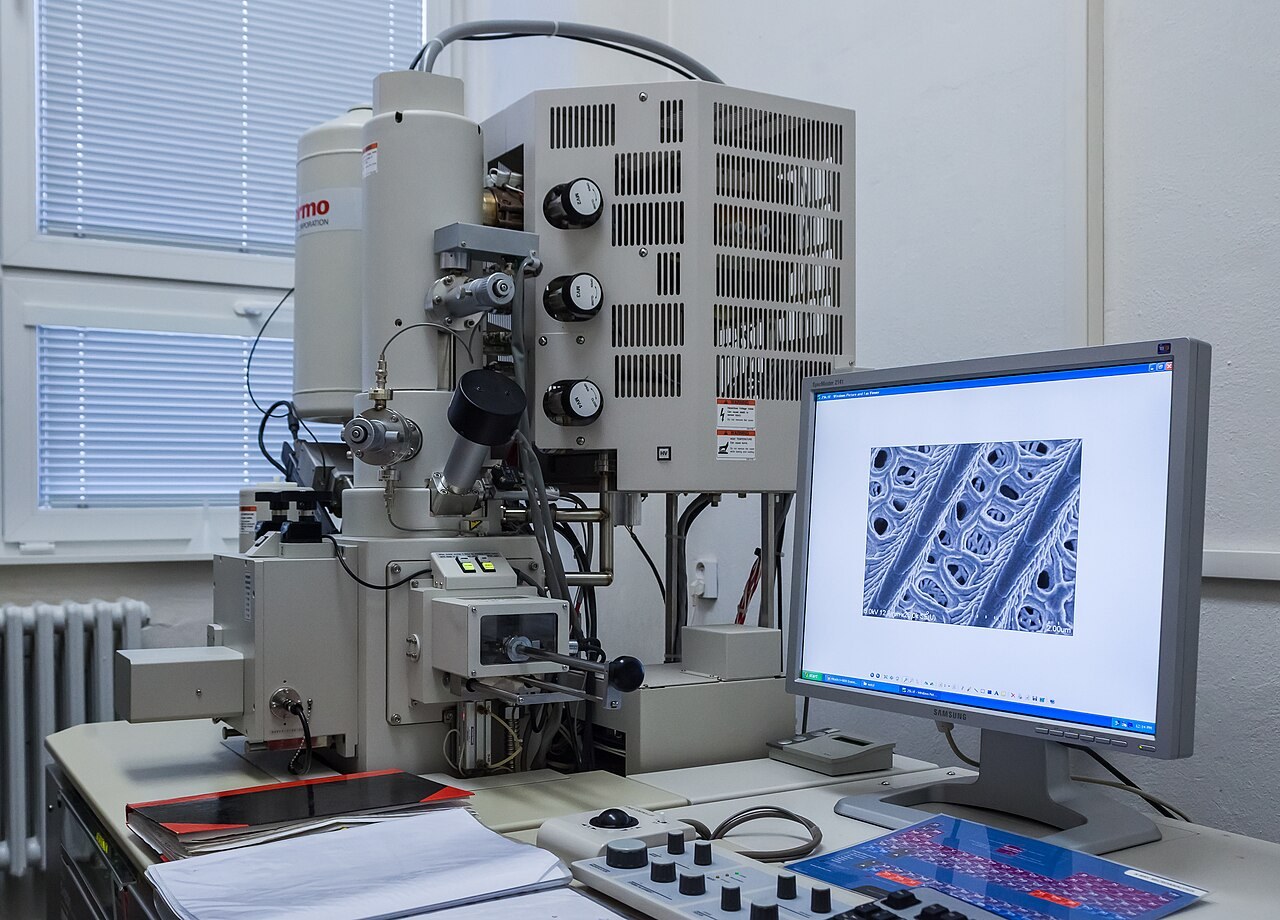
(b)A scanning electron microscope with its control computer.
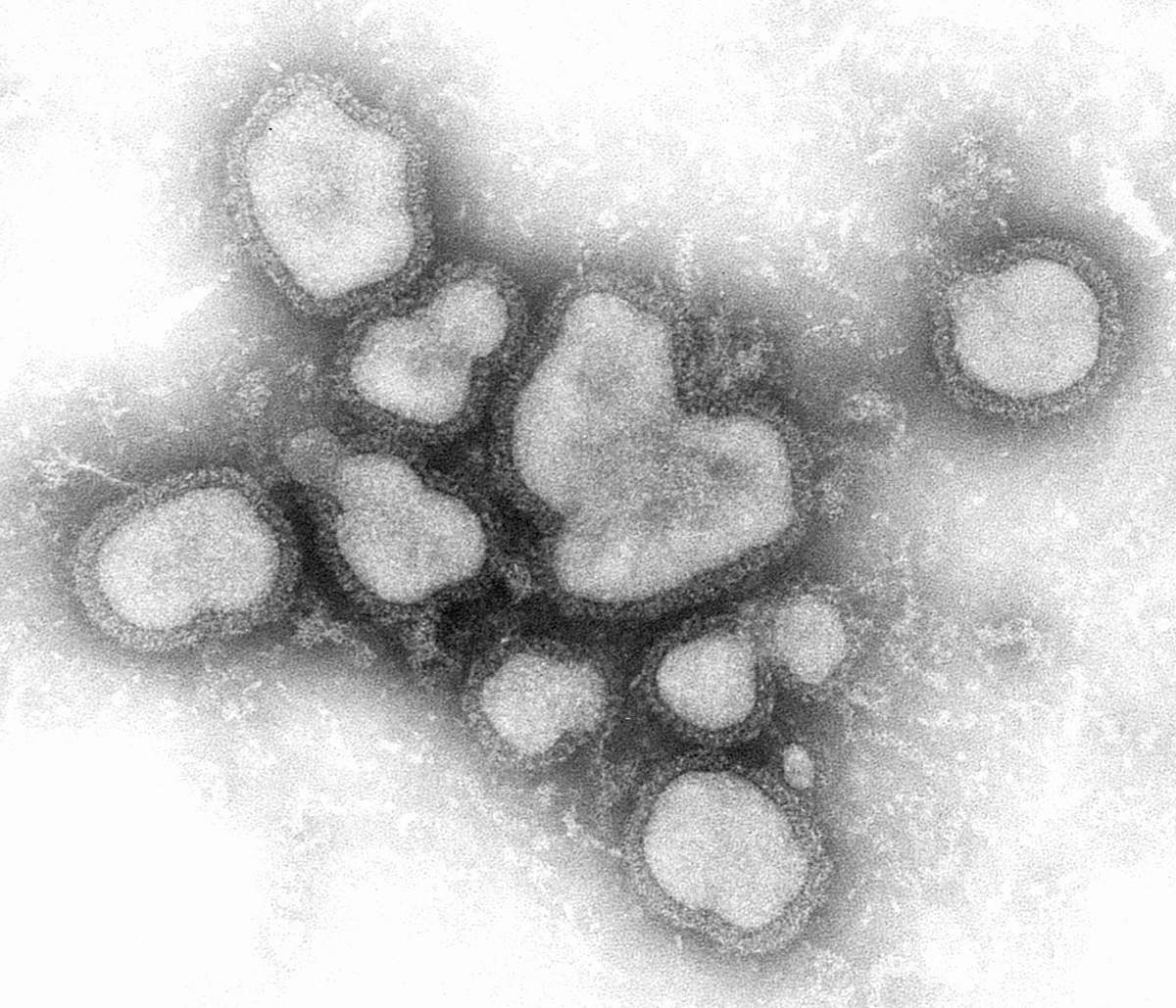
(c)A transmission electron micrograph showing several influenza A virus particles.
Seeing Smaller Structures. (a) An optical microscope. (b) A scanning electron microscope. (c) Influenza A virus particles imaged with a transmission electron microscope. Electron microscopes can resolve structures too small to distinguish with an ordinary light microscope.
Credits: Optical microscope nikon alphaphot — GcG(jawp), Public domain; Scanning electron microscope - UFCH JH (2020) 01 — Tadeáš Bednarz, CC BY-SA 4.0; Influenza A virus - negative stain image TEM — CDC / F. A. Murphy, Public domain. Images resized for the web.
Atoms act the way they do because of their structure. We already know that atoms are composed of protons, neutrons, and electrons. Protons and neutrons are located in the nucleus, and electrons orbit around the nucleus. But we need to know the structural details to understand why atoms react the way they do.
Virtually everything we know about atoms ultimately comes from light. Before we can understand the composition of atoms (especially electrons), we need to understand the properties of light.