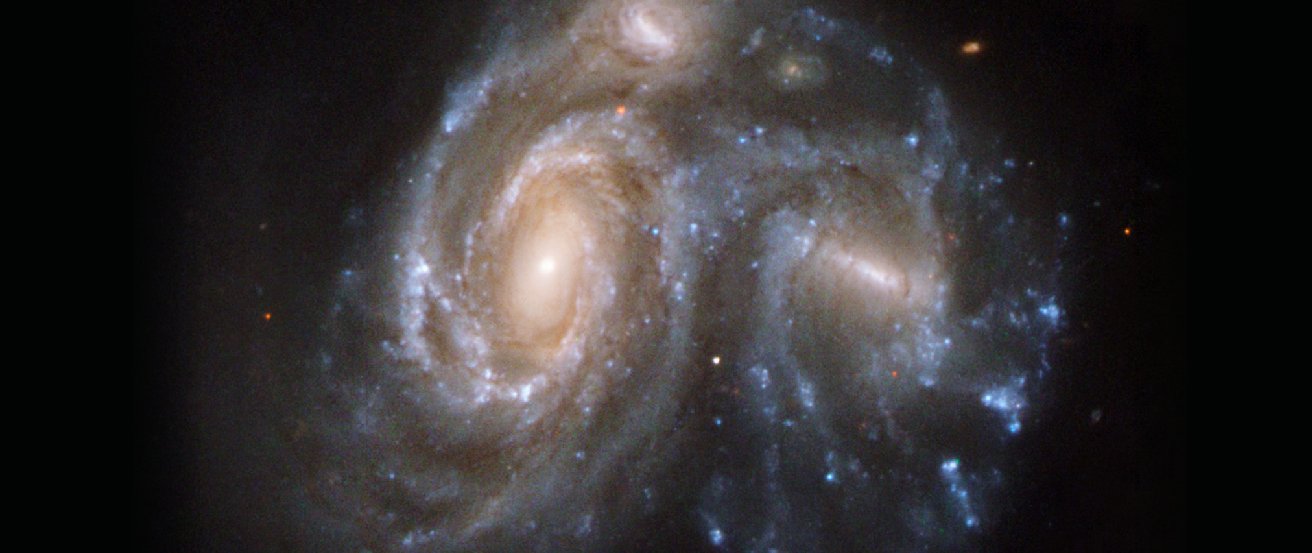
We invite you to come along on a series of voyages to explore the universe as astronomers understand it today. Beyond Earth are vast and magnificent realms full of objects that have no counterpart on our home planet. Nevertheless, we hope to show you that the evolution of the universe has been directly responsible for your presence on Earth today.
Along your journey, you will encounter:
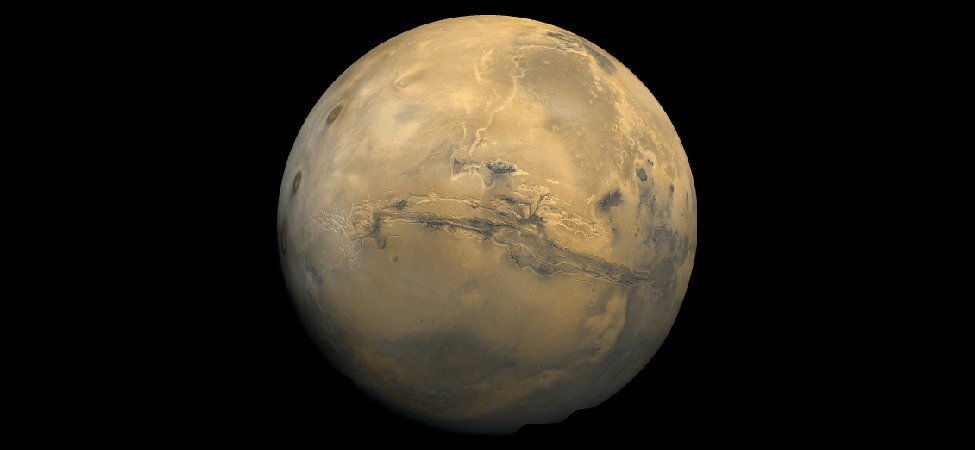
- a canyon system so large that, on Earth, it would stretch from Los Angeles to Washington, DC (Figure 1.2).
- a crater and other evidence on Earth that tell us that the dinosaurs (and many other creatures) died because of a cosmic collision.
- a tiny moon whose gravity is so weak that one good throw from its surface could put a baseball into orbit.
- a collapsed star so dense that to duplicate its interior we would have to squeeze every human being on Earth into a single raindrop.
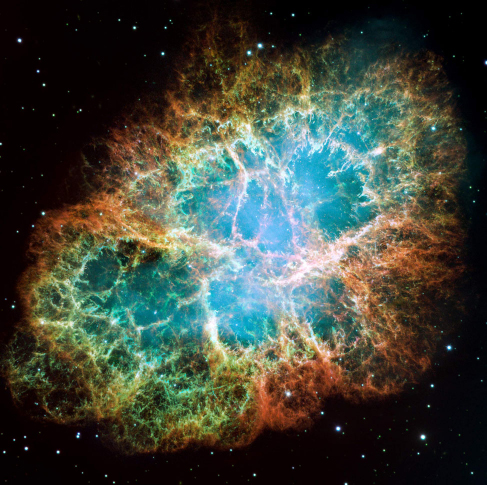
- exploding stars whose violent end could wipe clean all of the life-forms on a planet orbiting a neighboring star (Figure 1.3).
- a “cannibal galaxy” that has already consumed a number of its smaller galaxy neighbors and is not yet finished finding new victims.
- a radio echo that is the faint but unmistakable signal of the creation event for our universe.
Such discoveries are what make astronomy such an exciting field for scientists and many others—but you will explore much more than just the objects in our universe and the latest discoveries about them. We will pay equal attention to the process by which we have come to understand the realms beyond Earth and the tools we use to increase that understanding.
We gather information about the cosmos from the messages the universe sends our way. Because the stars are the fundamental building blocks of the universe, decoding the message of starlight has been a central challenge and triumph of modern astronomy. By the time you have finished reading this text, you will know a bit about how to read that message and how to understand what it is telling us.